
Subaru’s Most-Recalled 2026 Model Is Built By Another Automaker—Here’s Which One And Why It Matters
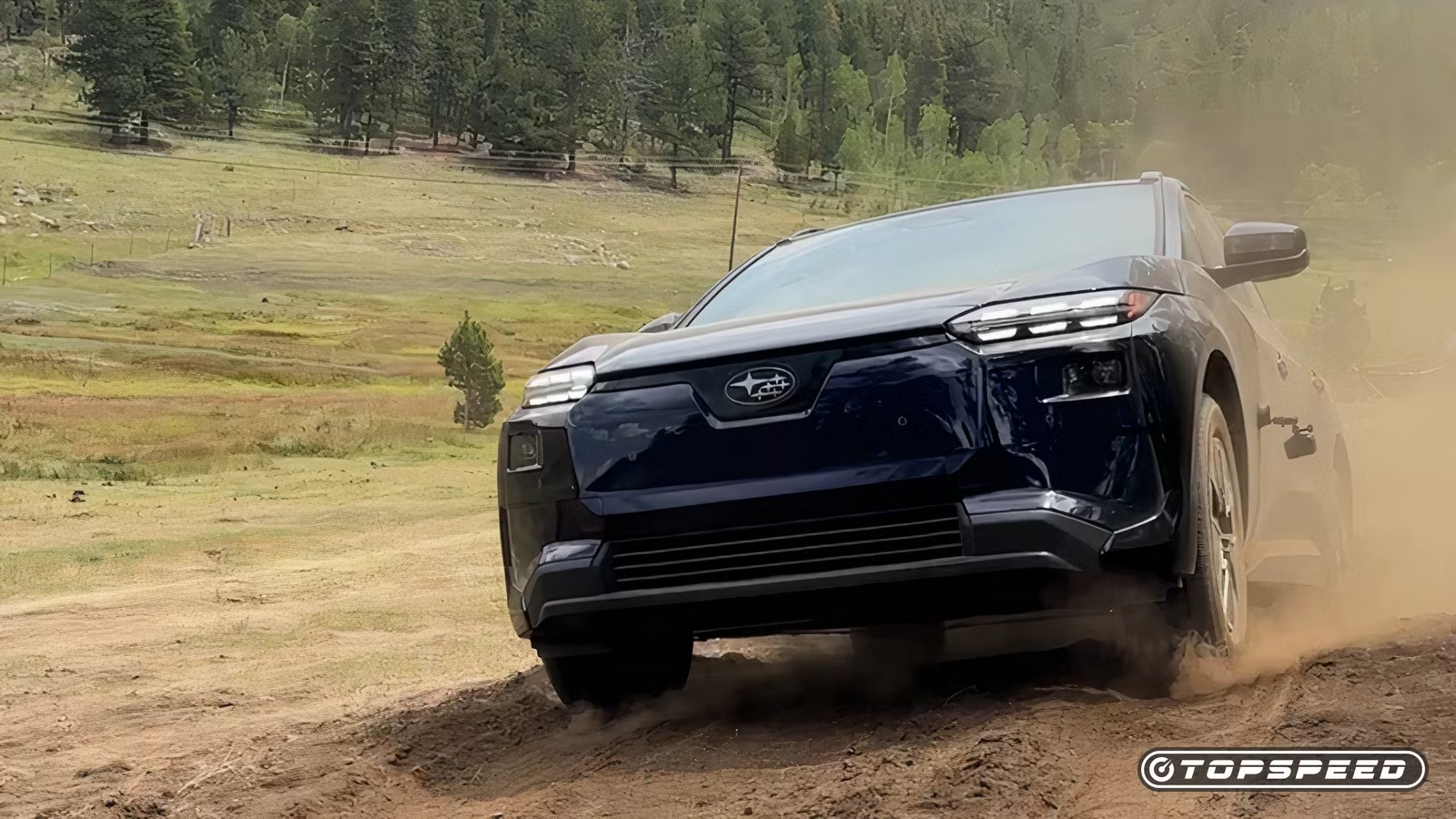
Subaru has spent decades building a reputation for durability, but its most-recalled 2026 model has a complicated origin story: it isn’t actually engineered or built by Subaru. According to a CarBuzz report published July 7, the 2026 Subaru Solterra—the brand’s all-electric SUV—leads Subaru’s recall count for the model year, and the reason traces directly to the car’s roots as a Toyota-built vehicle wearing a Subaru badge.

The Solterra shares its platform, powertrain, and manufacturing with the Toyota bZ4X, produced as part of a joint development agreement between the two automakers. That partnership has real consequences when something goes wrong—because the defects, the engineering decisions, and ultimately the recall filings originate with Toyota’s development program, not Subaru’s. For buyers who chose the Solterra specifically for Subaru’s reliability track record, that distinction matters.
The Solterra Is A Toyota Product In Subaru Clothing
The Subaru Solterra and Toyota bZ4X are mechanically identical vehicles. Both ride on Toyota’s e-TNGA electric platform, both are assembled at Toyota’s Motomachi plant in Japan, and both launched simultaneously in 2022 as a direct product of the Subaru-Toyota partnership that also produced the BRZ and GR86. The Solterra carries Subaru badging and is sold through Subaru dealerships, but the engineering decisions that underpin it—including those that have led to recall actions—belong to Toyota’s development team.

For 2026, the Solterra has accumulated the highest recall count among Subaru’s lineup. The CarBuzz report identifies the model as Subaru’s most-recalled 2026 vehicle, a distinction that reflects the shared-platform reality: when Toyota issues a recall on the bZ4X, a corresponding recall on the Solterra typically follows, because the two vehicles share the same components and the same failure modes.
What’s Actually Failing—And What Owners Should Know

The recall activity tied to the Solterra stems from issues that have affected the bZ4X platform broadly. Among the documented concerns are problems with the hub bolts on all-wheel-drive variants—a serious structural issue that drew significant attention at the bZ4X’s launch and prompted an early stop-sale—as well as software-related defects affecting charging behavior and driver-assist systems. Because the Solterra and bZ4X share components at the platform level, any recall filed against the bZ4X for a shared system is effectively a Solterra recall as well.
Subaru handles the recall process on its end: Subaru of America files the paperwork with NHTSA, notifies owners, and coordinates the remedy through its dealer network. The fix itself, however, is developed by Toyota, since Toyota owns the engineering. Solterra owners should check the NHTSA recall database using their VIN to confirm which specific recalls apply to their vehicle and whether a remedy is currently available.
Badge Engineering And The Reliability Question

The broader issue here is what badge engineering means for buyers who make purchasing decisions based on brand reputation. Subaru’s reliability scores—strong in segment surveys for its Outback, Forester, and Crosstrek—are built on vehicles Subaru actually engineers. The Solterra is a different case. A buyer choosing it over a competitor EV partly on the strength of Subaru’s name is, in practice, buying Toyota’s electric platform.
That isn’t inherently a problem—Toyota is a capable automaker—but it does mean Subaru’s reliability reputation isn’t the relevant benchmark for this vehicle. The bZ4X platform’s recall history is the more accurate predictor of what Solterra owners might encounter. Subaru remains responsible for the warranty and for managing recalls through its dealer network, but the engineering accountability sits with Toyota. Buyers considering the 2026 Solterra should research the bZ4X’s track record alongside Subaru’s, since the two vehicles will share whatever issues emerge from the platform going forward.

On pricing, the 2026 Solterra’s base price holds at $36,470 for the model year—Subaru confirmed it is not raising prices on its EV lineup for 2027 either, which at least offers some predictability for buyers weighing the purchase.
The Solterra isn’t a bad vehicle by default, but its recall record is a reminder that brand loyalty has limits when the product itself comes from a different engineering lineage. Subaru shoppers who prioritize the brand’s reliability pedigree should understand what they’re actually buying—and check NHTSA’s database before signing.

Related posts

Latest Post


No Comments