
Subaru’s Fastest-Ever EV Already Proved the Point—Instant Torque Is Outrunning Driver Skill
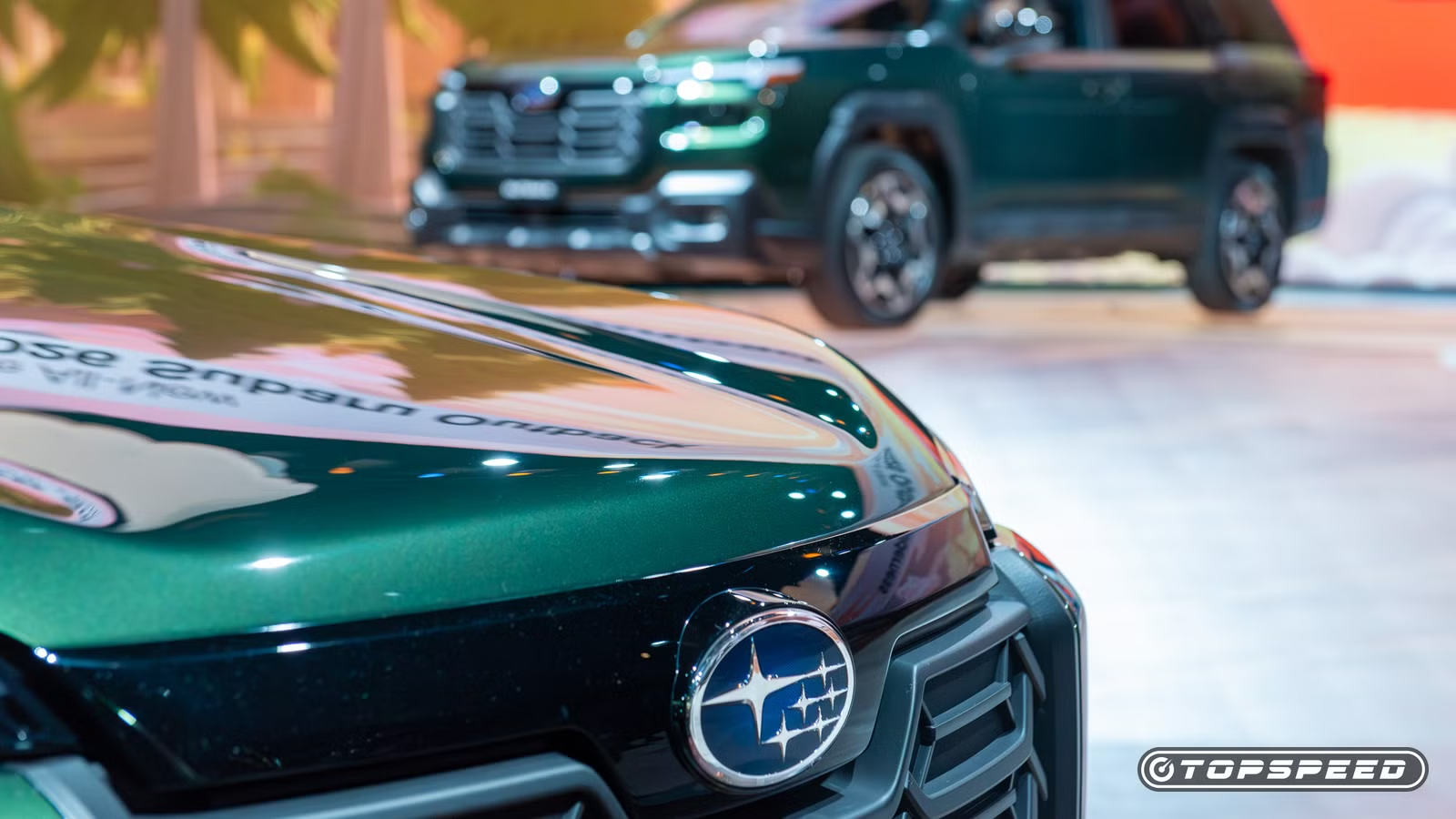
Subaru has just revealed its fastest production car ever — and it runs on electricity. The announcement lands as a genuine milestone for a brand built on rally stages and all-wheel-drive traction, but it also crystallizes a growing tension in performance cars: the machine is now faster than most drivers can meaningfully use.

The broader conversation isn’t new, but Subaru’s entry sharpens it. When instant torque replaces a combustion engine’s progressive power curve, the feedback loop that once taught drivers how to go fast disappears. Yahoo Autos framed it plainly this week: EVs have gotten too fast for their own good. Subaru’s fastest-ever model is the latest piece of evidence.
What Subaru’s Fastest Production Car Actually Means
The record-holder is the 2026 Subaru Trailseeker, an all-electric mid-size crossover that has drawn attention for its performance credentials alongside its everyday utility. Reviews note its dual-motor all-wheel-drive setup delivers the kind of acceleration figures that would have been supercar territory not long ago—a 0–60 mph time that places it ahead of every combustion-powered Subaru ever built, including the WRX STI variants that defined the brand’s performance identity for two decades.

For context, the STI’s most potent factory forms produced around 310 horsepower through a turbocharged flat-four, with power arriving in a band that rewarded rev-matching, throttle modulation, and reading the road. The Trailseeker’s electric motors produce torque from a standing start—all of it, immediately. There’s no spool, no surge, no moment where the driver negotiates with the engine. You press the accelerator and the car simply goes.
The Problem With Power That Arrives All At Once

Traditional performance driving is partly a skill of timing. In a turbocharged car, a driver learns when boost arrives, how to modulate throttle through a corner’s apex, and how weight transfer affects grip as power builds. Those lessons accumulate over time—and they’re the foundation of what enthusiasts call driver development.
Instant torque removes that negotiation entirely. An EV’s power delivery is binary in a way combustion never was: the torque is either there or it isn’t, and when it’s there, it’s everything. That’s genuinely impressive in a straight line. On a wet road, in a corner, or in the hands of a driver who hasn’t yet learned to respect it, it’s a different story. The AutoSpies framing from earlier this week asked the same question from a slightly different angle—are cars simply becoming too powerful for their own good? With EVs, the answer isn’t just about peak output. It’s about how fast that output arrives relative to human reaction time.
Research consistently shows that human reaction time to an unexpected stimulus runs between 150 and 300 milliseconds. Modern EV torque delivery operates in single-digit milliseconds. The gap between what the car can do and what the driver can process is real, and it’s widening.
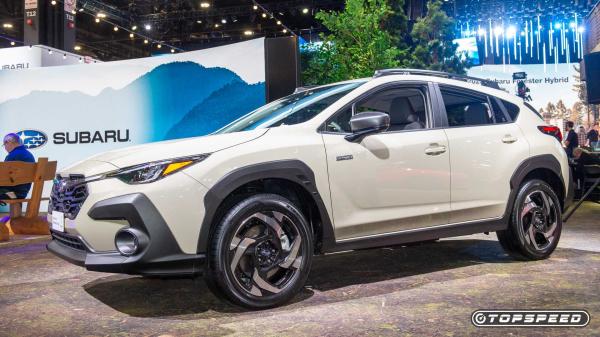
10 Reasons Why The 2026 Subaru Crosstrek Is Worth The Wait
Subaru’s new compact crossover hybrid is an exciting and versatile proposition
Subaru’s Rally Heritage Makes This Moment Particularly Pointed

Subaru’s performance reputation was built on driver involvement. The Impreza WRX and STI weren’t fast because they overwhelmed the driver—they were fast because they rewarded a skilled one. The symmetrical AWD system, the boxer engine’s low center of gravity, the manual gearbox: every element of the performance package was designed to communicate with the person behind the wheel. Colin McRae didn’t win rallies in a Subaru because the car did the work for him.
That heritage makes the Trailseeker’s record-setting status feel like a pivot point. Subaru is now building its quickest car around a powertrain philosophy that is, by design, less dependent on driver input. The car’s torque vectoring system—which distributes power between axles and individual wheels electronically—handles much of what a skilled driver once managed through feel and technique. That’s not a criticism of the technology. But it does raise a genuine question about what performance means when the car is increasingly doing the performing.
None of this makes the Trailseeker a bad car — early reviews suggest it’s a capable and practical EV. But Subaru’s fastest-ever title landing on an electric crossover, in the same week that automotive media is openly asking whether EVs have outpaced driver skill, is a coincidence worth sitting with. The performance ceiling keeps rising. The learning curve hasn’t kept up.
Sources: Yahoo Autos, AutoSpies

Related posts

Latest Post


No Comments