
Subaru Forester review 2026 | The Car Expert
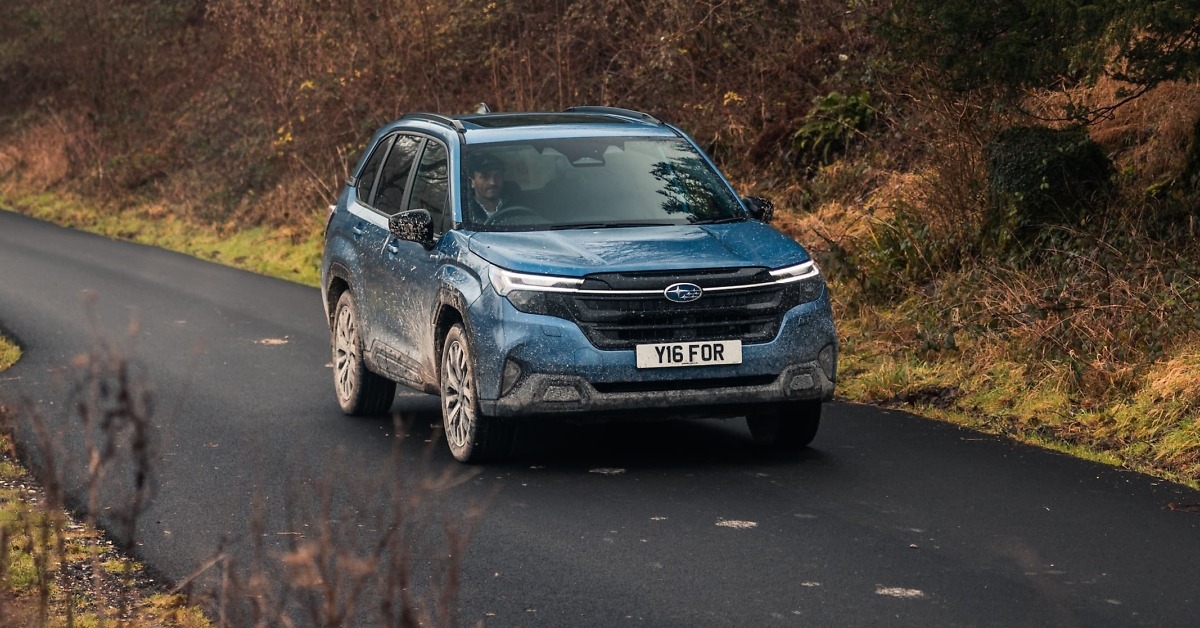
Make and model: Subaru Forester
Description: Medium-sized petrol mild-hybrid SUV
Price range: £39,995 to £44,100, plus optional extras
Summary: The Subaru Forester is a comfortable, spacious SUV with genuine off-road ability, but its dated technology, noisy automatic gearbox and high price let it down.

For a broader ownership picture, see our Subaru Forester Expert Rating.
Introduction
The Subaru Forester has been around for almost 30 years, and the latest sixth-generation version is now a fairly substantial family SUV. Like most Subarus, it’s aimed at buyers who want something a bit more hard-working than the usual collection of crossovers, with genuine all-wheel-drive capability rather than simply the appearance of a rugged off-roader.
It’s also a much better car than the smaller Subaru Crosstrek, which I drove immediately beforehand. That was apparent within about a minute of getting behind the wheel, and the impression held up over a week of driving.

The Forester feels more comfortable, more settled on the road and generally more pleasant to drive. The steering is better, the seats are good and there’s plenty of space for passengers. It also has the sort of rough-road ability that most family SUVs can only dream of.
Unfortunately, it shares several of the Crosstrek’s weaknesses. The petrol engine is still noisy and saddled with a dreadful continuously variable automatic gearbox, the dashboard technology looks years out of date and the hybrid system offers no genuine electric driving.
It’s a much more convincing Subaru, then, but whether it’s worth the money is another question.
Price and equipment
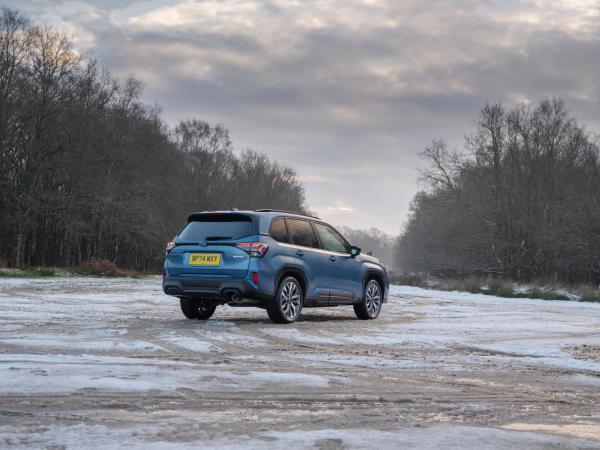
The Forester range starts at £40K for the Limited, rising to £41.5K for the Field and just over £44K for the range-topping Touring. All three use the same 2.0-litre petrol engine with mild hybrid assistance, continuously variable automatic transmission and permanent all-wheel drive. There’s no front-wheel-drive version or alternative engine to choose from.
Standard equipment levels are pretty generous. Even the entry-level Limited gets 18-inch alloy wheels, electrically adjustable and heated front seats, dual-zone climate control, a 12-inch touchscreen with wireless Apple CarPlay and Android Auto, wireless phone charging, a 360-degree parking camera and a comprehensive collection of driver assistance systems.
The Field adds more rugged-looking trim, water-repellent synthetic leather upholstery, a heated steering wheel and powered tailgate, while the Touring gets 19-inch wheels, a sunroof and a different interior finish.
Off-road equipment is also standard throughout the range. Subaru’s permanent all-wheel drive is accompanied by 22cm of ground clearance, selectable driving modes for difficult surfaces and hill descent control. The Forester can also tow a braked trailer weighing up to 1,870kg, which is a useful figure for anyone with a caravan or trailer.
That’s a respectable amount of equipment, and some of the Forester’s capabilities are difficult to match in a conventional family SUV.
But you’re still looking at £40K to £44K for a car with a relatively unsophisticated petrol engine and some very dated technology. There are plenty of alternatives at this price with better performance, considerably lower fuel consumption and much more modern interiors.
Inside the car
The Forester is a big, upright SUV, and that works very much in its favour once you’re inside. The high roof and large windows make the cabin feel particularly airy, while visibility is better than in most modern SUVs. You can see out of the sides and rear without feeling as though you’re peering through narrow letterboxes, and the relatively square body makes judging the car’s corners easier.
The seating position is another advantage. There’s plenty of ground clearance, but you don’t have to climb up into the Forester or drop down into the seat. You can simply step across, which makes getting in and out particularly easy.
The front seats are comfortable and supportive, while there’s plenty of room in the rear for passengers. Headroom is generous, and the large windows make the back seats feel less enclosed than in many rivals.
There is an irritation with the middle rear seat, however. The seat belt comes down from a mounting point in the roof, which is awkward to use, and the belt itself is rather narrow. Our son certainly wasn’t impressed with how uncomfortable it felt.
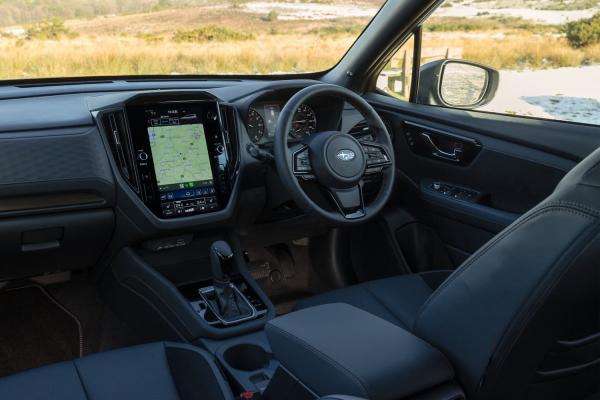
The dashboard is a curious mixture of materials and styles. There’s fake wood, various patterned plastic surfaces and large areas of hard black plastic. It all seems solidly assembled, but it doesn’t look or feel particularly sophisticated for a car costing more than £40K.
The instrument panel is similarly old-fashioned. Instead of a modern configurable digital display, you get two large analogue dials with a small information screen between them. I couldn’t find any way to customise that central display to show different information.
Then there’s the enormous-looking touchscreen. Subaru quotes a size of just under 12 inches, but the useful display area feels considerably smaller. The portrait screen has a thick black surround, with its upper section permanently devoted to information about acceleration, fuel consumption and the car’s roll angle. None of that is particularly useful during normal driving.
The bottom section is given over to climate controls, leaving a relatively modest area in the middle for Apple CarPlay, Android Auto and other functions. The resolution and graphics also look years behind newer systems.
Some of the controls are irritating, too. The temperature adjustment buttons sit either side of the screen, but you still need to look at the display to see what temperature you’re selecting. Automatic brake hold is another function that’s more awkward to use than it needs to be, while the driver assistance settings are poorly arranged. There are at least shortcuts for turning off the lane-keeping and forward collision warning systems, which saves digging through several menus.
And one feature deserves particular praise: a proper physical volume knob. It’s immediately to the driver’s side of the screen, exactly where you’d want it, and much better than fiddling with touchscreen controls.
Elsewhere, the large conventional automatic gear selector looks old-fashioned, but it’s easy to use. When you’re manoeuvring in a tight car park and want reverse, you can simply grab the lever without thinking about whether you need to twist a dial or push a button or pull on a column stalk. Simple but effective.
The wireless phone charger is less successful, however. It’s essentially a flat, hard plastic pad with very little to hold your phone in place, so the phone simply slides around as you drive. I ended up just plugging it in so it would actually charge.
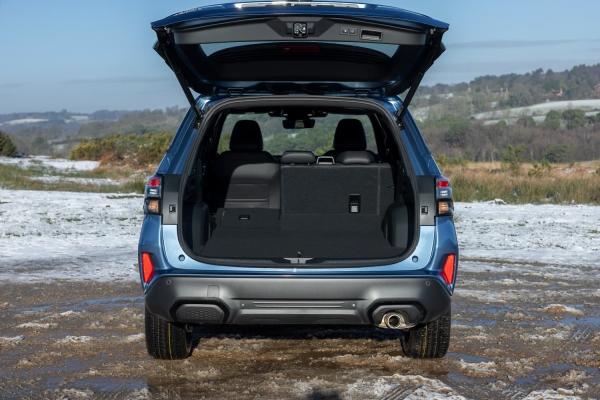
Boot space is decent rather than outstanding. At 508 litres, it’s wide enough for plenty of luggage, although it’s not particularly deep. There are useful hooks for securing smaller items, plus handy switches in the boot to release the rear seatbacks without having to reach through the rear doors.
On the road
The Subaru Forester is a significantly nicer car to drive than the smaller Crosstrek, despite sharing much of the same underlying mechanical bits and pieces.
The 2.0-litre petrol engine is paired with Subaru’s continuously variable automatic transmission (CVT), and the gearbox remains one of the car’s biggest weaknesses. Accelerate with any enthusiasm and the engine revs rise sharply, making plenty of noise as the gearbox works out how best to deliver the power.
It’s an unpleasant characteristic of this type of transmission, particularly when compared with the smooth conventional automatics or electric powertrains found in many rivals. But the Forester feels more willing than the Crosstrek. When you press the accelerator, there’s at least a more convincing sensation of making progress rather than simply generating a lot of noise.
It’s still not fast, though. Officially, the Forester takes more than 12 seconds to reach 62mph, and there’s nothing dynamic about the way it delivers its power.
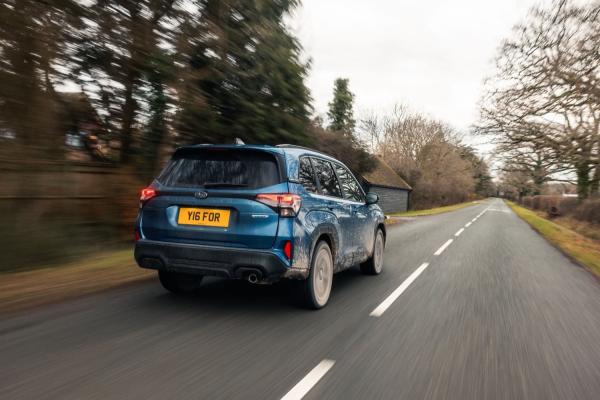
The ride quality is a much bigger improvement. Where the Crosstrek bounced around on uneven roads, the Forester feels better supported and more settled. It absorbs most bumps reasonably well without leaving the body moving up and down long afterwards.
That doesn’t mean the suspension is perfect. A bump or uneven surface midway through a faster corner can still unsettle the car more than it should, but at normal speeds it feels considerably more comfortable and controlled than its smaller sibling.
The steering is also better. It doesn’t offer much genuine feedback, but it’s reasonably well weighted and predictable, making the Forester easier to place on the road. It certainly doesn’t suffer from the same vague feeling that made the Crosstrek so uninspiring.
Road and tyre noise are relatively well controlled, even on the Touring’s 19-inch wheels and Bridgestone tyres. The problem is that whenever the engine is working hard, its noise tends to overwhelm everything else.
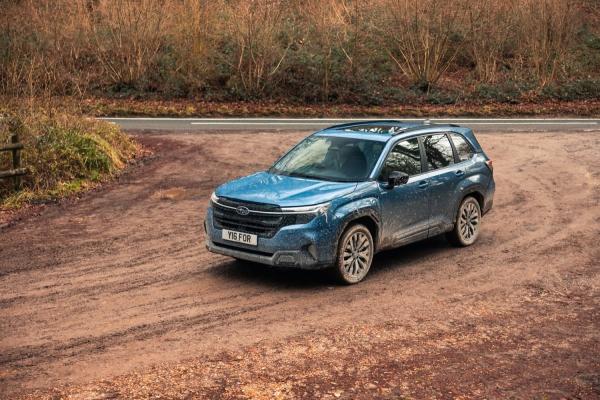
Where the Forester really earns its keep, however, is away from smooth tarmac. I took it along a heavily rutted gravel track, and it coped without the slightest fuss. The ground clearance, suspension travel and permanent all-wheel drive make the sort of rough surfaces that would worry many conventional SUVs feel entirely straightforward.
That’s a genuine advantage, rather than a marketing claim. You don’t have to be a committed off-road enthusiast to appreciate a car that can comfortably handle rough tracks, muddy country lanes and difficult winter conditions.
Hybrid system and fuel economy
Subaru markets the Forester as a self-charging hybrid, although its electrical system offers far less assistance than buyers might expect from that description.
Like the Crosstrek, the Forester can switch off its petrol engine while coasting, displaying an EV mode indication on the dashboard. But this generally happens when you’re not asking the car to do any work, and the engine restarts as soon as you need more power.
The process is smooth enough, but it doesn’t provide the extended electric driving capability that buyers might associate with a regular hybrid from Toyota or other manufacturers.
The official fuel economy figure is just under 35mpg, which isn’t particularly impressive for a modern family SUV, especially one carrying a hybrid badge.
Admittedly, the Forester’s permanent all-wheel drive, substantial ground clearance and relatively large body all come with efficiency penalties. Those are worthwhile compromises if you regularly make use of its capabilities, but harder to justify if most of your driving is around town or along the motorway.
Ownership
The Subaru Forester currently holds a C-grade New Car Expert Rating in our unique Expert Rating Index, with a score of 61%. Its Used Car Expert Rating is also a C-grade, at 64%.
Safety is the Forester’s strongest area, earning an A-grade rating of 85%. The latest model has a five-star Euro NCAP safety rating, while Subaru fits an extensive range of driver assistance systems as standard, including automatic emergency braking, adaptive cruise control, blind-spot monitoring and a 360-degree camera.
Elsewhere, the picture is less impressive. Media reviews average just 54%, earning a D-grade, while environmental performance and running costs are also rated D. With official fuel economy below 35mpg and CO2 emissions of 183g/km, the Forester is relatively thirsty for a modern family SUV, particularly one marketed as a hybrid.
Subaru’s three-year/60,000-mile new car warranty also earns a D-grade in our Expert Rating Index, falling well short of the five-, seven- and eight-year cover now offered by several mainstream rivals.
The Forester’s safety credentials are reassuring, but its relatively high running costs and short warranty make it a less convincing long-term ownership proposition than many similarly priced alternatives.
Verdict
The Subaru Forester is a much better car than the Crosstrek, and I’m glad I drove the two of them back-to-back. It feels more comfortable, more spacious and better sorted on the road, while the high seating position, large windows and excellent visibility make it particularly pleasant to use. It’s also genuinely capable on rough tracks, rather than simply looking the part.
Those are all worthwhile qualities, and for buyers who live in rural areas or regularly drive on poor surfaces, the Forester has a clear purpose.
Unfortunately, there are still too many shortcomings. The CVT gearbox is noisy and frustrating, the hybrid system doesn’t offer much meaningful benefit, and the dashboard technology looks badly dated. There are several irritating control arrangements, too, although Subaru deserves credit for retaining useful features like the physical volume knob and conventional gear selector.
More importantly, the Forester is expensive for what you get. At £40K to £44K, it faces plenty of newer, more efficient and more sophisticated competition. It’s a perfectly decent SUV in several respects, and substantially better than the smaller Crosstrek, but that doesn’t automatically make it a particularly good car.
If you genuinely need its rough-road ability and appreciate Subaru’s rather traditional approach to car design, the Forester is worth considering. If you don’t, it’s difficult to justify the price.
We like:
- Genuine off-road and rough-road ability
- Comfortable seats and easy access
- Large windows and excellent visibility
- Good passenger space
- Better ride and steering than the Crosstrek
We don’t like:
- Noisy CVT automatic gearbox
- Dated dashboard and touchscreen graphics
- Poor fuel economy
- Awkward touchscreen controls
- Expensive compared with rivals
Similar cars
BYD Seal U | Chery Tiggo 8 | Citroën C5 Aircross | Ford Kuga | Honda CR-V | Hyundai Tucson | Jeep Compass | KGM Korando | Kia Sportage | Mazda CX-5 | MG HS | Mini Countryman | Nissan Qashqai | Peugeot 3008 | Renault Austral | SEAT Ateca | Skoda Karoq | Suzuki S-Cross | Toyota C-HR | Vauxhall Grandland | Volkswagen Tiguan
Key specifications
Model tested: Subaru Forester Touring
Price as tested: £44,100, plus optional extras
Powertrain: 2.0-litre petrol engine (mild hybrid), all-wheel drive
Gearbox: Continuously variable automatic
Power: 136 hp
Torque: 182 Nm
Top speed: 116 mph
0-62 mph: 12.2 seconds
Fuel economy: 34.9mpg
CO2 emissions: 183g/km
Euro NCAP safety rating: Five stars (December 2024)
TCE Expert Rating: C (61%), as of October 2026

Related posts


Latest Post



No Comments