
Ram Is Bringing Back The Ramcharger And An SRT Variant Is Already Confirmed
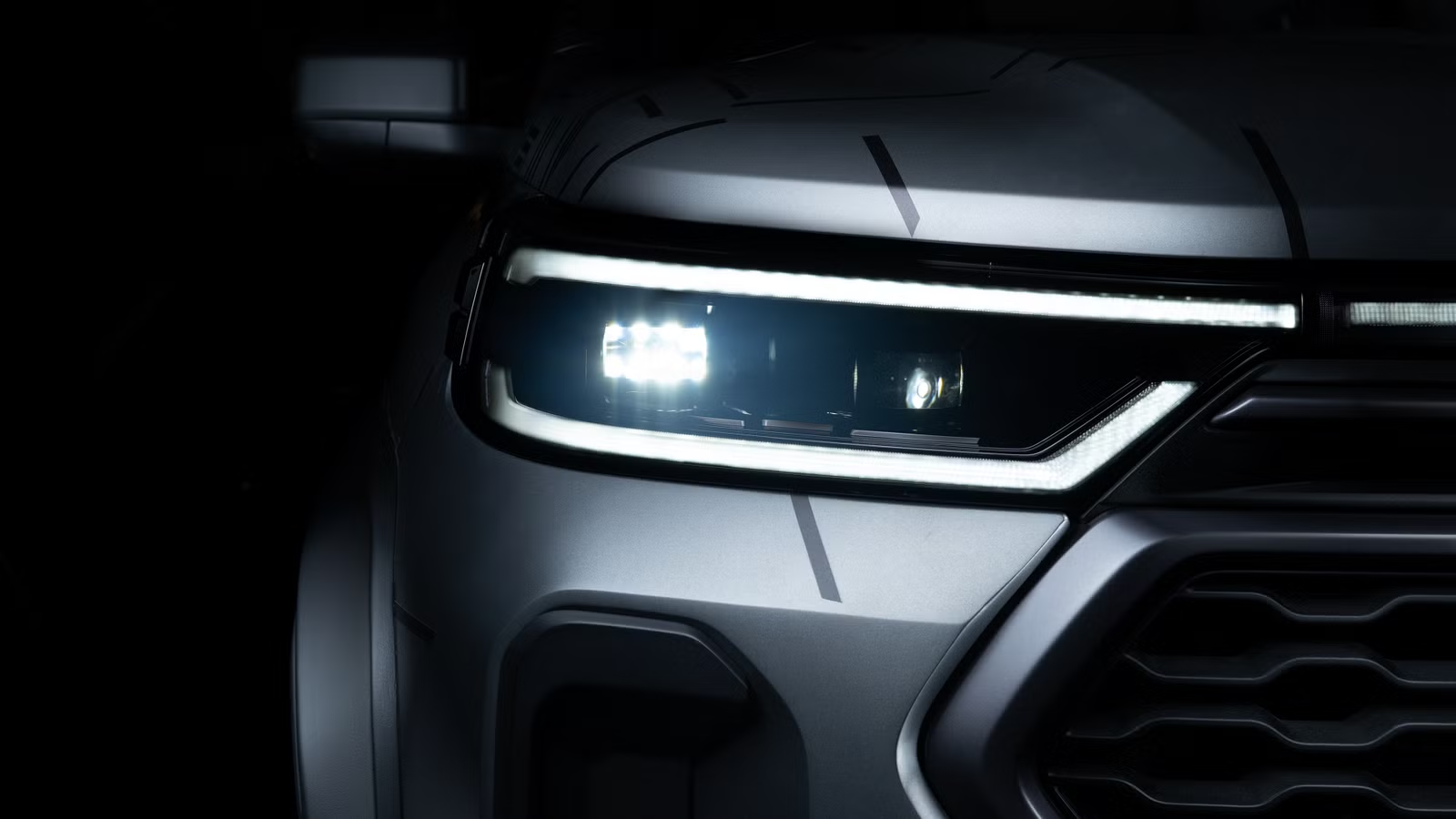
Ram is reviving one of the most storied nameplates in American truck history. The Ramcharger — a body-on-frame SUV that ruled the ’70s and ’80s before fading away — is coming back for 2028 as a full-size, three-row family hauler built on the Ram 1500 platform. And it’s not arriving quietly: Stellantis has already confirmed an SRT performance variant is part of the plan, with the supercharged 6.2-liter V8 from the Ram 1500 SRT TRX locked in to deliver 777 horsepower.

Tim Kuniskis, who heads Stellantis’ American brands, confirmed in a recent interview that V8 power is the Ramcharger’s defining characteristic — not the turbocharged inline-six that motivates its platform-mate, the Jeep Grand Wagoneer. Ram is positioning the Ramcharger as the more aggressive, performance-first alternative in the full-size SUV space, giving truck loyalists a three-row option that doesn’t ask them to trade away displacement or towing muscle.
V8s Across The Board, With An SRT At The Top
The Ramcharger‘s engine lineup is shaping up as a proper V8 progression. The base powertrain is expected to be the 395-horsepower 5.7-liter Hemi, with the 470-horsepower 6.4-liter Hemi available as a step-up option. Both are proven truck engines with the torque curves full-size SUV buyers actually need for towing — the kind of numbers that make a Tahoe’s 420-horsepower turbocharged six look like a compromise.

At the top sits the confirmed SRT variant, which is expected to carry the same supercharged 6.2-liter Hellcat Hemi that powers the Ram 1500 SRT TRX — 777 horsepower and 680 lb-ft of torque. No full-size SUV in the segment comes close to those figures. The Cadillac Escalade-V makes 682 horsepower from its supercharged 6.2-liter, and that’s currently the benchmark. The Ramcharger SRT would clear it by nearly 100 horsepower, making it the most powerful production full-size SUV on the market by a significant margin from day one.
Built On The 1500 Platform, But Not A Grand Wagoneer Clone

The Ramcharger shares its body-on-frame architecture with the Ram 1500 and the Jeep Grand Wagoneer, but the similarities with the Jeep stop at the frame rails. Where the Grand Wagoneer leans into chrome trim and luxury positioning — currently starting near $68,000 — the Ramcharger is being built around a more aggressive character, with V8 power as the centerpiece rather than an afterthought.
Expect independent rear suspension borrowed from the Grand Wagoneer rather than the Ram truck’s solid rear axle, with coil springs at entry level and optional air suspension on higher trims. An off-road-focused Rebel variant is also likely, potentially with a low-range transfer case and more aggressive suspension tuning — a direct answer to the Chevy Tahoe Z71 and Ford Expedition Tremor. Production will take place at Warren Truck Assembly in Michigan, the same plant that builds the Grand Wagoneer.
A PHEV powertrain may eventually join the lineup — when the Ramcharger name was first announced in late 2025, a range-extender setup was part of the conversation. For now, though, Ram’s focus is squarely on the V8s.
What This Means For The Full-Size SUV Segment

The Ramcharger enters a segment that hasn’t seen a serious performance challenger since the Escalade-V arrived. The Tahoe and Expedition dominate on volume, but neither offers anything close to 700-plus horsepower from the factory. Ram is betting that the same customers who stretched into a TRX or a Ram 1500 SRT want a three-row option that doesn’t require them to cross-shop a luxury brand.
Pricing is expected to start somewhere around $60,000 for the base Ramcharger — below the Grand Wagoneer’s entry point, which matters if Ram wants to pull buyers away from the Tahoe and Expedition rather than just trading Wagoneer intenders. The SRT will command a premium well above that, though exact figures haven’t been confirmed. With the Ramcharger arriving in 2028, gearheads have a couple of years to wait — but the fact that Stellantis committed to the SRT variant this early suggests Ram is serious about making the performance case from launch, not treating it as a future option.
The original Ramcharger bowed out after 1993. If Ram delivers on what’s been confirmed, the nameplate’s return will be anything but a nostalgia play — 777 horsepower has a way of making a statement on its own.
Sources: Car and Driver, CarBuzz, Backfire News

Related posts






Latest Post


No Comments