
Purists Hated The Cayenne In 2002, This 1980s Concept Would Have Broken Them In 1985
When Porsche revealed the Cayenne at the 2002 Paris Motor Show, many loyal fans saw it as a betrayal of everything the brand stood for. A heavy, five-seat SUV from the company behind the 911 felt wrong to people who had only ever known low, two-door sports cars.

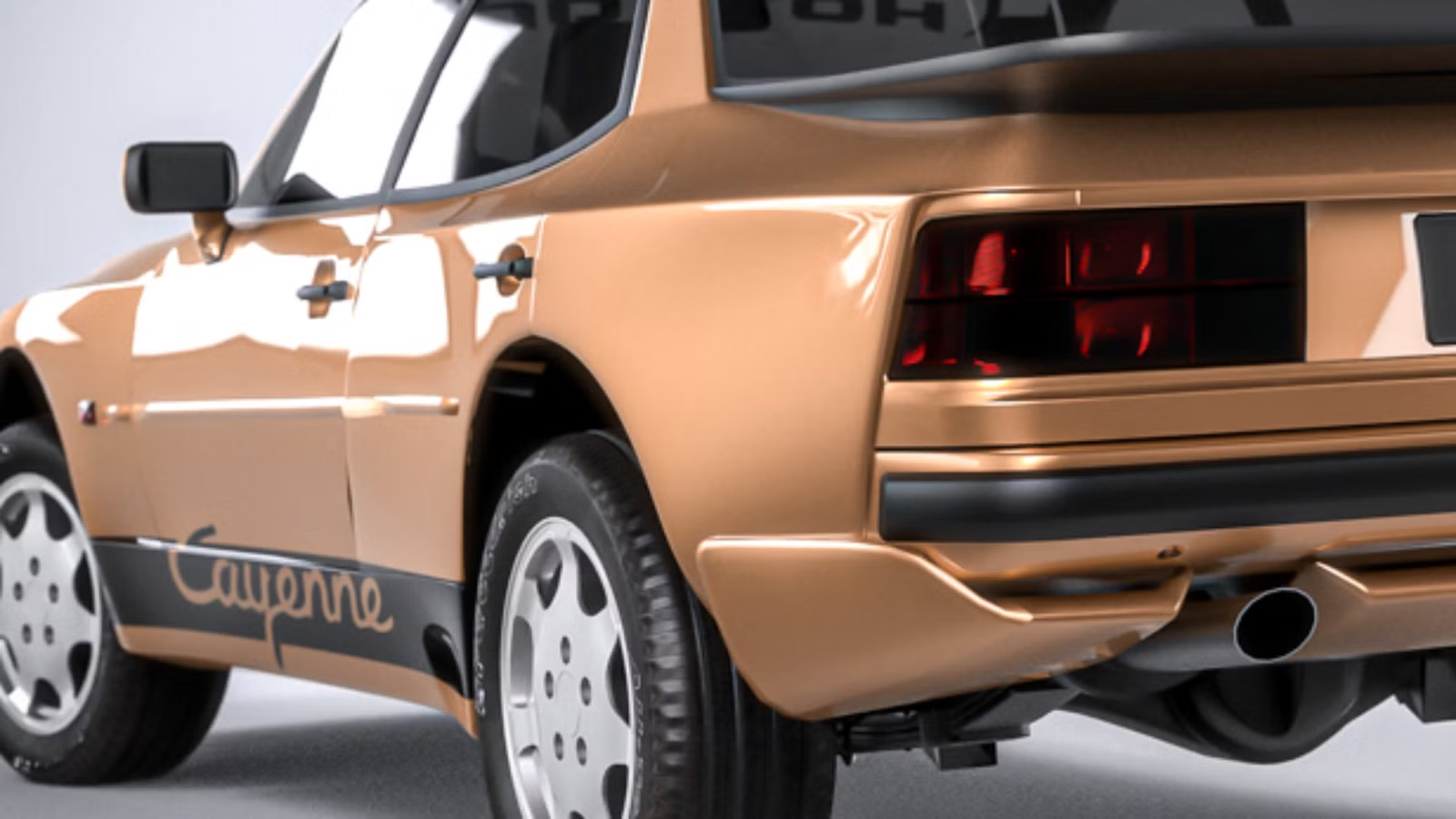
But what if Porsche had gone down that road almost two decades earlier, right in the middle of the pop-up headlight era? This HotCars-exclusive digital concept imagines exactly that, with a 944 nose, roof rails, and mud-ready tires.
Porsche Fans Hated The Cayenne, Then It Saved The Company
Production of the Cayenne began in Leipzig, Germany, on August 21, 2002, and many saw the move as a betrayal of Porsche’s identity. Until then, everything the company had built in its 54-year history had been low-slung with two doors. A tall SUV wearing the Porsche crest felt like a step away from the sports car DNA that made the brand famous.

Porsche says the Cayenne was quickly accepted inside the company, but Porsche club members were far less enthusiastic. Buyers felt differently. Porsche originally planned to sell 25,000 Cayennes a year, but the first generation alone found 276,652 buyers, and total sales passed one million by December 2020, thus saving the company from collapse.
Now imagine that same idea arriving in 1985. Purists were still getting used to Porsche’s front-engine cars, and the 944’s predecessor, the 924, had been criticized for its Audi-sourced engine and Volkswagen origins. A 944-based family hauler would have pushed that discomfort a lot further.
This Concept Turns The Porsche 944 Into A 1980s Cayenne

This concept, created exclusively for HotCars, is a digital design study and not a real prototype. It reimagines the Cayenne in Porsche’s 1980s design language, long before the real SUV took shape. The 944 makes a fitting base, since it debuted in autumn 1981 and quickly became the best-selling Porsche model of its time.
Up front, the concept keeps the 944’s familiar face, including pop-up headlights that flip up just like the original’s. The bumper has the same fog lamps and horizontal slats, while a deep black lower lip adds a sportier touch. It looks like a 944 that someone lifted for weekend camping trips instead of track days.
From the side, the coupe becomes a five-door wagon with a raised ride height and roof rails for extra gear. A black lower stripe runs along the doors with a period-style “Cayenne” script that looks straight out of a 1980s dealership brochure. The phone-dial-style wheels wrapped in chunky all-terrain tires show its ’80s-meets-overland personality most clearly.

The rear has a 944-inspired spoiler on top of the hatch, along with smoked full-width taillights. A black bumper and a single exhaust tip finish the look without overdoing it. The copper-bronze paint ties everything together and suits the era perfectly, giving the whole package a yuppie-overlander charm.
Porsche Was Winning In The Desert Long Before The Cayenne

An off-road Porsche in the 1980s isn’t as wild as it sounds. In 1984, Porsche entered three heavily modified 911s, known internally as the 953, in the Paris-Dakar Rally, and one of them took overall first place. Porsche repeated the feat in 1986 with the 959, which used the 953’s all-wheel drive system.
The SUV market was also starting to form at this time. Jeep marketed the 1984 XJ Cherokee as a Sportwagon, a precursor to the modern SUV before that term was used, and the first US-spec Range Rover arrived in March 1987, already marketed as a luxury model. Wealthy buyers were warming to tall, four-wheel-drive wagons, and Porsche already had the drivetrain know-how to join them.

A Porsche SUV might also have arrived at just the right moment. The company posted a loss of 240 million Deutschmarks in 1992 (roughly $154 million), and it needed drastic changes to recover. Purists would have hated this concept, but it might have spared Porsche its darkest decade.

Related posts



Latest Post


No Comments