
Porsche Taycan Scuff Results in $37,890 Repair Bill
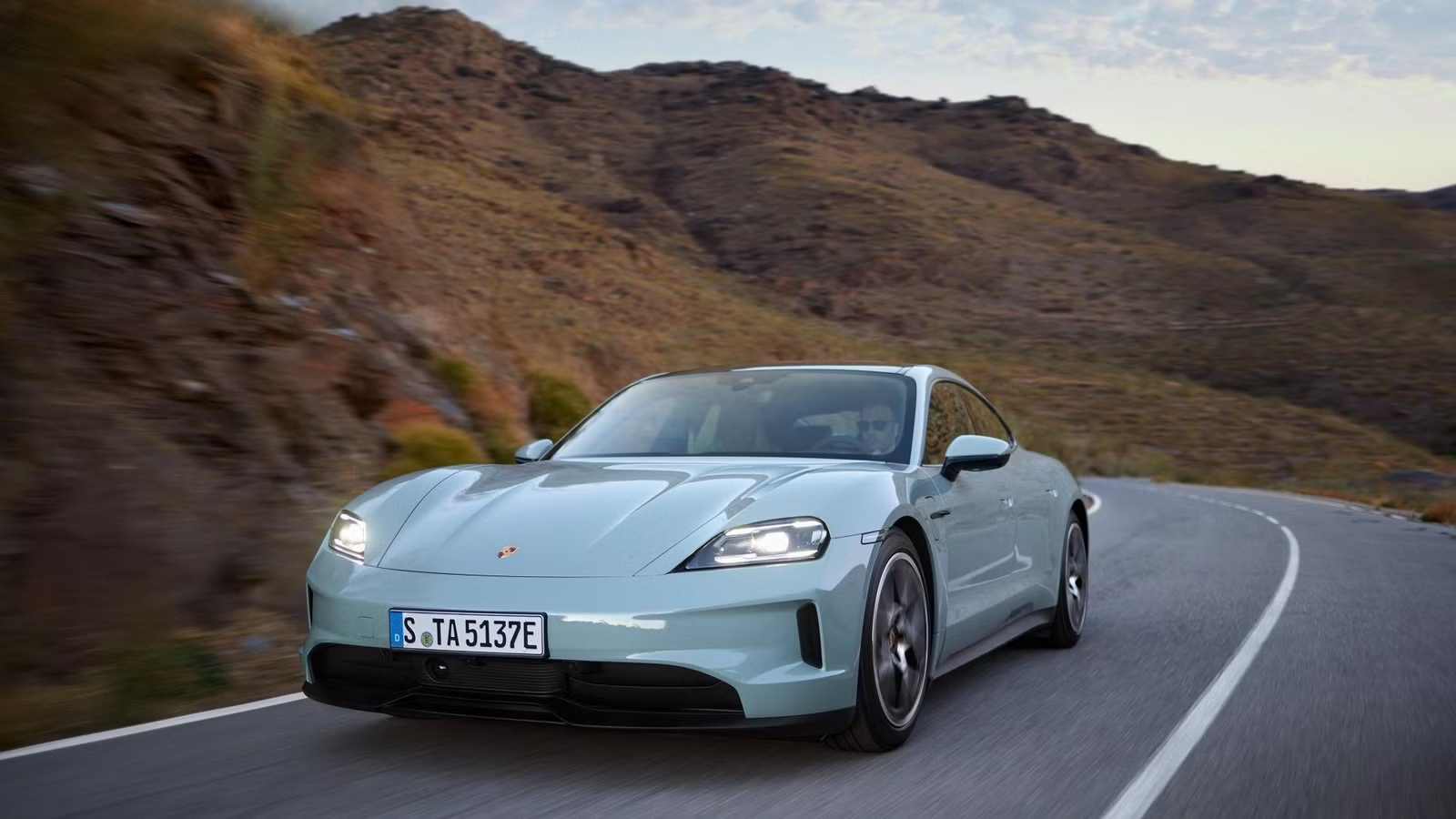
A light scrape on a bumper used to mean a quick trip to the body shop and a bill in the low thousands. The Porsche Taycan pictured here picked up that kind of mark and still could not be driven away. CCC Intelligent Solutions reports the average repair cost climbed to $4,818 in 2025, while a record 23.1% of claims ended in a total loss.

Modern cars pack expensive hardware right behind the paint, so a scuff you could cover with two drink coasters hides far more than it shows. What the shop found once the Porsche came apart is a lesson for anyone driving something newer than a decade old.
Why A Modern Fender Bender Is Never Just A Fender Bender
Bumpers, fenders, and mirrors now house the radar units, cameras, and parking sensors that feed a car’s driver-assistance systems. Even a gentle hit can knock one of those sensors out of alignment, and it has to be recalibrated before the car is safe to hand back. CCC found calibrations on 28.3% of repairable estimates in 2025, up from 21.8% a year earlier and fewer than 1% in 2017.

CCC’s average calibration fee has climbed from around $188 in 2017 to $485.56, so every affected sensor escalates the bill. In AAA’s study of minor rear-end repairs, the driver-assistance components alone made up 40.9% of the average estimate.
Shops can only price what they can see, which is why the first estimate is rarely the final one. Once the bumper cover comes off, technicians often find crushed energy absorbers, bent brackets, and damaged sensor mounts, and somewhere between 60% and 75% of collision jobs estimated above $2,000 end up needing at least one supplement. That teardown is usually where a cheap-looking scrape turns into a much bigger repair.
The Scuff That Left A Porsche Taycan Undrivable

Matt Farah, host of The Smoking Tire podcast, walked through one of these bills on a recent episode after lending his Porsche Taycan to a friend for the weekend. According to Farah, another driver rear-ended and sideswiped the car in the middle of the day, and his insurer later found his friend was not at fault.
The photo Farah shared barely looks like a body shop job. The visible damage on the driver’s side rear three-quarter covers an area about the size of two drink coasters, the bumper is only lightly pushed in, and the marks on the HRE wheel look like a bad run-in with a curb. Farah admitted that when he first saw it, he figured he would get out of it for around $5,000.

The one giveaway is the ride height, since the air suspension sits at its maximum setting when it shouldn’t be. Farah said the car couldn’t be driven after the crash, which is hard to believe from the picture alone.
Once the shop took the car apart, it found damage well beyond the bumper, fender, parking sensor, and wheel. Farah read out line items for an air compressor for the suspension, a rear air suspension control module, a front strut assembly, control arms, a rear shock, a knuckle, and an air spring, with the air spring alone listed at around $3,000.
All in, Farah said the repairs came to $37,890, and his insurance payout reached $39,390.37 after his $1,500 deductible was refunded. Those suspension figures aren’t out of line for an air-sprung Porsche, as RepairPal puts an air spring replacement on a 2024 Cayenne at $4,293 to $4,476 and an air compressor job at roughly $2,500.
It’s The Labor That Breaks The Bank, Not The Parts

Farah read the labor figure off the estimate at roughly $29,000, pausing to work out how the shop had grouped the line items, and even his lower reading leaves parts as the smaller share. That split isn’t unusual, as Otto’s analysis of 162 Southern California repair estimates found more than half of every repair dollar goes to labor.
Most of this job was mechanical suspension work rather than bodywork, and that’s where shop rates are rising fastest. National Autobody Research data shows the average posted mechanical labor rate at U.S. collision shops hit $163 an hour in June 2026, up 11.6% from a year earlier and climbing nearly twice as fast as body and paint rates.
Where the car gets fixed matters just as much, since Otto found labor rates in Southern California ranging from $56 an hour in Van Nuys to $98 an hour in West Hollywood for the same type of work. A gap that size adds up quickly on a job Farah said ran to more than 50 hours.
Electric cars push costs up further because so much of the work means fitting new factory parts. Mitchell’s data shows 85% of the parts dollars on EV repair estimates go to OEM components, against 61% for gas cars, and each replacement adds time for removal, fitting, and testing. Shops equipped for EV work also spend heavily on lifts, battery-handling gear, training, and fire safety, and that overhead lands in their rates.
Why This Car Was Repaired And Yours Might Not Be

Insurers usually total a car once repairs pass roughly 70% to 80% of its actual cash value, though the exact line varies by state and insurer. Farah paid $64,800 for his Taycan, around $72,000 once taxes were in, so this repair came to more than half of what he spent. He said he believes the car would likely have been totaled without his particular insurance coverage.
Falling values make that line easier to cross. iSeeCars data has the Taycan shedding about 55% of its value over five years against 41.5% across all vehicles, while Mitchell found the values used to settle EV total losses in the U.S. fell 6% in 2025.
An agreed-value coverage plan locks in the car’s worth when the policy is written, while a standard policy pays out the depreciated value on the day of the crash. On a car shedding value this quickly, that gap can decide whether it gets fixed or written off. A scrape looks much the way it did 20 years ago, but almost everything underneath has changed, and so has the price of fixing it.
Sources: The Smoking Tire Podcast, Mitchell, RepairPal

Related posts




Latest Post


No Comments