
Opinion: BMW Might Need An X9 Bigger Than the X7
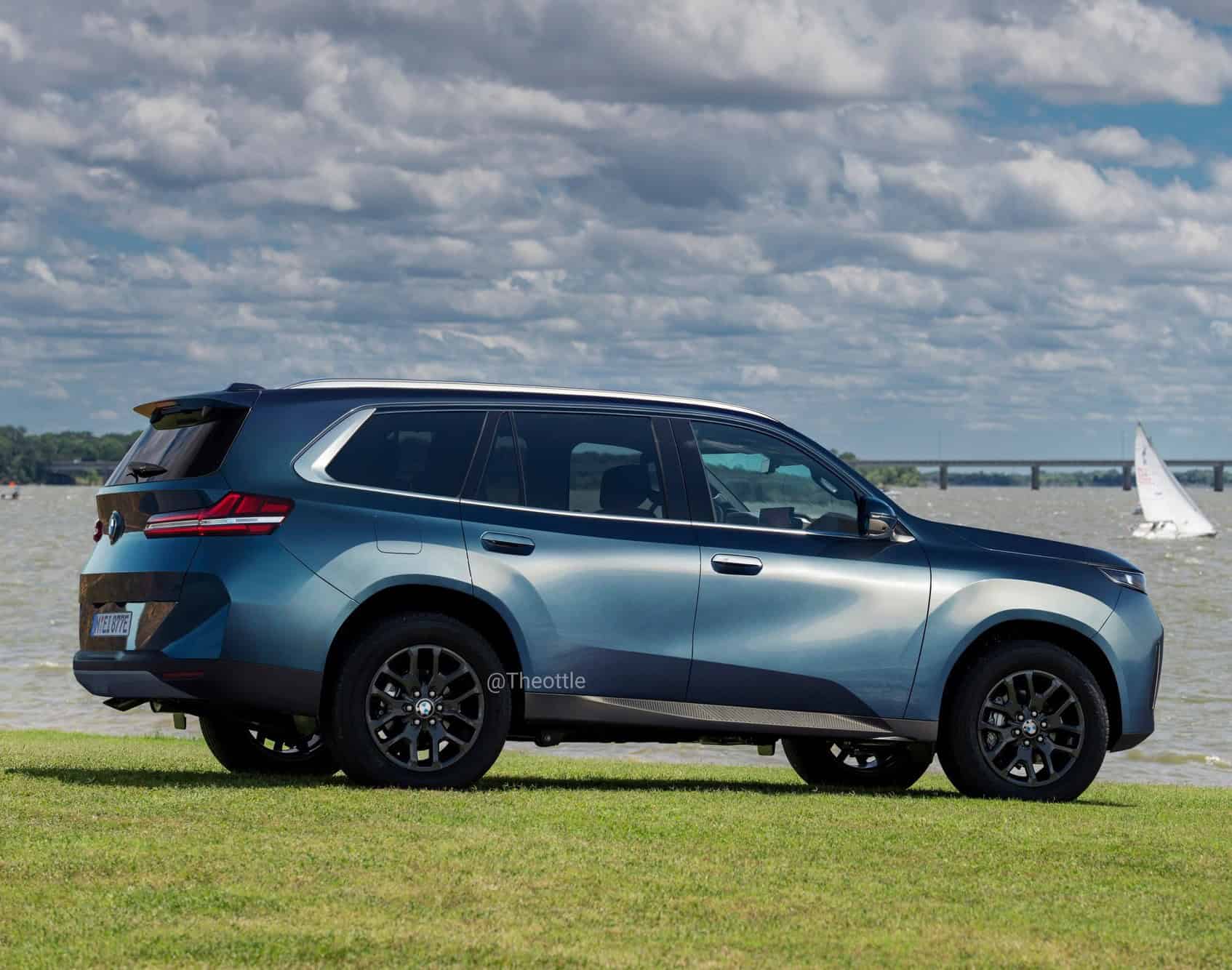
Article Summary
- The new BMW X5 is approaching the outgoing X7 in size, creating room for a larger flagship SUV.
- Demand in the United States, Middle East, and China could make an X9 more viable than the reportedly stalled Rugged project.
- A simple X9 50 and X9 M60 lineup could pair mild-hybrid S58 and V8 engines with greater space and luxury.
For years, the BMW X7 has seemed almost comically large by European standards. In other markets, though, it’s just another three-row luxury SUV. And on the global stage, the X7 is hardly a whale. American buyers can choose substantially larger alternatives from Cadillac and Lincoln, while the long-wheelbase Range Rover offers more passenger space and a considerably grander rear-seat experience. Cadillac sold 57,000 Escalades last year; meanwhile, 114,000 Chevy Tahoes and nearly 25,000 Lincoln Navigators found new homes.
BMW likely wants a piece of that pricy pie. But customer expectations continue to grow along with the vehicles themselves. Which leads us to the topic for today. If the brand wants to compete, it’ll need something above the BMW X7: a theoretical BMW X9. As the name suggests, it would be bigger, more luxurious, and more expensive than any other BMW SUV.
BMW SUVs Keep Getting Bigger

Size matters, and BMW continues to grow its lineup with every generation. The original E53 BMW X5 measured 4,667 millimeters, (183.7 inches) long. Today’s X3 stretches to 4,755 mm (187.2 inches); BMW’s current compact luxury SUV is nearly four inches longer than the vehicle that established the brand’s SUV lineup. The same gradual expansion is now affecting the upper end of the range. The new G65 X5 measures 4,994 mm (196.6 inches) long. That brings it surprisingly close to the outgoing X7, which measures 203.6 inches (5,181 mm). The two are also the same 78.7 inches (2,000 mm) wide, and vehicle height runs close, too: 1,751 mm (69 inches) for the X5 and 1,835 mm (72 inches) for the X7.
Now, seven inches of additional length is still segment-defining. There’s no danger of the X5 taking the X7’s place, or vice versa. A hypothetical X9 would exist above the X7, not replace it. There’s room above the X7, and some competitors already occupy that space. The standard Cadillac Escalade measures 211.9 inches long, while the Escalade ESV stretches to an enormous 226.9 inches. A long-wheelbase Range Rover is approximately 207 inches long. BMW doesn’t necessarily need to chase the ESV’s school-bus proportions, but an X9 measuring somewhere around 210 to 215 inches safely sits above the X7.
An X9 Would Need More Than Additional Sheet Metal

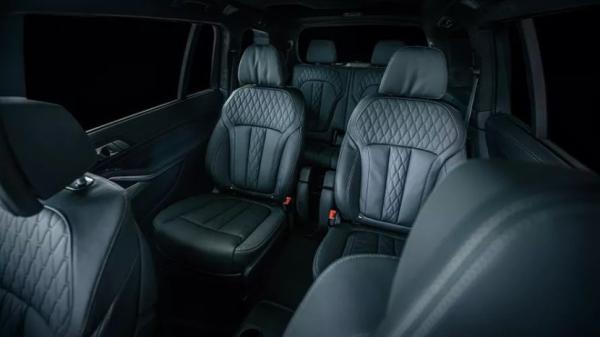
Bigger isn’t enough to be better. The extra length needs to offer real advantages and luxuries above that of the existing BMW X7. For one, it should deliver a usable third row without sacrificing the luggage compartment. That remains one of the defining advantages of traditional full-size SUVs: passengers can use all three rows while still carrying more than a few small bags each. Furthermore, the X9 should borrow liberally from the 7 Series. Deeply reclining Executive Lounge-style second-row seats, extensive massage functions, powered leg rests, and a version of BMW’s 31.3-inch Theatre Screen would immediately separate it from the X7. Automatic doors, electrically deployable running boards, a refrigerated center console, and significantly more individual control over climate, lighting, and entertainment would further reinforce the flagship positioning.
BMW’s competitors already set the pace. The Cadillac Escalade offers power-opening and closing doors, dual 12.6-inch rear entertainment screens, Night Vision, and a refrigerator with freezer mode. Its available Executive Second Row package can even be paired with a 42-speaker AKG audio system. The Lincoln Navigator counters with a 48-inch panoramic display, available massaging second-row seats, and a separate touchscreen allowing rear passengers to manage their own comfort settings. Range Rover offers 24-way adjustable seats, a passenger foot massage feature, and cooled rear seats. The current X7 is luxurious, but it doesn’t offer quite the same level of excess. An X9 could combine those convenience features and proportions with BMW’s superior body control, steering, and high-speed composure. Rear-wheel steering, active roll stabilization, and two-axle air suspension would be essential rather than optional luxuries.
The U. S. Carries the Business Case
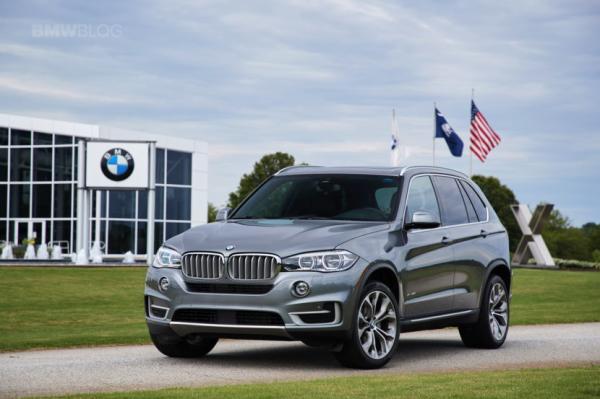
Europe arguably has little need for an X9. Its size would make it inconvenient in older cities, difficult to park, and expensive to tax and fuel. But BMW already builds the X5, X6, X7, and XM in Spartanburg, South Carolina. An X9 could be developed around the United States from the beginning, with the Middle East contributing another important share of demand. China also has an established appetite for long-wheelbase luxury vehicles, particularly those that prioritize rear-seat passengers.
BMW itself has acknowledged the opportunity. In March, BMW brand and product-management boss Bernd Körber said the company could build something for the segment, estimating that its demand is concentrated overwhelmingly in the United States and Middle East. The challenge, he suggested, would be making it sufficiently global. The case strengthens further when you remember that BMW dealers are asking for a bigger SUV. Few people are more in-tune with a hypothetical X9’s target market.
China is a tougher business case. But that market loves long wheelbase cars, and BMW still has measurable sales figures there, even as domestics encroach. An X9 would never become BMW’s highest-volume SUV overall, but it could be a relative volume model within the six-figure flagship segment. It would also likely have more mainstream appeal than the rumored Rugged project.
Moving On From Rugged SUV
BMW’s proposed G74 Rugged SUV was reportedly intended to compete with the Mercedes G-Class, Range Rover, and high-end adventure vehicles. However, rumors indicate that the project might not come to light after all. If that program is truly finished, BMW could direct the associated engineering bandwidth and product-development resources toward an X9. The Rugged was always going to be a niche product built around a specialized image. An X9 would still be expensive and relatively exclusive, but its appeal would be easier to understand. More room, more luxury, and more presence than the X7. It would also fit naturally into BMW’s existing lineup. Customers already understand that an X1 is smaller than an X3, an X5 is smaller than an X7, and higher numbers generally mean more space and money. “X9” would require almost no explanation. What’s a “Rugged,” anyway?
BMW X9 Engine Choices Are Obvious — Six and Eight Cylinders
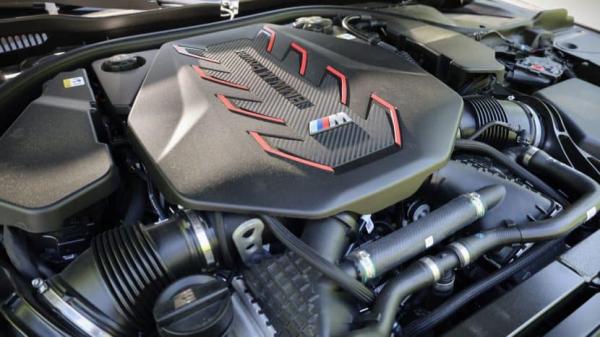
BMW wouldn’t need too many variants, either. Two models could cover the most important markets: an X9 50 and an X9 M60. The X9 50 could use the updated, hybrid S58 inline-six BMW M is potentially developing with 48-volt mild-hybrid assistance. The S58 offers considerably more potential than the B58, while electrification could improve throttle response, efficiency, and low-speed performance. Output beyond 550 horsepower would be realistic and more than sufficient for markets where a V8 is difficult to justify. The X9 M60, however, would be the model the vehicle truly needs. A mild-hybrid twin-turbocharged V8 should produce at least 650 horsepower. A flagship BMW SUV of this size and price deserves the effortless torque, sound, and sense of occasion that only eight cylinders can provide. Relying on M power plants also helps the X9 directly compete with high-powered Range Rover SV models, which ironically already depend on an M-sourced V8s for power.
Forget the plug-in hybrid. Adding a large traction battery and electric motor would increase weight and complexity without fundamentally improving the X9’s appeal. A fully electric version would be even harder to justify. An electric-only X9 could also alienate an important portion of the American market BMW would need to make the vehicle viable. Buyers spending well into six figures on an enormous luxury SUV continue to demonstrate an appetite for V8 power. BMW should meet that demand directly. That said: we’ll need to revisit the EV possibility after watching how Cadillac’s Escalade iQ sells. The brand only moved about 2,000 examples in Q1, down 26.8% from last year. But there’s still time for the math to pencil out there, considering they sell for around $150,000 a pop.
The next-generation BMW X7 is already on its way. The G67 arrives in 2027 with new technology, familiar six- and eight-cylinder engines, and an electric iX7 derivative. Whether it will eventually have a bigger brother remains unseen. But, as it turns out, there just might be room in the family.

Related posts

Latest Post


No Comments