
Oldsmobile Vista Cruiser: The Muscle-Era Wagon That Became a Legend
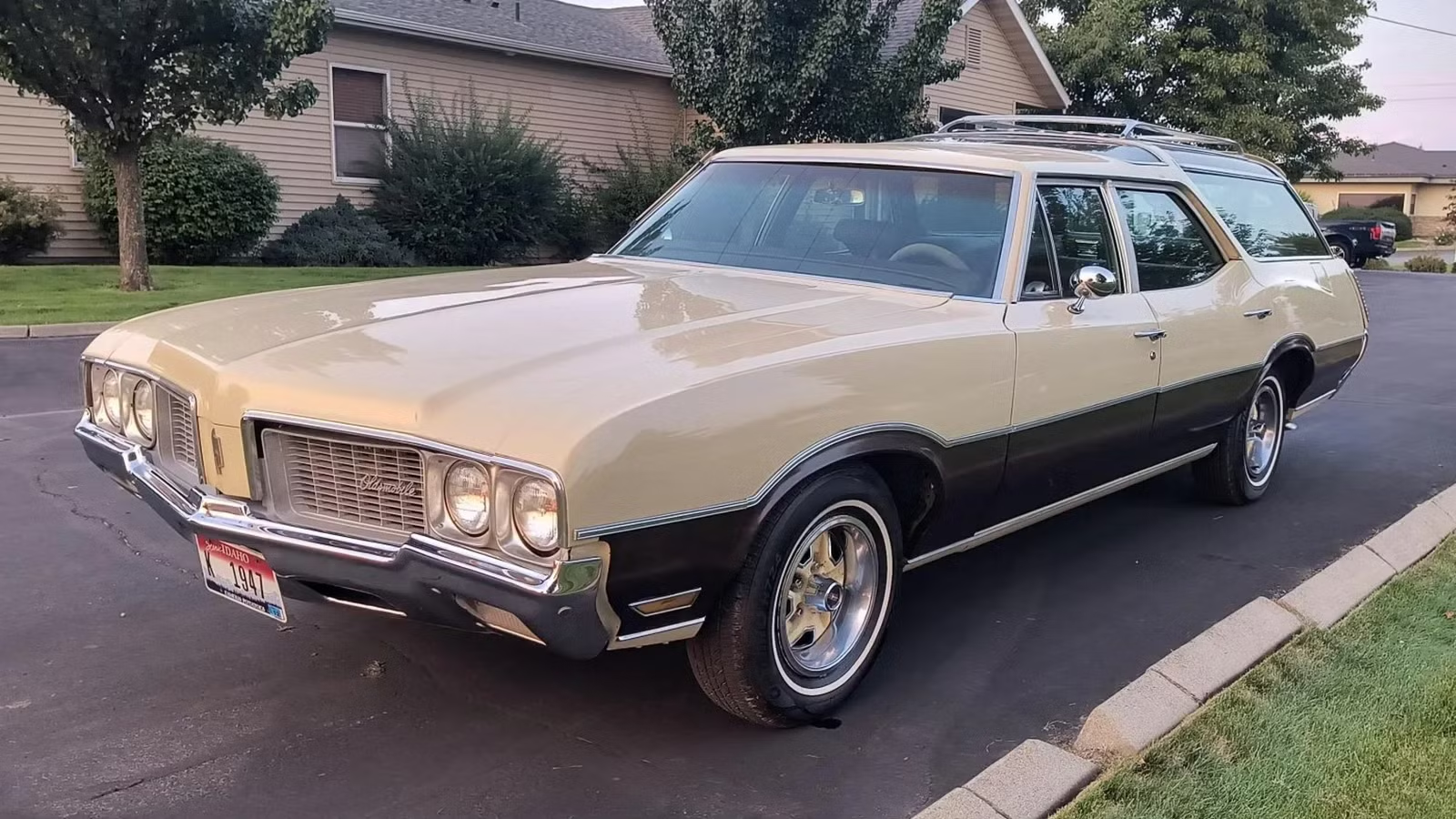
Station wagons rarely get the same respect as muscle cars. They weren’t designed to dominate drag strips, star in dealership brochures, or inspire bedroom posters. Instead, they carried families on summer vacations, hauled groceries home from the supermarket, and spent decades doing the unglamorous jobs that kept American households moving. That’s precisely why one particular wagon stands out.

While countless family haulers faded into obscurity, this Oldsmobile refused to disappear. It arrived during the height of Detroit’s muscle-car era, introduced a feature unlike anything else on the road, and eventually became one of the most beloved wagons ever built. Today, collectors actively seek out the best examples, enthusiasts celebrate its innovation, and many regard it as the benchmark for what a classic American station wagon should be.
Most Family Wagons Were Forgotten: This One Refused To Be
The 1960s were a golden age for the American station wagon. Nearly every manufacturer offered multiple models designed to serve growing families. They came with spacious interiors, long roofs, and enough cargo capacity to handle everything from camping gear to Little League equipment. Yet despite their importance, most wagons shared one unfortunate fate: they were forgotten.

Unlike performance cars, wagons rarely became collectible. They were purchased to be used, not preserved. Families put thousands of miles on them before eventually trading them in for something newer. However, every now and then, a practical vehicle develops a personality strong enough to outlive its original purpose.
One Oldsmobile wagon managed to do exactly that. It wasn’t the fastest vehicle in the company’s lineup, nor was it marketed as a performance machine. Yet it offered something competitors simply couldn’t match.
Its appeal began with a bold design decision that transformed the passenger experience. It also benefited from arriving at a time when Detroit’s engineers were building some of the most exciting V8-powered vehicles in American history.
As a result, the wagon occupied a unique position. Families loved it because it was practical. Enthusiasts loved it because it was different. That combination helped ensure its legacy would extend far beyond the era in which it was built.
A Clever Design Feature Made It Unlike Anything Else On The Road

Some cars become memorable because of horsepower figures or racing success. This wagon became memorable because of the roof. When Oldsmobile introduced the vehicle in the mid-1960s, the company was searching for a way to make its midsize wagon stand apart from competitors. The solution was both simple and brilliant.
Instead of using a conventional roofline, designers incorporated a raised roof section fitted with a series of skylight windows above the passenger compartment. Known as the Vista Roof, the feature flooded the cabin with natural light while creating an unusually open and airy atmosphere. For families embarking on long road trips, the experience was unlike anything else available at the time.
Children seated in the rear rows could look upward through the overhead glass, while adults enjoyed a cabin that felt significantly larger than its exterior dimensions suggested. It was the sort of feature that immediately made an impression and remained memorable long after passengers stepped out of the vehicle.
The engineering behind the design was equally clever. Oldsmobile gave the wagon a longer wheelbase than standard F-85 and Cutlass wagons, creating additional passenger room while preserving ride comfort. The result was a vehicle that felt spacious without requiring the bulk of a full-size wagon. Most importantly, the Vista Roof gave the wagon an unmistakable identity. Decades later, enthusiasts can still recognize one from a distance. In an automotive world filled with lookalike family vehicles, that kind of visual distinction is remarkably rare.
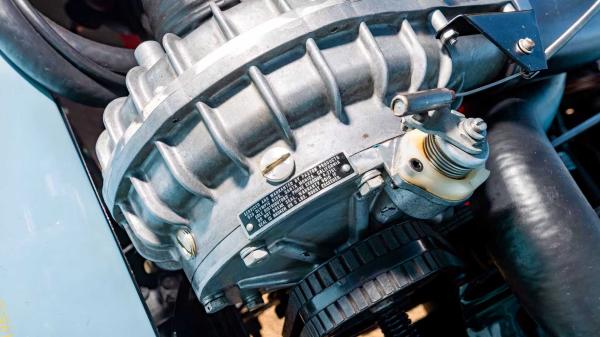
The First Factory Supercharged Muscle Wagon Ever Sold
It’s an exceedingly rare option that turned a family hauler into a proper sleeper wagon.
Meet The Oldsmobile Vista Cruiser

The wagon responsible for all this attention was the Oldsmobile Vista Cruiser. Introduced for the 1964 model year, the Vista Cruiser quickly became one of the most distinctive vehicles in Oldsmobile’s lineup. Built on General Motors’ A-body platform, it occupied a sweet spot between compact and full-size wagons, offering practicality without excessive size.
The first-generation model ran from 1964 through 1967 before being redesigned for 1968. That second-generation model would ultimately become the most celebrated version, thanks to its sharper styling and closer connection to the muscle-car era.
What many enthusiasts forget today is that the Vista Cruiser wasn’t merely a clever family wagon. Underneath its innovative roofline was a vehicle that shared much of its engineering with Oldsmobile’s performance-oriented intermediates.
That meant buyers had access to a variety of Rocket V8 engines throughout its production run. By the early 1970s, the Vista Cruiser had evolved into something genuinely unusual: a family wagon with big-block muscle-car credentials.
Key Vista Cruiser 455 Powertrain Specifications

|
Model Year |
Engine |
Power |
Torque |
Transmission |
Drivetrain |
|
1970 Vista Cruiser 455 |
455-cu-in (7.5-Liter) Rocket V8 |
365 hp |
500 lb-ft |
3-speed Turbo-Hydramatic automatic |
RWD |
|
1971 Vista Cruiser 455 |
455-cu-in (7.5-Liter) Rocket V8 |
320 hp |
510 lb-ft |
3-speed Turbo-Hydramatic automatic |
RWD |
|
1972 Vista Cruiser 455 |
455-cu-in (7.5-Liter) Rocket V8 |
250 hp (net) |
370 lb-ft |
3-speed Turbo-Hydramatic automatic |
RWD |
The 1970 model remains particularly noteworthy. Equipped with the 455 Rocket V8 producing 365 horsepower and 500 lb-ft of torque, it offered performance levels that few family wagons could approach. While most buyers probably appreciated the engine’s effortless torque more than outright acceleration, the fact remained that this was a wagon capable of surprising plenty of cars that looked far sportier.
Power was sent exclusively to the rear wheels through Oldsmobile’s trusted Turbo-Hydramatic automatic transmission, giving the Vista Cruiser the smooth, torque-rich character that defined many of Detroit’s best big-block machines. In an era when family transportation and performance rarely intersected, the Vista Cruiser managed to deliver both.
Its Reputation Grew Long After Production Ended
The true measure of a classic isn’t how popular it was when new; it’s how well it survives in the public imagination. By that standard, the Vista Cruiser has aged remarkably well.
As minivans and SUVs gradually replaced station wagons, enthusiasts began revisiting the vehicles that once dominated American roads. The Vista Cruiser immediately stood apart because it represented something more than transportation. It showcased genuine innovation.
Collectors were particularly drawn to the 1964–1972 models because they featured the original Vista Roof design that made the wagon famous. Combined with available Rocket V8 power, those early models offered a compelling blend of practicality and personality. The wagon’s reputation received another boost from popular culture.
A 1969 Vista Cruiser featured prominently in That ’70s Show, introducing the vehicle to an entirely new generation of enthusiasts. For many viewers, it became their first exposure to a station wagon that looked genuinely cool. That exposure helped cement the Vista Cruiser’s status as one of the most recognizable wagons ever produced.
Today, surviving examples attract attention wherever they appear. Whether at auctions, cruise nights, or concours events, the Vista Cruiser consistently draws crowds eager to revisit a unique chapter in American automotive history.
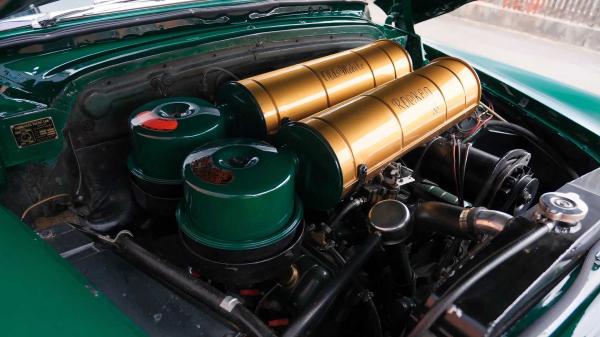
Oldsmobile Built The World’s First Sleeper Car That Fooled Everyone…In 1949
This classic Oldsmobile accidentally created the perfect formula for the “sleeper” and is widely considered America’s first muscle car.
Why The Vista Cruiser Remains A Classic Today

The Vista Cruiser remains relevant because it achieved something few practical vehicles ever manage: it developed character. Its innovative roof design transformed everyday travel into something memorable. Its muscle-era engineering gave it credibility among enthusiasts. And its available big-block V8s ensured it could do more than simply carry passengers and cargo. Perhaps most importantly, it reflected an era when automakers were willing to experiment.
Oldsmobile could have built another ordinary wagon and called it a day. Instead, it created a vehicle that offered families something genuinely different. The Vista Roof wasn’t just a styling gimmick; it improved visibility, enhanced the passenger experience, and gave the wagon a distinctive identity that survives to this day. That’s why the Vista Cruiser remains one of the most celebrated wagons in American automotive history. Most family wagons were built to be useful. The Vista Cruiser was useful too, but it also managed to become unforgettable.
Sources: GM Heritage Center and Hagerty

Related posts



Latest Post


No Comments