
Motorcycles That Get Better The Longer You Own Them
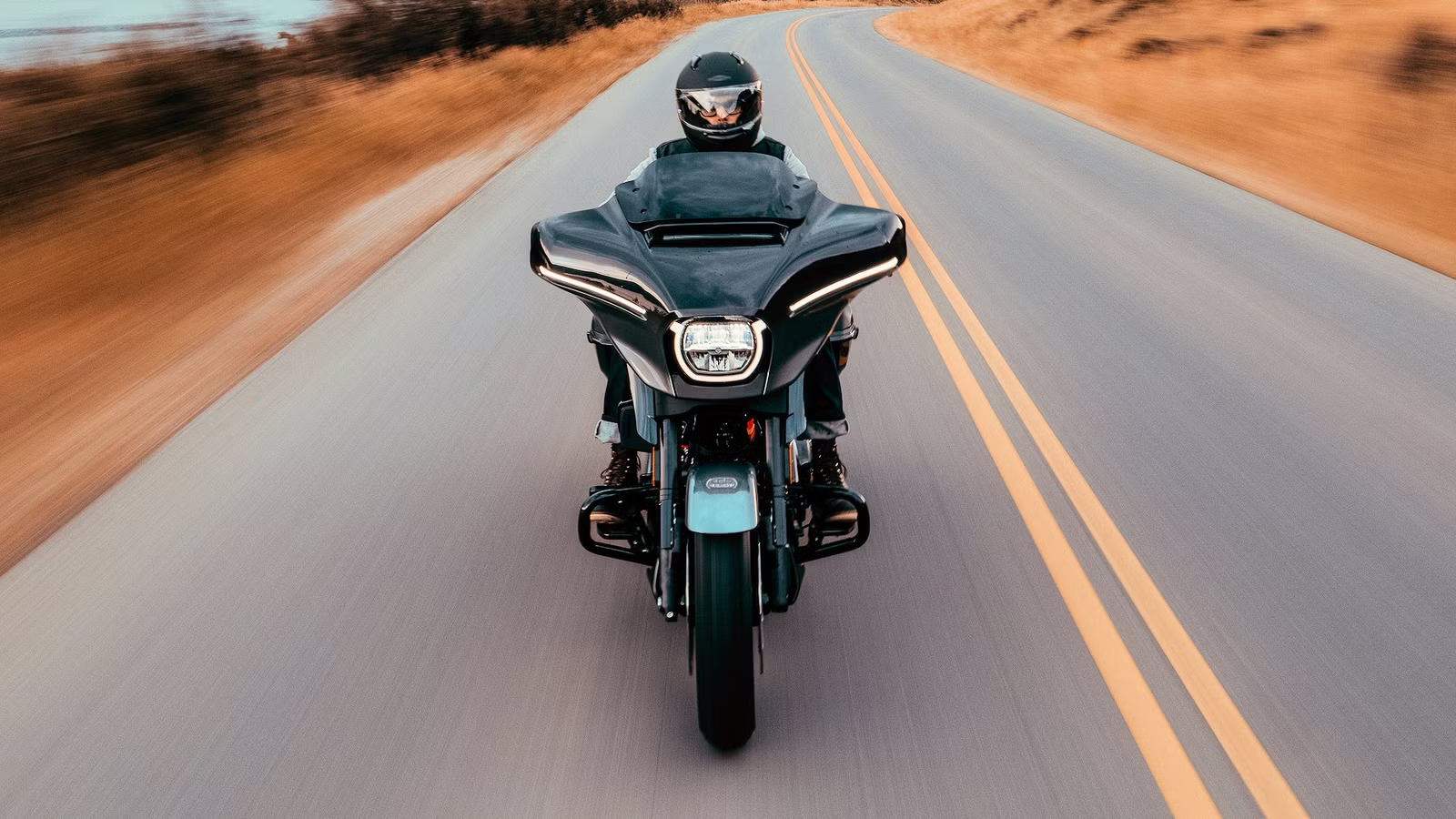
Many times, a spectacular test ride of a motorcycle leaves a lasting impression on you. Maybe it looked stellar, or it was the way the engine sounded, or even how it made you feel. That, however, does not necessarily make for a great long-term motorcycle. Think of it as infatuation versus true love for motorcycles. An unassuming bike that you can easily overlook could become more attractive as the months, years, and miles stack up. This is a list of motorcycles that fall into this category. Ones that you truly have to give time and effort to riding them to appreciate what they have to offer as motorcycles.
Kawasaki KLR650
MSRP: $6,999

The KLR650 might be unkillable, but its utilitarian aesthetics rarely win riders over. Its 652cc single makes 40 horsepower; there are only five gears, and the basic suspension would struggle to impress anyone shopping for brand names. Live with one, though, and those apparent limitations start looking suspiciously like virtues. There is little complexity between the rider and the motorcycle, while the 6.1-gallon fuel tank makes wandering well beyond the daily commute practical.

Better still, the KLR encourages owners to shape it around what they actually do. Luggage, protection, comfort upgrades, tires, and camping equipment can gradually turn a stock bike into something deeply personal. Familiarity also makes its 456-pound curb weight and tall 34.3-inch seat less intimidating. Eventually, the KLR becomes useful enough that selling it starts making less sense than simply finding another reason to ride it.
Suzuki SV650
MSRP: $8,149


Almost three decades after the original appeared, the SV650 basically still looks the same, and that’s because its original recipe was so good, that it still works. Suzuki resisted turning it into something unnecessarily complicated and all these years later, it is still an easy recommendation. The 645cc 90-degree V-twin provides the character that many similarly priced parallel-twins can’t, while its narrow layout contributes to a manageable 437-pound curb weight.

The SV gets better with familiarity because its limits are approachable enough to explore. A newer rider can learn throttle control and cornering without wrestling excessive power, then discover considerably more pace from the same chassis as their experience builds. Experienced riders get an inexpensive roadster whose engine remains enjoyable without requiring constant looking-after. The SV’s combination of usable performance and mechanical personality tends to survive just as the motorcycle itself has.
Honda Shadow Phantom
MSRP: $8,699

Ownership becomes considerably easier when a motorcycle asks for very little in return. The Shadow Phantom pairs its 745cc liquid-cooled V-twin with fuel injection and a shaft drive. Time also works in the Shadow’s favor stylistically. There are no giant screens, elaborate body panels, or technology packages likely to date its appearance quickly.

The low 25.6-inch seat and unstressed cruiser layout are qualities owners can appreciate on every ordinary ride rather than features reserved for special occasions. Its five-speed transmission and relatively modest performance are hardly cutting edge, but chasing specifications misses the point. It’s a cruiser that costs less to both buy and own, and the longer the Phantom stays in the garage, the more its simplicity becomes part of its appeal.
Triumph Bonneville T120
MSRP: $13,995

With retro motorcycles, what initially feels charming can eventually become tiresome if authenticity comes at the expense of usability. Triumph has spent years making sure that the Bonneville T120 avoids that trap. Its 1,200cc parallel-twin has the low-speed character expected from a Bonneville, but the modern motorcycle surrounding it is substantially easier to live with.

That is the kind of balance that makes the T120 particularly good at surviving changing priorities. It can spend one year doing Sunday rides, the next commuting, then acquire luggage and a windscreen when longer trips start sounding appealing. Owners can personalize one heavily without needing to correct fundamental shortcomings first, and Triumph’s extensive accessory ecosystem helps.
Honda Africa Twin Adventure Sports ES
MSRP: $17,799

A large adventure motorcycle can take time to be understood, particularly when its capability extends well beyond what most owners will use during the first month or even a year. The Africa Twin Adventure Sports ES rewards that learning process. Its 1084cc Unicam parallel-twin provides broad, manageable performance, while Showa electronically controlled suspension can adapt the chassis without requiring the rider to start manually chasing compression and rebound settings.

This is also the more road-oriented Africa Twin, with a 19-inch front wheel and a substantial 6.6-gallon fuel tank. These features become increasingly valuable as trips get longer and owners figure out what kind of adventure riding they actually enjoy. The riding modes and extensive electronic adjustment add another layer of customization. The attraction here is that the Africa Twin has enough depth for a rider to grow into it, yet the fundamentals remain approachable to keep the learning interesting.
Indian Chief Vintage
MSRP: $19,999

The Chief Vintage proves that growing attached to a motorcycle does not require pretending modern conveniences were a mistake. Its full-valanced fenders, wire wheels, floating saddle, and illuminated headdress deliberately recall earlier Chiefs, but underneath sits the modern Thunderstroke 116 producing 120 pound-feet of torque. Cruise control, keyless ignition, rear-cylinder deactivation, ABS, and three ride modes make living with all that nostalgia considerably easier.

Ownership adds another dimension because this is exactly the sort of cruiser riders tend to personalize. Indian offers accessories covering comfort, touring, appearance, and luggage, while the 4-inch Ride Command display brings navigation and connected functionality without visually dominating the cockpit. A Chief Vintage can therefore evolve with its owner rather than forcing a decision between classic style and everyday convenience.
Harley-Davidson Fat Boy
MSRP: $22,599

The Fat Boy has never been subtle, and living with one probably will not convert anyone who fundamentally dislikes its steamroller proportions. For everyone else, time exposes more than the famous silhouette. The 2026 model’s Milwaukee-Eight 117 produces 126 pound-feet of torque, giving the motorcycle the kind of low-speed grunt that remains entertaining without demanding increasingly reckless road speeds.

What really develops over ownership, however, is familiarity with a motorcycle that initially feels enormous. Its broad tires, substantial mass, low seat, and long wheelbase require deliberate inputs. Once those responses become familiar, the Fat Boy feels less cumbersome and more distinctive. Its styling has already survived decades of changing cruiser fashion, and yet it’s the Harley that’s easiest to recommend.
BMW R 1300 GS Adventure
MSRP: $23,795

Few motorcycles have as much capability to unpack as the R 1300 GS Adventure. The 1,300cc boxer produces 145 horsepower and 110 pound-feet of torque, but raw performance is only one layer. BMW surrounds it with a huge range of electronic, chassis, comfort, and touring equipment, including options such as the Automated Shift Assistant that can handle clutch operation and, when desired, gear changes automatically.

Owners gradually learn which settings matter, how the boxer delivers its power, and how surprisingly manageable a 593-pound adventure motorcycle can become once its dimensions stop feeling unfamiliar. The GS Adventure demands more acclimatization than most motorcycles here, but it also gives owners considerably more capability to grow into.
Honda Gold Wing
MSRP: $25,500

The Gold Wing’s defining quality is not that it makes a strong first impression. At this point, everyone already expects Honda’s flagship tourer to be comfortable. What takes time to appreciate is how thoroughly the motorcycle removes small annoyances from covering serious mileage. The 1833cc horizontally opposed six-cylinder is exceptionally smooth, the double-wishbone front suspension separates steering inputs from much of the suspension movement, and reverse assist makes maneuvering a large touring motorcycle considerably less theatrical.

Then longer journeys start revealing more of its pluses. Cruise control becomes indispensable rather than luxurious. Wind management matters after hours in the saddle. Wireless Apple CarPlay and Android Auto become genuinely useful when navigation forms part of everyday touring. The manual Gold Wing even leaves buyers the choice of shifting for themselves, while the Automatic DCT variant takes another layer of work away. This is a motorcycle that eventually shows how little effort it requires to continue riding.
Harley-Davidson CVO Street Glide
MSRP: $49,999

Spending nearly $50,000 on a motorcycle creates expectations that horsepower alone simply cannot satisfy. The CVO Street Glide is a game of accumulation. Its Milwaukee-Eight VVT 121 produces 115 horsepower and 139 pound-feet of torque, while Harley adds upgraded suspension, radial-mounted brake calipers, premium audio, Skyline OS, and CVO-specific paint and finishes.

Some of that equipment is easy to admire in a showroom. The justification becomes clearer once the miles start building up and each of the equipment, details, and nuances come to the fore in making the ride all the more pleasurable. The CVO Street Glide ownership has always had an emotional component that cannot be separated from its engineering. Regular Street Glides accomplish the touring job for much less money, but the CVO bikes go further in making the entire ownership experience feel like a special occasion.
Source: Various Manufacturers

Related posts


Latest Post


No Comments