
Mazda Next-Gen MX-5 Miata Chassis Patent Explained
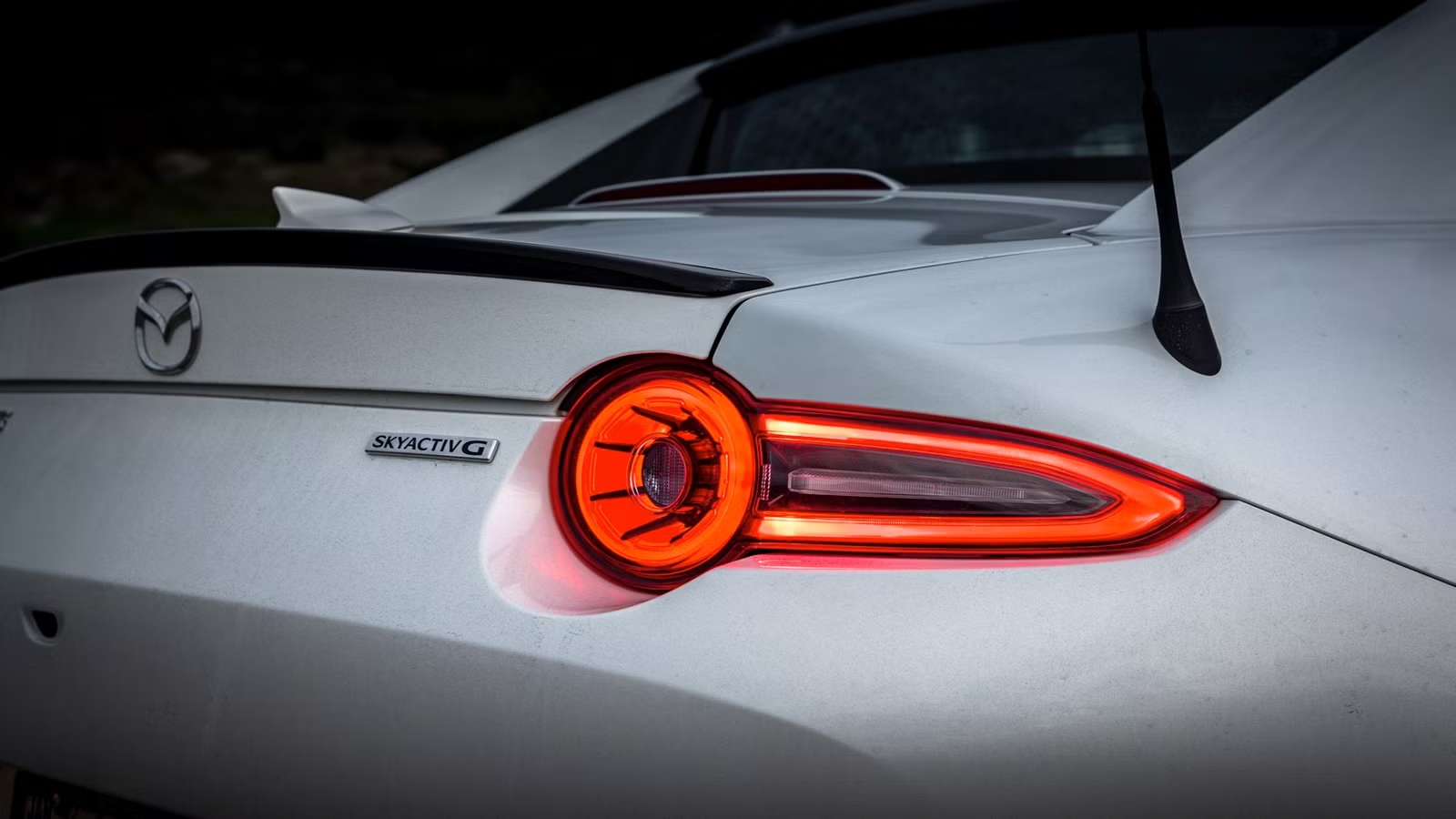
Mazda is quietly building the next MX-5 Miata, and a newly uncovered chassis patent gives the clearest look yet at how the company plans to solve the roadster’s most stubborn engineering problem: staying small and light while surviving modern crash standards. The patent, surfaced by CarBuzz on September 14, covers the front structure of the car — the firewall, footwell, and frame extensions running to the nose — and reveals a genuinely clever approach to a packaging puzzle that has only gotten harder with each generation.

This isn’t Mazda’s first patent filing tied to the next Miata, but it’s the most technically specific, and it carries some visual breadcrumbs that point toward bigger questions about what the fifth-generation roadster will actually look like.
The Packaging Problem Mazda Had To Solve
The core engineering tension is straightforward: as modern safety regulations demand more structural rigidity up front, subframes tend to grow — particularly as they move rearward to distribute crash loads into the main chassis. On a car as compact as the MX-5, that growth creates a direct conflict with cowl-mounted components. The brake booster, wiper system, and water drains all compete for the same tight real estate where a conventional subframe wants to be tallest and widest.

Mazda’s answer is to change the geometry entirely. Rather than stamped frame sections — the square-tube-style construction typical of unibody cars — the patent describes cast components that are far flatter and wider, reinforced with ribs to maintain the necessary strength. Think a sheet of paper rather than a cardboard box. Viewed from below, the layout fans outward in a shape CarBuzz compares to the Eiffel Tower, but the key detail is that the frame sections open into a U-shape rather than closing into a full rectangle. That U-shaped cavity — what Mazda’s filing calls the “apron-shaped” section — becomes the home for the brake booster and other components that would otherwise force the structure taller. Packaging and structural integrity addressed in a single design move.
Butterfly Doors and Iconic SP Styling Enter the Picture

Some of the patent drawings will look familiar to anyone who has been following Mazda’s next-gen filings. The company has reused versions of the same illustrations in earlier patents covering butterfly-style doors and a revised wheel arch reinforcement method — both of which appeared on the Iconic SP concept Mazda revealed at the 2023 Tokyo auto show. That concept turned heads with its low, sculpted body and upward-swinging doors, and seeing the same visual language reappear in a structural chassis patent is at minimum worth noting.
Butterfly doors would be a first for any production MX-5. The double-wishbone front suspension geometry and the open cowl visible in the drawings — consistent with a front-engine, rear-drive roadster without a fixed roof — make it clear this chassis is being developed specifically for the next Miata, not a generic platform exercise.
Three Scenarios, One Very Interesting Patent

CarBuzz outlines three plausible readings of what this development activity adds up to. First, Mazda could be planning to bring the Iconic SP’s styling directly to the next MX-5, making the concept a genuine preview rather than a design exercise. Second, the SP itself might arrive as a production car but swap the rotary range-extender powertrain shown in the concept for a conventional driveline. Third — and the most expansive possibility — both cars could be coming, sharing a common platform the way the NC-generation MX-5 and the RX-8 shared architecture in the mid-2000s.
None of these scenarios is confirmed, and Mazda has said nothing publicly about the next Miata’s timeline or configuration. Patent filings protect intellectual property; they don’t guarantee production intent. What they do confirm is that real engineering work is happening, that Mazda is actively solving the structural challenges a next-generation roadster would face, and that the company hasn’t abandoned the lightweight, driver-focused formula that has defined the car since the NA launched in 1989. Whatever form the fifth-generation takes, it’s still years away — but the foundation is clearly being laid.
For Miata faithful who have watched the car grow incrementally heavier with each generation, the casting-over-stamping approach is exactly the kind of obsessive engineering detail that suggests Mazda is still fighting the right fight. The ND is already a benchmark for lightweight roadster packaging. If these patent drawings are any indication, the team working on its successor is thinking just as hard about every gram.

Related posts





Latest Post


No Comments