
The Dirt-Chewing, Road-Ready Dual-Sport That Justifies Every Penny
5 minutes reading
Sunday, 25 Oct 2026 10:30 0 5 autotech
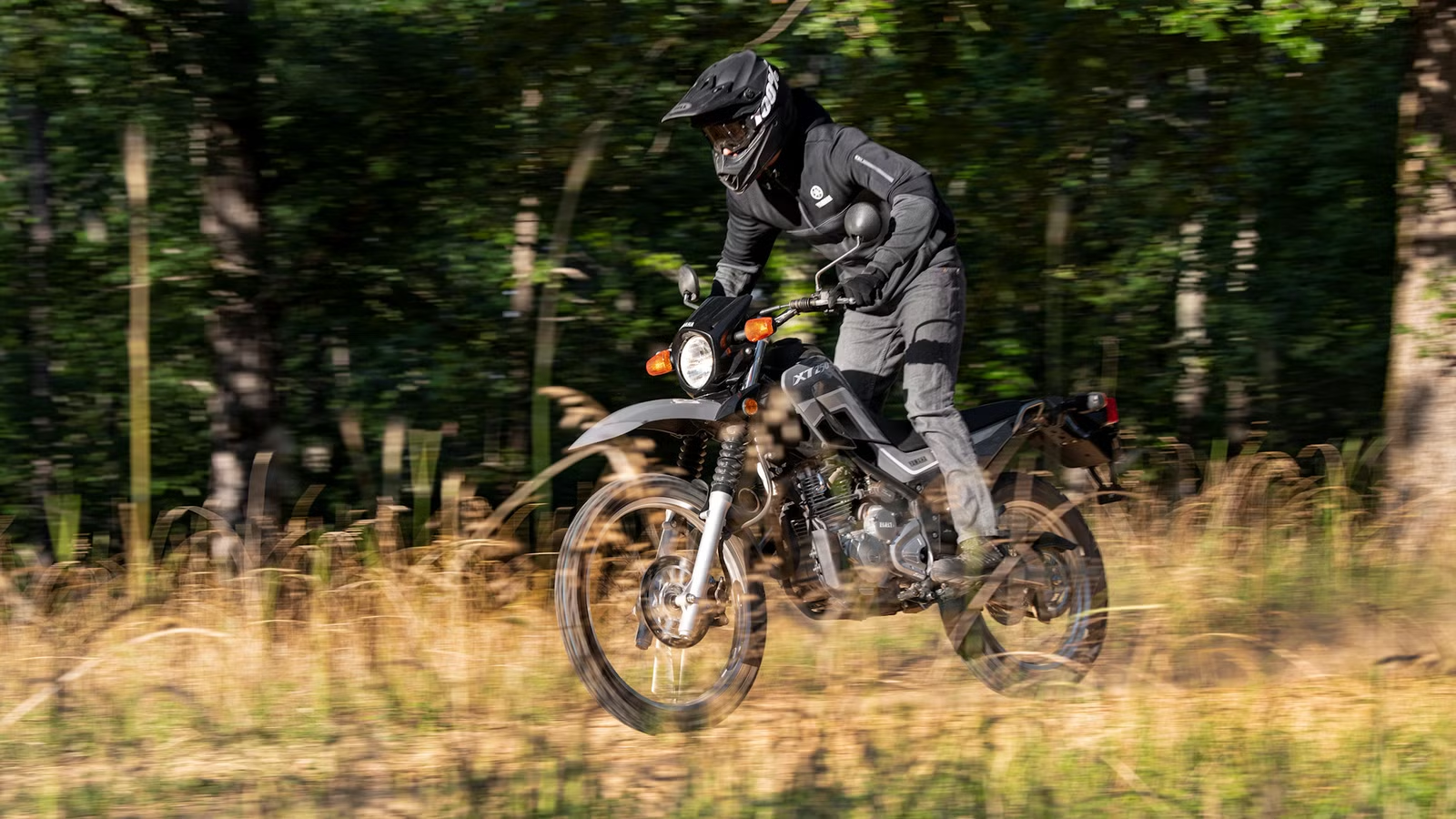
The dual-sport segment has never been more crowded, yet it remains as neatly split as ever. At the top end, you have premium machines built for hard enduro — race-spec singles pumping out well over 50 horsepower and priced to match. At the other end, you have the entry-level dual-sports: unpretentious, affordable, and arguably more useful to more riders.

78 autotech
That lower tier is where the real value lives for beginners and casual trail riders alike. The bike we’re looking at here fits squarely in that space — a simple, rugged little motorcycle that will absorb endless abuse without complaint. It earns its reputation as one of the best beginner bikes on the market, yet it’s also the kind of machine experienced riders hold onto for years once trail riding gets into their blood.
The Yamaha XT250 Is Worth Every Penny
Starting MSRP: $5,499

12 autotech
The XT250 has been around forever, and in its current fuel-injected form, it has remained largely unchanged since 2008. Suffice to say, this is a simple little bike that only offers a back-to-basics kind of riding experience. There is beauty in that kind of simplicity, and it is what keeps the price down. Suzuki recently launched an all-new dual-sport in the form of the DR-Z4S, but it is the older DR-Z400S that competes most directly with the XT250. It offers a similarly rugged, back-to-basics experience for a little more money — along with a carburetor, something of a novelty in this day and age, and a fair bit more power. It is also a rather tall bike, with a seat height of very nearly 37 inches.
Honda has the more beginner-oriented 300L and 300LS, but these bikes have an Achilles heel. They have a very soft rear suspension, and if you weigh more than 150 pounds, you will need to turn to the aftermarket for a better rear shock. Factor that cost in and the value proposition diminishes drastically. Kawasaki has updated the KLX230 and 230 S models, and they are well worth a look. While the standard 230 is pretty hard to fault, it does carry a fairly tall seat height. The S model, on the other hand, matches the XT250’s 32.7-inch seat height — but to get there, ground clearance is reduced to 8.3 inches.
Suspension travel is also trimmed in the process, giving the S a noticeably different character compared to the more capable standard model. KTM has also entered this space with the 390 Enduro R — an intriguing machine built on a lightweight street-bike platform and backed by the brand’s deep enduro pedigree. It looks promising, but it is a more complex, modern bike and something of an unknown quantity (as is the state of the company itself).
Rivals
- 2024 Suzuki DR-Z400S
- Honda CRF300L/LS
- Kawasaki KLX230/S
- KTM 390 Enduro R
The XT250 Has A Simple Air-Cooled Single-Cylinder Engine
Power: 19 Horsepower

If you are looking for a powerful dual-sport, then you might be shopping in the wrong aisle. This is a very simple SOHC air-cooled engine whose basic architecture dates back to the 1980s — but that isn’t necessarily a bad thing. Unless you plan to enter enduro races, a highly strung, high-maintenance single borrowed from the dirt bike world isn’t always the best tool for a trail ride. What the XT250 delivers instead is unerring reliability. No matter how far into the wilderness you venture, you can trust it won’t leave you stranded.
On the face of it, the relatively small 2.5-gallon tank doesn’t offer much range, but it is more than enough for the bike’s intended purpose — especially when you consider that it returns around 76 miles per gallon. This is a motorcycle designed equally for commuting and weekend fun, and if your commute happens to include a stretch of unpaved road, all the better. On the weekend, it will take on any challenge you throw at it, as long as that challenge is only around 80 miles from the nearest gas station.
Engine Specifications
|
Engine Type |
Single-Cylinder, air-cooled |
|
Displacement |
249cc |
|
Max Power |
19 HP |
|
Max Torque |
15 LB-FT |
|
Transmission |
5-speed |
A Great Bike For Both Beginners And Experienced Riders

Every part of this motorcycle screams simplicity — an engine that is straightforward to maintain and work on for those so inclined, and a suspension that can only be described as rudimentary. The design may trace its roots to the 1980s, but look a little closer and there is genuine ingenuity at work. In the entry-level dual-sport class, the common approach to achieving a lower seat height is simply to lower the suspension, sacrificing ground clearance and travel in the process.
The XT250 was designed differently. Despite offering a solid 11.2 inches of ground clearance, it still manages a relatively low 32.7-inch seat height — a combination that takes real engineering intent to pull off. Trail bikes like the XT250 are not necessarily for everyone, but everyone should start on one. Any budding adventure enthusiast should be looking at a bike like this to learn how to ride. Even those only interested in street riding will benefit from honing their skills on dirt first. For more experienced riders, this is just an ideal commuter that doubles as a capable trail bike whenever the mood strikes.
Dimensions And Weight
|
Length |
84.6 inches |
|
Width |
31.7 inches |
|
Height |
45.7 inches |
|
Seat Height |
32.7 inches |
|
Ground Clearance |
11.2 inches |
|
Weight |
291 lbs |
Sources: Yamaha Motorsports

Related posts



Latest Post

27 minute ago
8 autotech

27 minute ago
8 autotech

42 minute ago
8 autotech

No Comments