
Lincoln Continental Concept: The V12 Super Sedan
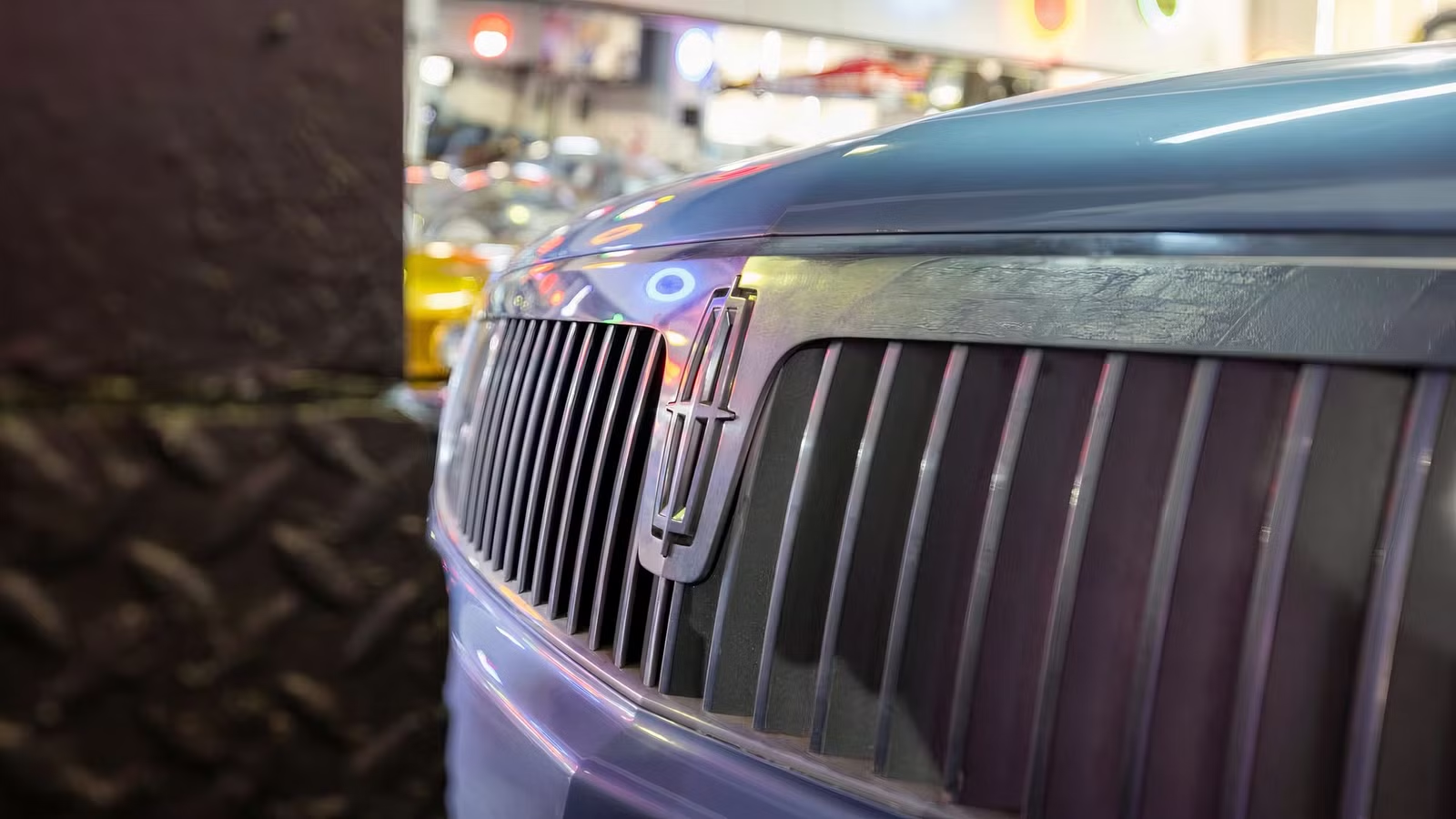
American companies are great at doing muscle cars, and they are great at doing luxury cars, but blending the two hasn’t always been a success. Sure, there have been models such as the Plymouth GTX and the Ford Thunderbird, along with various other powerful luxury machines, but when it came to taking on the AMG Mercedes S-Classes and V12 BMW 7-Series of this world, most homegrown carmakers didn’t bother to field a rival. That is until the early 2000s, when a plucky US manufacturer stepped up with a wild sedan sporting V12 power borrowed from Aston Martin, no less. It was bold, comfortable, and effortlessly powerful. So why didn’t it stand a chance?
Lincoln Was Once A Byword For High-End Luxury

Lincoln was established in 1917 and bought by Ford in 1922. The company would go on to be the wheels of choice for the rich and famous — and infamously it was a 1961 Lincoln Continental convertible that JFK was riding in when he was assassinated — making it one of the crown jewels of the US car industry. Lincoln was so established in the luxury market that models featured signature Cartier dashboard clocks in classic models like the Continental Mark III, IV, and V, as well as the later Lincoln Town Car Cartier Edition. This was the kind of prestige automobile that could give the likes of Mercedes and BMW a run for their money, and not be far off the Rolls-Royce market. It just needed the right engine.
The Company Wanted To Recapture Its Past Glory In The 2000s

This is usually the part where we say that the carmaker in question was struggling and desperately in need of a reboot. But in the ’90s, Lincoln was doing very well, delivering good profit on its cars for Ford, with a strong market for models like the Town Car, Continental, and Navigator. But while Lincoln was doing what it did best, its Euro competitors were taking over the fast, Autobahn-crushing luxury barge market. If you wanted to get to a PowerPoint presentation in Munich by breakfast, then a newfangled V12 7-Series or twelve-pot W140 Benz was the only way to do it. Ford was on a spending spree at the time, having bought Aston Martin, Jaguar, and Volvo, and was feeling confident by 2000. Surely now was the time to take on the German luxo elite at their own game.
The Lincoln Continental Concept Was A Retro Vision Of The Future


The 2000s were a time of steam punk and Art Deco revival, with postmodernism popping up everywhere, from your local shopping mall to car design. This was lucky as cars like the 1930s Model K and the Continental from that era were the perfect period for Lincoln to bring back. The company took the glorious luxury of these vehicles and remixed it with the flat, elegant styling of ’60s cars, to create the Lincoln Continental Concept that appeared at the 2002 Los Angeles Auto Show.
The result was a handsome sedan with an almost symmetrical push-me-pull-me side profile, along with pillarless windows and suicide doors at the back. It managed to capture the styling of mid-60s American cars without being too overly retro. Inside, it was similarly well judged, with a minimalist aesthetic and high-end surfaces. But it wasn’t the styling that set the Continental Concept apart.
Under The Hood Was An Aston Martin V12

Being the custodian of Aston Martin at this time, Ford had access to some pretty tasty spare parts. The obvious choice of engine would have been a V8, but in keeping with the V12-powered Model K, Lincoln was allowed to use the same sporty twelve-cylinder unit found in the DB7 Vantage and V12 Vanquish. The Continental was a working concept (there was one other that was for show only) and packed 414 hp and 413 lb-ft of torque. The 6.0-liter N73 V12 engine in the 2002 E65 BMW 7-Series 760i / 760Li produced 439 hp, so they would have been direct competitors. The Continental’s six-speed automatic transmission sent the power to the rear wheels.
The Continental Had Rolls-Royce Level Luxury

The Continental, which used an elongated rear-wheel-drive Ford Thunderbird platform, was packed full of attention-grabbing features that were perfect for the Rolls-Royce Phantom era of excess. Like the Rolls, the Continental’s doors also had space for full-size umbrellas. There was, of course, the 2000s must-have fold-down DVD player and even a trunk that extended out Thunderbirds-style to accommodate bespoke metal luggage.
The Lincoln Continental Never Made Production

Lincoln was on the way up when the concept was built, having been placed in Ford’s Premier Automotive Group (PAG) toward the end of the ’90s. This put it together with the likes of Aston Martin and Jaguar, and there were expectations that Lincoln could expand to the Middle East and certain Asian markets, with some of the allure of its European stablemates rubbing off. But within weeks of the Continental Concept’s debut, which should have announced Lincoln’s high-end aspirations, the company was apparently pulled out of PAG and put under the direct control of Ford again. Without global support, the Continental Concept was quietly shelved.
Here’s What Happened To The Working Concept Car

It turns out that there was perhaps an appetite for the V12 Lincoln Continental after all — at least if the concept is anything to go by. According to RM Sotheby’s, the car sold for $56,100 in 2017. Finished in Silver Sea Spray with a beige leather front and back bucket seat interior, the vehicle went on to be shown at the Retrofuturism display at Klairmont Kollections Automotive Museum in Chicago. The museum sadly shut down, leading to a large auction of the exhibits at Mecum. The Lincoln Continental Concept fetched $110,000 at a Mecum auction in 2025 — that’s double the price in less than ten years.
Sources: Lincoln

Related posts




Latest Post


No Comments