
Equus Bass 770: The Retro Muscle Car Built Without Compromise

Even when big American automakers claim they don’t hold back, they seldom really keep their word. Even the really crazy stuff—your Corvette ZR1s, Hellcats, and hot rod Mustangs of all stripes—still adheres to the same basic framework about how to sell a profitable automobile. It’s those same profit margins that govern a modern muscle car’s design, often just as much, if not more, than the engines that power them. But what if that wasn’t the case? What if someone decided to design a muscle car and fully cut loose? One man tried; whether he succeeded is another question entirely.
One Man’s Muscle Car Dream

For how radical and out of this world his new-age muscle car may have been, there really isn’t much public information surrounding the life or background of Bassam Abdallah. What we know for certain is that he was born in the Central African Republic capital city of Bangui to parents of Lebanese origin in the 1970s. The son of two business magnates, Abdallah was influenced by a collection of African, Lebanese, as well as French cultures through his travels for his education.
By the age of 21, Abdallah found himself in a leadership position within the family manufacturing business, a period where he well and truly fell in love—not with European supercars as you might expect—but with pure American muscle. ‘60s-vintage icons like the Mustang, Camaro, Charger, and the whole mythos surrounding the first muscle car wars made a profound impact on the young businessman. Enough so, that Abdallah began formulating a plan to get into the game himself.
The mission statement for Abdallah’s new company was simple in theory but endlessly complicated in its minutia. Step one: design a no-holds-barred modern take on a classic muscle car for the 21st century. Step two: find or develop a powertrain wicked enough to fit the theme. And step three: put it into mass production. On principle alone, it was one of the most ambitious automotive projects of its time, so there was certainly a lot of work to be done.

Making the Dream a Reality

Beginning with effectively a blank slate and not much else, what ultimately became Equus Automotive was staffed by engineers and designers hand-selected by Abdallah himself. The team consisted of auto-industry veterans who had what it takes to bring a retro-modern muscle car to the mainstream. At the helm was lead designer and long-time industry veteran Tom Tjaarda.
That name might draw a blank for younger readers, but Tjaarda’s design credits include the De Tomaso Pantera and the Ferrari 365 California. Not exactly a novice, then—but to see that kind of talent applied to the medium of a modern muscle car? Now that had serious potential for staying power, especially if the engine beneath the skin was excitement-worthy.
Through the late 2000s and early 2010s, that group known as Equus Automotive formulated the ultimate retro-modern muscle car body shell, an exotic-grade interior with all the ‘fixins, and even a naturally-aspirated small block V8 built entirely in-house for the initial prototype. When the covers were pulled for the public at the North American International Auto Show in 2013, the revived Camaros and Challengers sharing event space looked inadequate.
Equus Bass 770: The Ultimate Retro-Styled Modern Muscle Car

On first impressions alone, the Equus Bass 770 simply did the whole retro thing better than mainstream muscle car offerings. Styled far more like a true-to-form late-’60s Coke bottle muscle car than some modern facsimile, the 770 had the crumple zones and safety features of a modern car, but none of the visual drawbacks. The aluminum spaceframe chassis was roughly half a ton lighter than the steel unibodies that most muscle cars of the era used. The body over the top was a mix of auto-grade aluminum alloy and carbon fiber composites at a time when such technology was still supercar-exclusive.
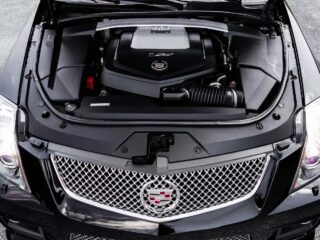
The five-liter small-block pushrod engine developed for the prototype was touted as making between 420 and 540 hp, depending on the stage in the car’s development process. The engine was meant to provide as close to an old-school power delivery to the rear tires as emissions requirements of the period would allow, but manufacturing and cost constraints prompted Equus to pick the 6.2-liter supercharged LS9 V8 out of a C6 Corvette ZR1 instead. With 640 horsepower and 605 lb-ft of torque, that was more grunt than most mid-engine sports cars of the period.
With a six-speed manual transaxle and sport-tuned suspension with adjustable shock absorbers and magnetic dampers, plus track-ready drilled and slotted steel brake rotors, the 770 was the kind of car that could carve canyons and blitz drag races. In truth, it was as close to a well-sorted GT sports car as it was a muscle car. This showed most of all, surprisingly, in the interior.
A Genuinely Amazing Place to Sit

As we all know well, the interior department is typically where the review of a typical modern muscle car falls apart. Cheap plastic, most of it hard-touch and unpleasant, poor fit and finish, and genuinely inferior construction materials came to define muscle cars of the late 2000s and early 2010s. That’s why the Equus Bass 770’s cabin was such a profound element of its construction.
Where there would normally be the cheapest, roughest-quality leather a Detroit OEM could source, every surface you could see or touch inside a 770 was lined with plush, high-quality hide, available in a range of vibrant colors. Elsewhere, real metal trim pieces, not fake plastic tinsel, were added in abundance, namely around a gauge cluster with genuine switches and dials.
There was a seven-inch touchscreen infotainment screen that also handled the backup camera, but everything else about this interior was built to parallel the outside to an exact science. It made muscle car interiors elsewhere, and even those from the ’60s, look downright juvenile by comparison.
A Great Achievement, Assuming It’s Not Vaporware

Make no mistake, the original 770 prototype unveiled in Detroit was very real indeed, and a few examples were manufactured for promotional purposes. As for how many were sold to customers and driven on public roads? That’s an entirely different can of worms. Depending on which outlet you read, the number varies anywhere from twelve to just a handful. Never mind that the production facility Equus acquired in Rochester Hills, Michigan, could handle as many as 100 cars per year.
In all likelihood, the factory never even cracked ten percent of its production capacity under the ownership of Equus Automotive. Like other potential vaporware cars like the Devel Sixteen and the Gen-II Tesla Roadster, the Equus Bass 770 toed the line between reality and promotional trickery with surprising skill. Then again, that is the only thing the public at large knows for certain it was good at. One wishes that weren’t the case, because what was promised looked nothing short of amazing. In an era of modern muscle cars that largely looked identical to each other, the770 dared to be different, and it dared to be better. Well, at least at first, it did.
Source: Equus Automotive

Related posts
Latest Post


No Comments