
Lamborghini Built A Kawasaki-Powered Superbike That Matched Japan’s Best On Paper
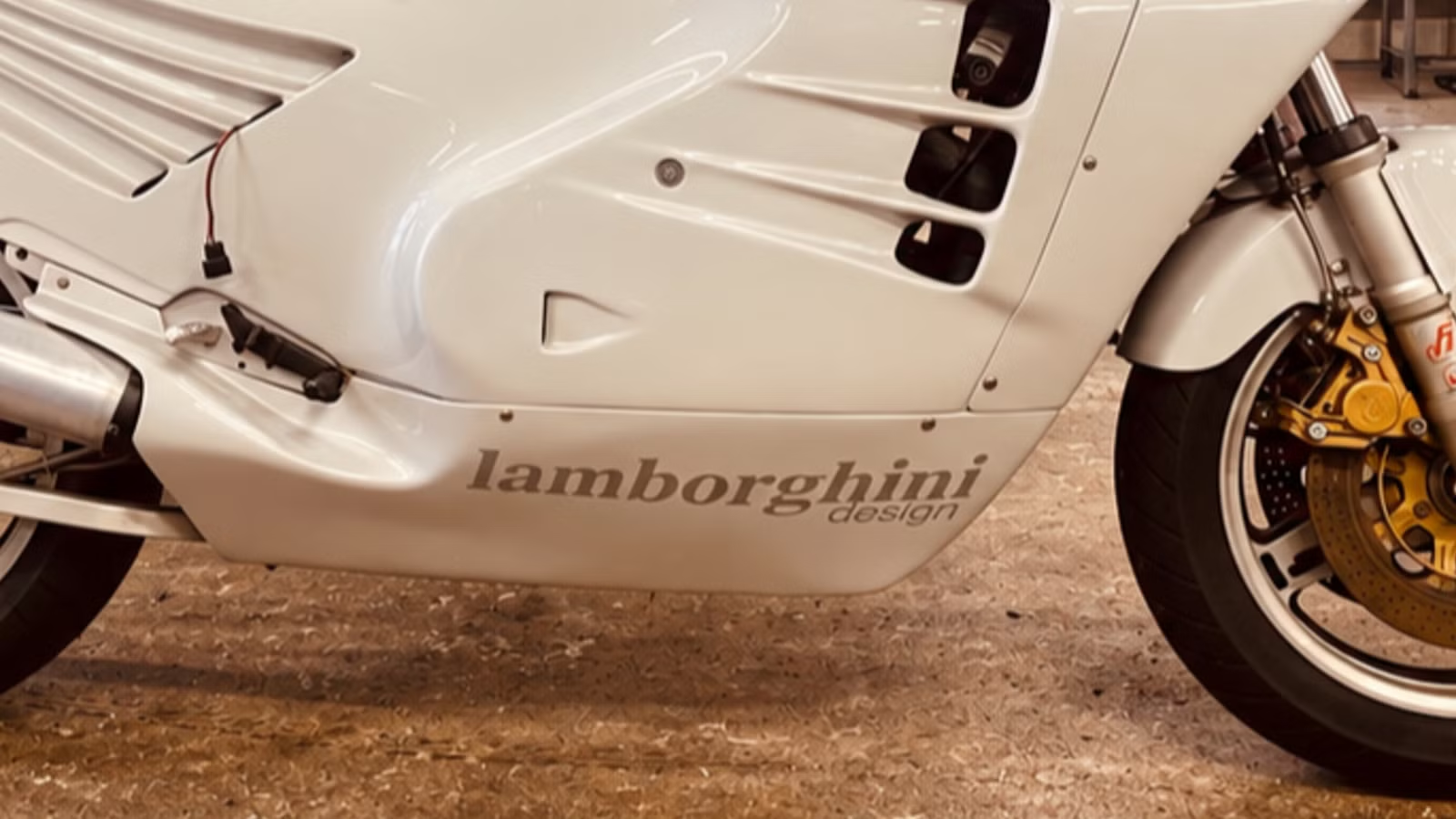
There was once a time when brands didn’t need to be dictated to by marketing and spreadsheets, and were free to create whatever they fancied. They could explore new markets, experiment with unfamiliar ideas, and chase ever-bigger performance figures in the name of competition. For some, this ambition brought unexpected success. For Lamborghini in the 1980s, however, it produced something that looked spectacular on paper but never got the chance to prove itself on the road.
The 1980s Superbike Wars Were All About Speed

The 1980s were an era of untamed excess and ambition, and the motorcycle industry was no exception. 150 MPH was the effective new benchmark for bikes, while Kawasaki’s Ninja 1000R hit 159 MPH in contemporary tests. But while bikes like the Ninja and Honda VFR750F were at the top end of what was possible performance-wise, they were still reasonably affordable when compared to more exotic alternatives like the Bimota YB4 or Ducati 750 F1.
This goal for some parts of the industry meant that breaking in seemed an easy prospect, but the reality was more complex. Simply hitting a higher top speed was just part of the problem, with the other — and arguably harder — part lying in making bikes that were also comfortable, reliable, and a justifiable purchase.
Lamborghini Wanted To Be More Than A Supercar Company


While the motorcycle industry was experiencing a surge in ambition, brands were, too. Lamborghini, fresh from bestowing the Miura and Countach onto the world in the previous decade, was looking for other avenues to explore. It released the original Lamborghini off-roader in the LM002, and entered the V-12 powerboat racing scene, reflecting aspirations far greater than simply producing elegant cars.
The Italian marque even entered Formula 1 by the end of the decade, becoming an engine supplier in 1989 and supplying teams like Lotus and Minardi with a 3.5-liter V12 that helped Larrousse finish third in the 1990 Japanese Grand Prix. But before this four-wheeled endeavor, it attempted something arguably more audacious and with far fewer wheels.
The Lamborghini Design 90 Could Have Challenged The Best Japanese Superbikes

The idea of a Lamborghini motorcycle sounds like yet another concept exercise intended to generate headlines, or a branded version of another brand’s bike similar to the far more recent Ducati Panigale V4 Lamborghini. But the 1986 Design 90 was neither of these. The bike was actually a project that combined Italian styling, Japanese hardware, and French construction in an unusual attempt to translate one of Italy’s most recognizable car brands into a motorcycle. That’s a lot to talk about, so let’s start with styling.
Designed by Frenchman Sacha Lakic, who would go on to design the far more divisive Bimota DB3 Mantra, the Design 90 took inspiration from Lamborghini’s angular bodywork. There are elements of the Countach in there, notably in the strakes on either side, while the overall aesthetic looks similar to the BMW K1 (though the K1 actually came out a few years afterward). The fancy bodywork was complemented by some equally fancy equipment, with the fiberglass body flanked by Brembo brakes and three-piece Gotti wheels far more commonly used on the brand’s cars.
The power underneath that bodywork was provided by a Kawasaki-sourced 1000 cc four-stroke engine derived from the GPz1000RX, and it made around 130 HP. This connection to Japan was important, as Lamborghini obviously had no experience of making motorcycle engines. Starting fresh would be a significant risk, and could torpedo the project entirely if the Design 90 bikes had poor figures or little reliability. Outsourcing the engine removed a large part of this risk by opting for a far more known quantity, and was a tactic employed by Bimota to great effect.
In all, the Design 90 had an interesting spec sheet: a bike that weighed around 375 lbs dry, made a claimed 130 HP, and had a claimed top speed of 160 MPH. This put it among the top bikes of its period, capable of challenging bikes like the Ninja 1000R and VFR750F. On paper, this appeared like the bike was far more than another part of Lamborghini’s self-created journey to find a new version of itself, and a genuine attempt to create the next market-leading superbike. In reality, these manufacturer-provided figures could have been achieved through different measures, or possibly overstated in an attempt to make the bike look like more of a contender than it might have been. Taking them at face value, though, and taking the design into consideration, it was certainly an interesting prospect. At least, until you got to the price.
A $13,500 Price Tag Made The Lamborghini A Hard Sell
A reported $13,500 price tag for the Design 90 meant that the bike wasn’t just expensive, it was comparatively ludicrous. Both the Ninja 1000R and VFR750F were around $5,000 new, and both offered similar performance. That meant that you could buy both bikes for less than the Design 90, and you’d still have plenty of money left for gas afterward. Add in the fact that the theoretical performance of the Design 90 may not have lined up with the practical speeds, and it was a difficult-to-justify choice. A Lamborghini badge can only do so much.
Unfortunately for riders, though, it was a choice that was taken away — Chrysler, which owned Lamborghini at the time, pulled the plug on the project just a year later. Of the 25 to 50 models initially expected, only six were completed. The Design 90 was done.
The Design 90’s Legacy Is A Superbike What If
The Design 90 never got the chance to realize what it could have become. Whether it would have gone on to offer Lamborghini a new revenue stream, or become a new money pit, remains one of the marque’s biggest what ifs. But it remains an illustration of a time when brands were brave enough to give things a go. But, for the Design 90, it marked a time when Lamborghini didn’t dare to go beyond. And that’s to everyone’s detriment.
Sources: Cycle World, Top Speed, GTSpirit

Related posts




Latest Post


No Comments