
International’s All-Steel Anniversary Pickup Made Chevy’s Fiberglass Cameo Look Like A Shortcut
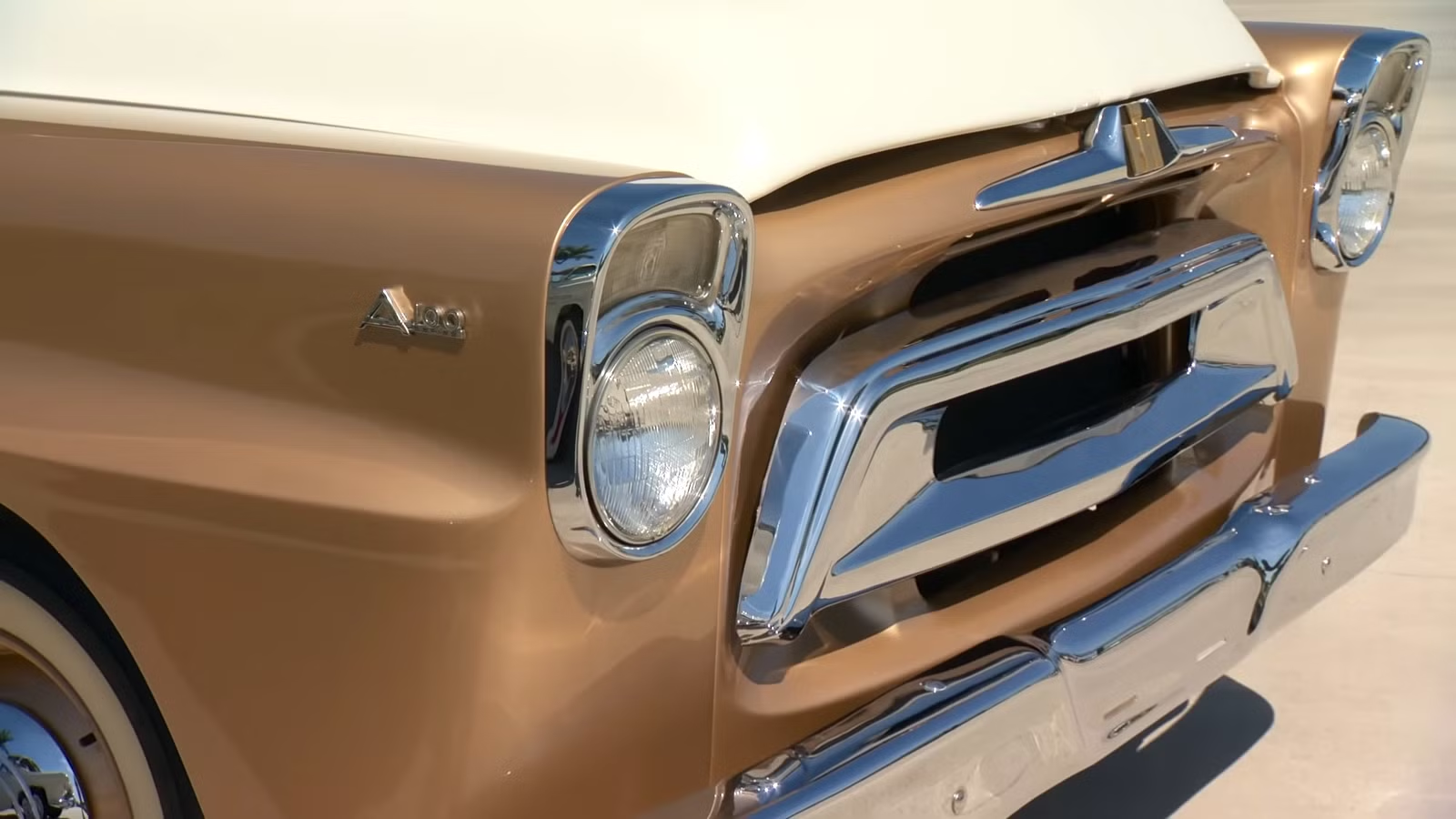
By 1957, the agricultural equipment giant International Harvester had established itself as a serious American truck manufacturer, proving it could produce not just a utilitarian pickup in the spirit of its other heavy equipment, but a genuinely refined special edition that would give even the stylish Chevrolet Cameo a run for its money.

The result was a fitting tribute to 50 years of truck manufacturing that celebrated 2.6 million trucks built and gave Chevrolet designers something to think about.
International Harvester Had Come A Long Way Since 1907
Yes, they made some pickup trucks, but International Harvester’s roots were planted firmly in American agriculture. It had been formed in 1902 as the result of a merger of several farm equipment manufacturers and quickly became a significant force in an industry that was in the midst of a turn-of-the-century transition from horse power to horsepower.

Big, expensive farm gear was its bread and butter, but it didn’t take long before the company recognized that farmers needed more than just machinery to work their fields. The “Auto Buggy” was an early motorized vehicle that could transform into a light-duty truck by removing the rear seat, and it was the beginning of International Harvester’s expansion beyond the fences of the farm. What began as a natural extension of the farm equipment business grew into an automotive operation in its own right, with the black and red International Harvester logo beginning to appear as naturally on vehicles parked on a street in town as it did on the equipment working the fields.
By ’57, International had built and sold more than two and a half million trucks and marked 50 years of truck manufacturing with an updated A-series lineup. The “A” stood for “Anniversary,” and the redesigned trucks had wider cabs, sleek wraparound windshields, and fashionably enclosed front fenders. Oh, and one more thing.
The Golden Jubilee Was More Than A Fancy Paint Job

The 1957 International Harvester A-100 Golden Jubilee was a special-edition pickup that commemorated the golden anniversary of the company’s truck manufacturing business with considerable style.
Based on the A-100 Custom, the Golden Jubilee had a remarkable two-tone paint combination of what was called Anniversary Gold and Whitecap White, with the color scheme carried into the interior with gold and ivory trim. It was an upscale proposition compared to the workaday pickups they had been putting onto city streets and rutted dirt roads for half a century.
It was a half-ton truck adorned with bumpers, grille, and hubcaps all in chrome, along with tinted glass, electric windshield wipers, and other deluxe-for-1957 appointments.
International’s A-series offered a selection of workhorse inline-sixes, with output ranging from 112 to 154 hp. This wasn’t a muscle truck, and it wasn’t trying to be. The Golden Jubilee was exactly what its name described: a gilded celebration of hardworking practicality elevated to its most refined.
International Gave Chevy’s Fiberglass Cameo A Lesson In Steel

Of course, this wasn’t the invention of the pretty work truck. Two years earlier, Chevrolet had introduced its Cameo Carrier with a similarly ambitious aesthetic and a marked departure from traditional designs.
Chevy had envisioned a smooth, slab-sided pickup in much the same vein as what the Golden Jubilee would later deliver, but took an economical approach to getting there. Rather than an all-new steel bed, the Cameo Carrier achieved its distinctive look by fitting fiberglass panels to the largely unchanged vehicle underneath. The look was achieved, but underneath the bodywork there was still an ordinary Chevy truck hiding.
International didn’t do that. Its seven-foot cargo box featured all-steel, fully integrated construction, with a styled tailgate and a clever one-handed latch that made it more convenient to use. It was a serious accomplishment of both aesthetics and engineering, and one that made Chevrolet’s fiberglass solution look like a shortcut.
A true anniversary edition, it was offered for just one year.
Proving A Golden Jubilee Is The Real Challenge

Seven decades after International Harvester built its anniversary pickup, it’s not surprising that it would be the kind of thing prized by collectors. And indeed it is, though nailing down the provenance is a little trickier than you might expect.
It seems like the distinctive steel bodywork would make it easy to identify the genuine article, but there’s a catch. You could get the same shape on the regular A-100 Custom, meaning that the difference between a run-of-the-mill Custom and a genuine limited-production Golden Jubilee could come down to paint, upholstery, and factory documentation.
Of course, paint can be redone and upholstery replaced, but as far as documentation goes, International Harvester maintained mercifully detailed records. The trucks were assembled using the company’s line-setting tickets, which spelled out original equipment including engines, transmissions, and paint colors. Many of these records have survived and are held by the Wisconsin Historical Society.
The tickets document factory paint colors, including 407 Gold and 902 White, which help Jubilee hunters establish a truck’s original configuration.
Nobody Seems To Know How Many Were Built

Surprisingly, for a truck from a company we’ve just established as having great attention to detail and an unusual affinity for hanging onto old paperwork, nobody seems to know how many Golden Jubilees were made.
Estimates range from as low as 500 trucks to as many as 3,000, with Hagerty suggesting a one-per-dealer distribution. The number of surviving examples is even murkier, with plenty of speculation from auction houses and websites, but no definitive total. What’s not in dispute is that they are out there, and Golden Jubilees in varying degrees of restoration and modification will come across the auction block.
All these years later, it’s still a compelling bit of mystery any time you see one. One thing you can count on, though, is that the sides definitely aren’t fiberglass.
Sources: Hagerty

Related posts




Latest Post


No Comments