
Inside the new tests making ADAS systems you’ll actually want to use
What follows is the scenario where the first thing a driver does on entering their car is turn off as many of its ADAS features as possible. Al-Ani sympathises but believes that greater configurability of systems is the correct way forward. “If the ALK [active lane keeping] is too sensitive, rather than turn it off you should be able to turn it down. BMW is getting very good at offering levels of configurability so the driver can set up the system the way they like it and it stays that way. You don’t have to reset it when restarting the car. Until ADAS have improved sufficiently, that’s a better condition to have.”
On the road with Thatcham

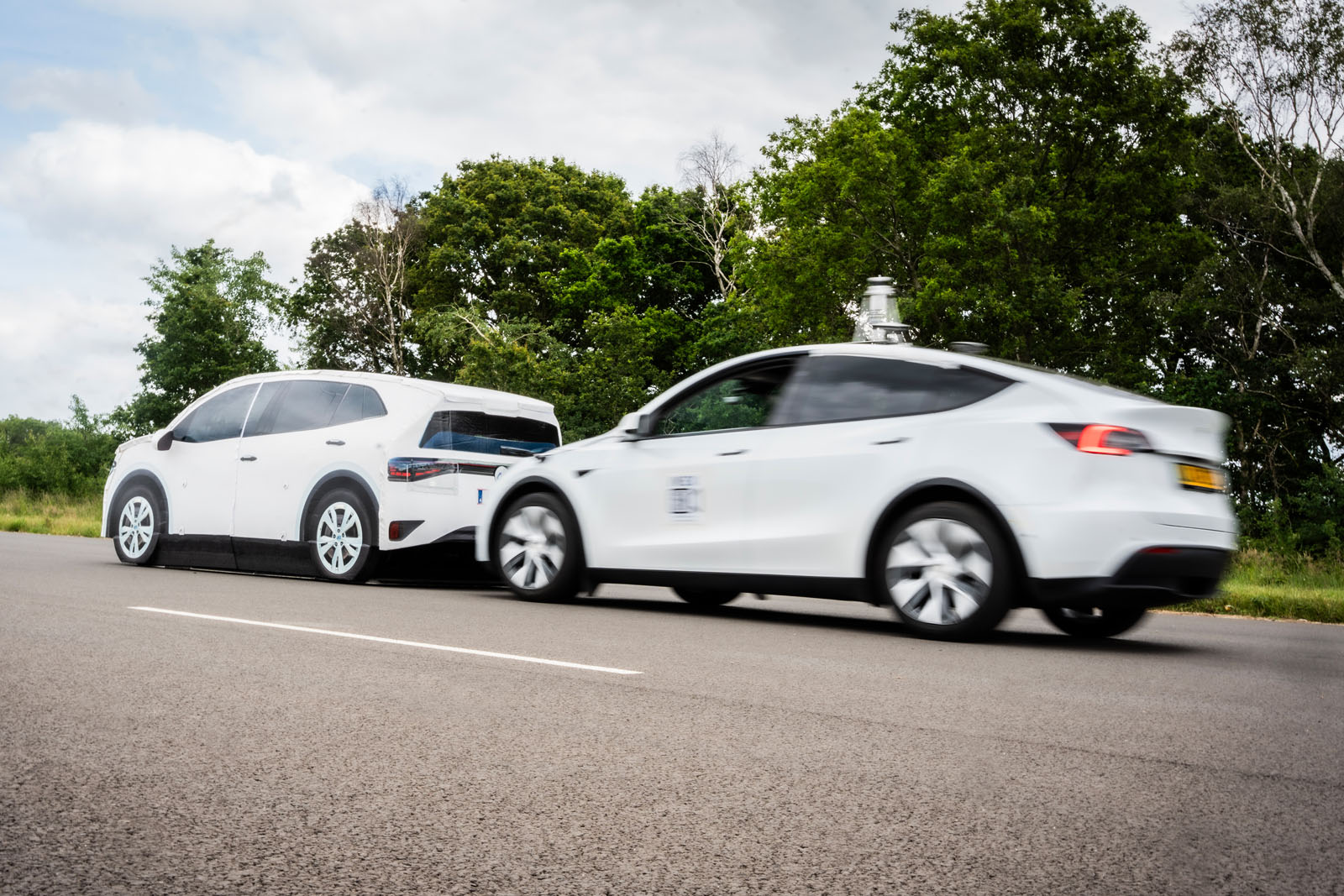
Thatcham Research’s event-based ADAS test programme takes place mainly on public roads but also, for more controlled work, on a closed circuit. Three cars are used: a BMW i5, Tesla Model Y and MG ZS. In terms of their ADAS, says principal ADAS engineer Yousif Al-Ani, they represent around 10% of new cars.
Each car sports a roof-mounted, 360deg lidar plus cameras inside for recording the infotainment screen and ADAS functions. These provide forward and roadside views that are key to recording the presence of speed signs and lane markings and the car’s position relative to them.
Driving the Model Y, Al-Ani showed how its ADAS can do things that prompt drivers to switch it off. The first was how, in autopilot mode, the car slowed excessively for a sharp corner on a main road. Then, entering a built-up area and rounding a corner, it braked excessively for a parked vehicle.

“This car has software designed only to pass the EU regulation,” says Al-Ani. “In the slow-moving queue we’ve joined it’s brilliant, but for many drivers its unpredictability is enough to discourage them from using it at all.”
Al-Ani is critical of the way the Tesla’s system disengages each time he makes the slightest correction: “It’s not collaborating with me, so I become frustrated and leave it off.”
Later, a bus turns into our road from the right while, a little way ahead, a pedestrian crosses in front of us: “The car braked for the bus when it needn’t have and the steering correction was for the pedestrian who was still a safe distance away. The system then disengaged, leaving us in a bad situation with not much time to react. Working at its best, Tesla’s system offers real benefits, but drivers need to understand its limitations.”

Related posts
Latest Post


No Comments