
If BMW Brings Back the F 650 GS, It’s Reviving the Bike That Made Budget Adventure Riding Mainstream
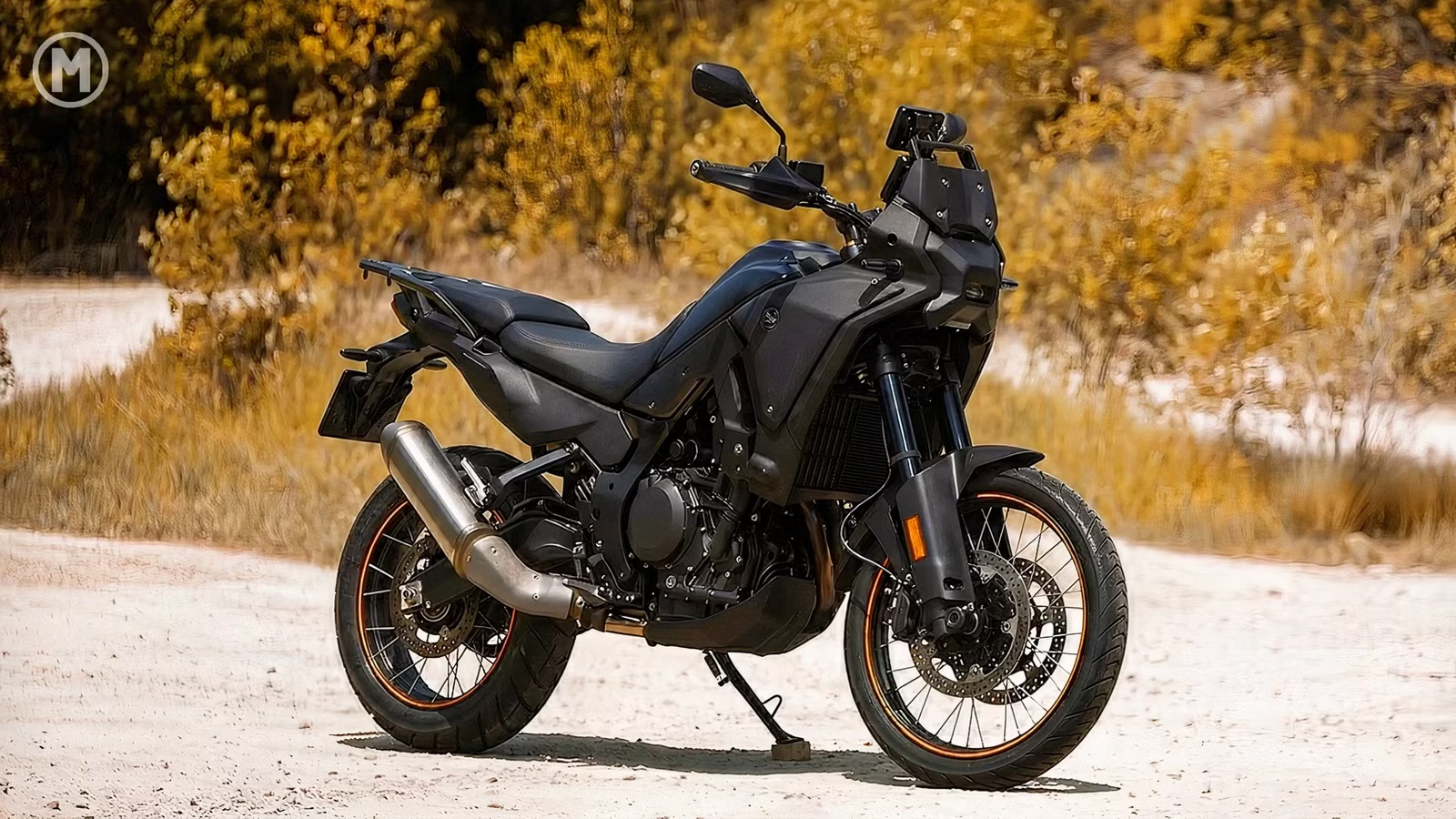
Spy shots published this week show BMW testing an all-new middleweight adventure prototype that appears to slot directly between the F 450 GS and F 900 GS — a gap that has existed in the lineup for years. The prototype rolls on 21-inch front and 18-inch rear cross-spoke wheels, uses a steel bridge frame closely related to the F 900 GS, and carries a parallel-twin engine with visible kinship to the F 450 GS’s powerplant. Whether it arrives as an F 600 GS, F 650 GS, or F 700 GS, the nameplate question alone is enough to get adventure riders talking.

For many in the community, the F 650 GS badge carries real weight. The F 650 GS Dakar from the early 2000s remains a benchmark for what an accessible, genuinely capable adventure bike can be — the kind of machine that introduced a generation of riders to long-distance dirt travel before the segment exploded into what it is today. BMW returning to that territory, with a modern platform and the resources of the GS family behind it, would be a significant moment for the middleweight adventure market.
What the Spy Shots Actually Reveal
The prototype is clearly a mix of components drawn from across BMW’s existing GS range. The chassis and braking system lean toward the F 900 GS, while the rear shock mounting and swingarm design echo the smaller F 450 GS. Ground clearance looks generous — observers estimate around 230 millimeters (roughly nine inches) of suspension travel — and the wheel sizes confirm this is built with genuine off-road intent, not just the appearance of it.

Kerb weight is reported to be around 204 kilograms (approximately 450 pounds), placing it neatly between the F 450 GS and F 900 GS on the scales as well as in the lineup. The headlight already shows a finished X-shaped design borrowed from the R 1300 GS, though the characteristic GS beak is absent — likely a sign that front-end bodywork is still in progress. The overall proportions draw comparisons to the Yamaha Ténéré 700, which is no accident: both the Ténéré 700 and the Honda XL750 Transalp are reportedly being used as development benchmarks during testing.
The Engine Question Is the Most Interesting One
The powertrain is where things get genuinely complicated. The engine is a parallel twin with clear ties to the F 450 GS platform, but how heavily BMW reworks it — or whether it builds something new entirely — remains open. The most concrete reference point is the Norton Atlas, where BMW partner TVS uses a 585cc version of a reworked parallel twin producing 70 hp. That engine is regarded as a plausible starting point, though the prototype’s motor differs from the Norton unit in several visible areas.
There’s also a technical wrinkle worth noting: the F 450 GS runs an unusual 135-degree crankpin offset, while the Norton twin uses the more conventional 270-degree firing interval common in this class. That difference affects how the engine feels under throttle and how well power can be metered on loose surfaces — exactly the conditions this bike is being built for. Whether BMW carries its unconventional setup into the middleweight or switches to the standard layout is one of the more interesting unanswered questions surrounding the project. Power output is expected to land somewhere in the 65–80 hp range, keeping it well clear of the F 900 GS’s 105 hp.
The Market BMW Is Walking Back Into

The middleweight adventure segment has changed dramatically since the original F 650 GS era. The Yamaha Ténéré 700 and KTM 690 Adventure have set a high bar for off-road performance at accessible price points, while the Royal Enfield Himalayan and Honda NX500 have pushed the entry point lower still. It’s a crowded, competitive space — and it’s one BMW has been absent from for long enough that the Ténéré 700 and Transalp have had time to build loyal followings.
A new middleweight GS, priced between the F 450 GS and F 900 GS, would give BMW a genuine answer to all of them. One estimate places the India price around 1.2 million rupees (roughly $12,500 USD), though that figure carries no manufacturer backing. What’s clear is that BMW’s intent is to compete on capability first — the 21-inch front wheel, long-travel suspension, and F 900 GS-derived braking all point to a machine that takes off-road performance seriously rather than treating it as a styling exercise.
A production launch is not expected before 2028, and the unfinished state of the prototype confirms there’s significant development work still ahead. EICMA 2026 is the earliest realistic opportunity for an official reveal, though even that isn’t confirmed. For riders shopping the middleweight segment right now, the prototype is a signal worth paying attention to — BMW is coming, and it’s building something that looks like it means business.

Related posts
Latest Post


No Comments