
Honda’s Manual Comeback Puts Pressure On Every Rival That Dropped The Third Pedal
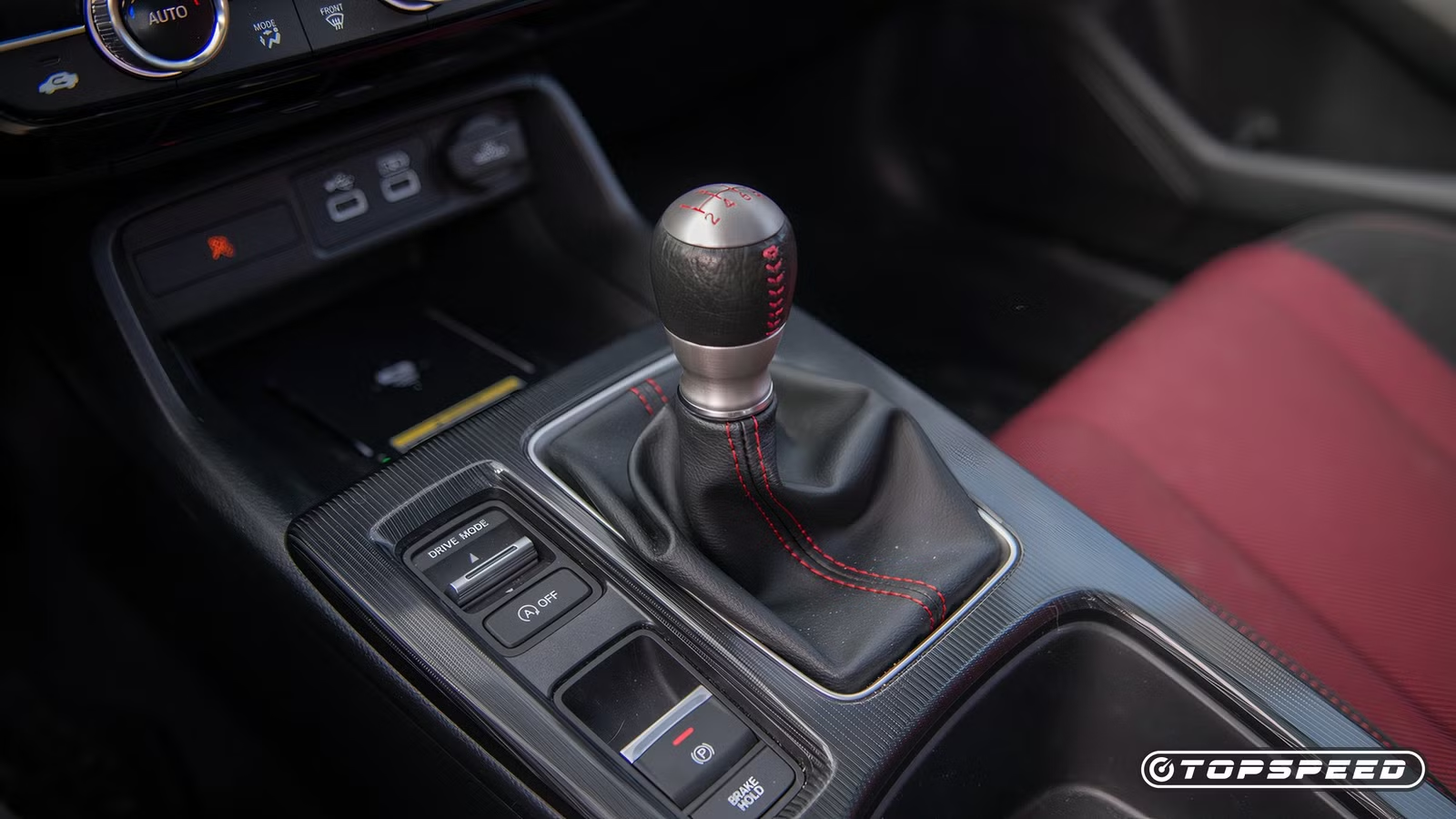
The manual Civic Si is coming back. At the IndyCar Freedom 250 Grand Prix in Washington D.C. on August 30, American Honda VP of Auto Sales Lance Woelfer confirmed that the six-speed Si will return for the 2028 model year, ending months of uncertainty that followed Honda’s announcement of a production hiatus for the 2027 model. The pause had spooked enthusiasts into wondering whether the Si’s stick shift was quietly being retired — it wasn’t.

Woelfer was candid about the market reality: “It continues to be a smaller and smaller portion of the market that gets excited about the manual, and that will probably continue to shrink, honestly.” But Honda’s answer to shrinking demand isn’t to walk away. It’s to keep the manual on the assembly line anyway — and that decision puts every rival that quietly dropped the third pedal in an awkward position.
Honda’s Commitment Goes Beyond One Model
Woelfer’s comments at the Freedom 250 covered more than just the Si. He named the Civic Type R and Integra alongside the Si as models Honda intends to keep manual-equipped, framing the stick shift as inseparable from the fun-to-drive identity those cars are built around. American Honda CEO Eiji Fujimura, also present at the event, went further — invoking company founder Soichiro Honda when asked for a longer-term commitment. “We always think about [the enthusiasts], and we always think about their dreams,” Fujimura said.

Right now, Honda’s manual lineup spans four models across two brands: the Civic Si (returning for 2028), the Civic Type R, the Acura Integra Type S, and the Integra A-Spec — though the A-Spec’s manual status for the next generation hasn’t been formally confirmed. Woelfer named the Integra alongside the Si and Type R in his statement, but stopped short of a specific commitment for the non-Type S trim. The Type R and Type S are unaffected by the production hiatus and continue with their turbocharged 2.0-liter engines and close-ratio six-speeds.
Who Still Offers a Manual, and Who Has Given Up

Honda’s renewed commitment lands harder when you look at what’s happened across the compact-sport and mainstream-sedan segments. The Subaru WRX still offers a six-speed manual as standard on base and Sport trims. The Ford Mustang keeps the stick shift alive across its lineup, from the EcoBoost four-cylinder up through the GT. At the premium end, the Porsche 911 remains available with a seven-speed manual, and the BMW M2 — though the M440i xDrive has moved exclusively to automatic — still gives buyers three pedals.
The departures are notable. The Toyota GR Corolla, one of the most celebrated manual-only launches in recent memory, has dropped the stick shift from its lineup. The Hyundai Elantra N no longer offers a manual in the U.S. The Kia Forte GT, once a budget-friendly gateway to three-pedal driving, has also abandoned it. These weren’t fringe offerings — they were mainstream-adjacent performance cars that enthusiasts specifically bought for the engagement a clutch provides. Their exits make Honda’s persistence more meaningful, not less.
Woelfer acknowledged that Honda can approximate the experience for less committed buyers through paddle-shifting systems — nodding to the transmission-simulating setup in the current Prelude hybrid — but was clear that it isn’t the same thing. “It’s just not the same as a Type R, hitting the clutch and getting that rev matched. I love it,” he told Road & Track.
What the 2028 Si Confirmation Actually Means

The 2028 Civic Si announcement closes the gap in Honda’s official language that kept speculation running all summer. Before Woelfer’s comments, Honda had confirmed the Si would return with the next-generation Civic platform — but hadn’t explicitly said the manual would come with it. That ambiguity is now resolved for the Si. The Integra A-Spec’s manual future remains less certain, and buyers waiting on that specific car should watch for further announcements as the 2028 model year approaches.
For enthusiasts planning purchases around manual availability, Honda’s public commitment — made through two senior executives at a motorsport event — is the kind of statement that’s difficult to walk back. Brands that stay the course as the manual market contracts tend to earn disproportionate loyalty from the buyers who remain. Honda has always had that with the Si crowd and the Type R faithful. Keeping the six-speed in the lineup, even as demand contracts, is how that loyalty gets renewed with the next generation of drivers who will learn to heel-toe in a 2028 Si.

Related posts


Latest Post


No Comments