
Honda Gave Up Its Trunk And Reverse Gear, Then Out-Ran Harley’s Flagship CVO
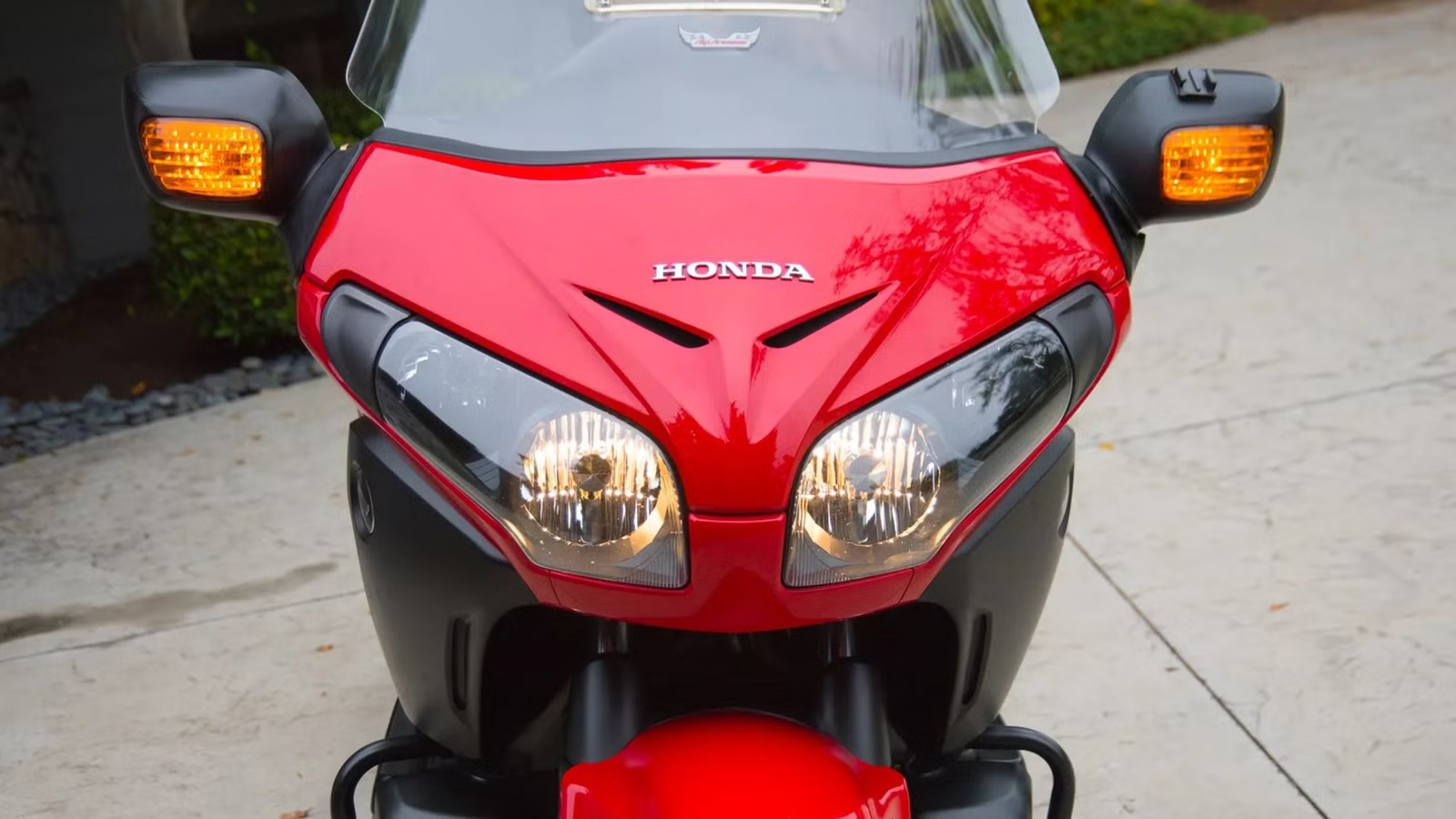
In 2013, Harley-Davidson‘s premium CVO Road Glide Custom faced a Honda that had lost some of its luxury equipment to save weight, and the results surprised more than a few motorcycle enthusiasts. In a head-to-head comparison, Honda’s cheaper six-cylinder bagger beat the exclusive Harley in acceleration despite costing roughly $13,000 less. It also impressed on winding roads and with a passenger aboard.
Harley’s CVO Badge Came With A Serious Price Tag

Harley-Davidson’s Custom Vehicle Operations (CVO) division produces some of the brand’s most exclusive motorcycles. These limited-production models combine powerful engines, premium equipment, custom paint, and distinctive styling. The 2013 CVO Road Glide Custom followed that formula with a 110-cubic-inch (1,803cc) Screamin’ Eagle V-twin. Its massive engine promised strong low-end torque, while its shark-nose fairing, premium audio system, and elaborate finishes gave it plenty of road presence.
Harley limited production to approximately 3,150 examples, including 900 special 110th Anniversary editions. The regular CVO Road Glide Custom carried a $32,999 MSRP, while the anniversary model cost $33,999. Buyers received a motorcycle with special paint, exclusive trim, and plenty of touring equipment. With that kind of price tag and a massive V-twin under the tank, the Harley had high expectations to meet. Its challenger, however, approached the bagger formula differently.
The Cheaper Challenger Had Already Given Up Some Luxuries


The Japanese challenger started with one of the motorcycle industry’s most established luxury touring platforms. Rather than develop an entirely new performance machine, its manufacturer removed equipment that added weight and complexity. The large rear touring trunk disappeared, along with the electric reverse system. Engineers also replaced the electronically adjustable rear suspension preload system with a manual hydraulic adjuster. The changes helped make the motorcycle lighter without touching its substantial six-cylinder engine.
A shorter windshield and revised rear bodywork completed the transformation into a sleeker bagger. The motorcycle retained its hard saddlebags, substantial front fairing, and comfortable seating, but it looked considerably less bulky. Overall, the changes shaved approximately 62 pounds from the full-dress touring model. Removing some of that weight from the high rear section also helped make the bike easier to manage through corners. Honda had essentially put its luxury tourer on a diet without taking away its favorite meal: horsepower.
The Honda Gold Wing F6B Deluxe Beat The CVO Where It Counted

The mystery challenger was the 2013 Honda Gold Wing F6B Deluxe, with F6B standing for Flat Six Bagger. It shared its basic mechanical package with the GL1800 Gold Wing, including the unchanged 1,832cc, liquid-cooled, horizontally opposed six-cylinder engine. Honda also retained the five-speed transmission, shaft drive, and aluminum frame. The Deluxe carried a $20,999 MSRP and weighed 849 pounds with a full tank of fuel, compared with 842 pounds for the standard F6B. Despite losing several Gold Wing luxuries, the Deluxe included heated grips, a passenger backrest, a centerstand, and self-canceling turn signals.
The real surprise arrived in Cycle World’s April 2013 comparison test. The Honda completed the quarter-mile in 11.84 seconds at 110.97 mph, while the Harley needed 12.49 seconds at 104.83 mph. That gave the F6B a 0.65-second advantage and a 6.14-mph higher trap speed. The Honda also accelerated from 0 to 60 mph in 3.3 seconds, compared with 3.7 seconds for the CVO. Both motorcycles reached the same measured top speed of 124 mph, but the Honda clearly had the upper hand getting there.

The horsepower figures helped explain the result. Cycle World measured 103.66 horsepower from the Honda and 91.27 horsepower from the Harley. Interestingly, both produced exactly 109.9 lb-ft of peak torque in the test. The Honda’s smooth flat-six could maintain useful torque at higher engine speeds, allowing it to produce more horsepower. It also accelerated faster in top-gear roll-on tests, showing that its advantage extended beyond hard launches from a standstill.
The Honda performed well through corners, too. Both motorcycles handled remarkably well for large touring machines, but the F6B remained more composed when leaned over with a passenger. The Harley’s limited rear suspension travel worked against it on rough pavement, especially during aggressive cornering. The Honda also offered better passenger comfort. Still, Cycle World considered the CVO’s performance impressive for such a large motorcycle powered by a traditional pushrod V-twin. The Harley wasn’t slow. Its opponent was simply quicker.

Acceleration wasn’t everything, and the CVO had several advantages that helped explain its premium price. It came with standard ABS, cruise control, GPS navigation equipment, and an elaborate Harman/Kardon audio system. Exclusive paint, extensive chrome details, premium components, and limited-production status added further appeal. The Honda F6B Deluxe lacked ABS, cruise control, and built-in GPS navigation. Its simpler equipment package made it less convenient for riders who wanted every touring accessory straight from the factory. The Harley also offered its distinctive V-twin sound, strong low-rpm response, and extensive customization possibilities.

The Honda countered with smoother power delivery, a comfortable riding position, stronger acceleration, and better passenger accommodations in the comparison. Its spacious saddlebags also offered practical luggage capacity without audio components taking up valuable room. However, the F6B’s short windshield created more wind noise, and the missing cruise control seemed like a strange omission on a touring motorcycle.
The price difference remained substantial: the regular CVO cost $12,000 more than the F6B Deluxe, while the anniversary edition stretched that gap to $13,000. Buyers who valued Harley’s styling, exclusivity, and touring accessories might consider the extra money worthwhile. Riders focused on performance and comfort had a compelling reason to choose the Honda.
The Faster Bagger Wasn’t The One Wearing The Premium Badge

The quarter-mile figures told the story better than any brochure. Honda‘s 11.84-second run beat Harley’s 12.49-second result in a real comparison test, while its higher trap speed confirmed a meaningful performance advantage. Honda achieved that result without giving its established Gold Wing engine a major upgrade. Instead, it removed the trunk, reverse system, and some luxury equipment to create a lighter motorcycle that could outperform Harley’s exclusive CVO. The flat-six’s smooth power delivery and willingness to rev made the weight savings even more effective.

That result didn’t make the CVO Road Glide Custom a bad motorcycle. Harley offered distinctive character, craftsmanship, premium equipment, and rarity that acceleration numbers couldn’t measure. The F6B simply showed how much performance Honda’s touring platform had hiding beneath its luxury equipment. Today, it remains an interesting used-motorcycle prospect for riders who appreciate six-cylinder refinement, comfortable cruising, and surprisingly strong acceleration.
Source: Harley-Davidson, Honda, Cycle World

Related posts

Latest Post


No Comments