
Here’s What The First-Gen Honda NSX Is Worth Today
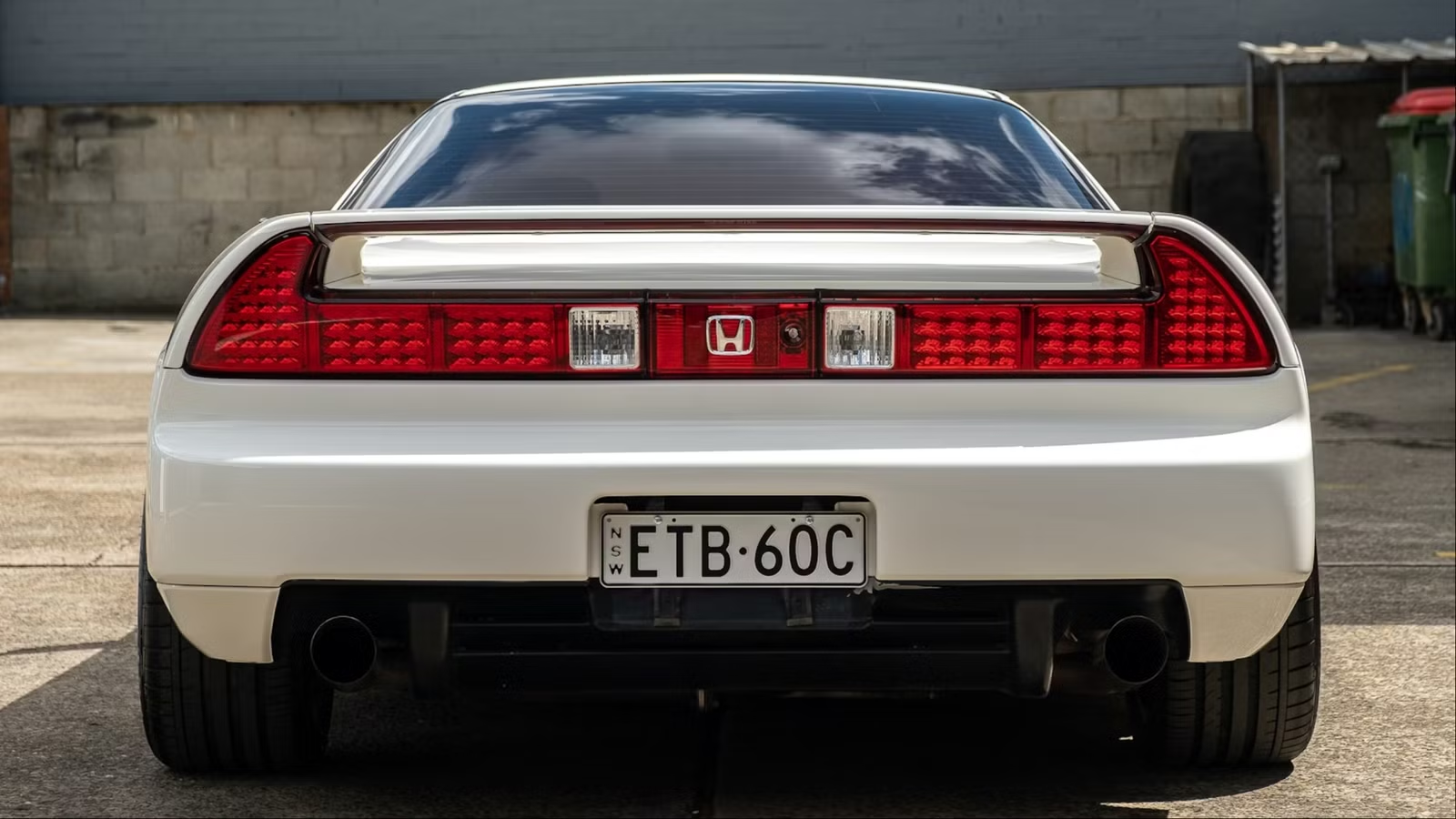
Few sports cars have aged as gracefully — or appreciated as sharply — as the original Honda NSX. When it arrived in the early 1990s, it rewrote the rulebook for what a supercar could be: lightweight, mid-engined, and genuinely livable, yet capable of embarrassing far more expensive machinery on a winding road. The vision had been in development for nearly a decade before launch, and it never wavered — Honda (and Acura, in North America) would build a supercar that anyone could drive every day without drama. The result was a legend that only looks more prescient with time.

The NSX’s importance only seems to get clearer with age. It may have seemed a little underpowered at the time, and certainly by today’s standards, but many supercars followed its lead, with manufacturers such as Audi striving to make the R8 a viable option in a one-car garage. So how much is the iconic NSX — marketed as an Acura in some markets and a Honda in others — worth today?
HotCars used expert resources such as Hagerty and classic.com for used prices, plus Carsurvey and Edmunds for in-depth research on reliability and ownership.
Here’s What A First-Generation Acura NSX Is Worth Today

For a limited-production car, Honda made a remarkable number of NSXs. When engineers at the Tochigi Research and Development Center first sketched out the project’s goals in 1984, five objectives defined the brief: performance on par with existing exotics, excellent liveability, light weight, forgiving handling characteristics, and limited production. In the end, 18,685 were sold worldwide over 16 years — impressive numbers for a bespoke supercar built to such exacting standards.
When the car launched in 1991, Honda noted that the NSX assembly plant was the smallest of any Honda facility, with the slowest production rate: just 32 cars per day, built by 200 hand-selected associates each with a minimum of 10 years’ experience. Every car was mounted on a dolly and pushed by hand from one workstation to the next, with a full inspection before moving along to the next team.
Prices For Used NSXs Are Not As High As You May Think
The NSX’s healthy production run and enduring popularity work in a buyer’s favor. There are plenty of good examples to choose from, and, if you’re not too particular about the spec, genuine bargains can still be found. The basic timeline begins with the NA1 cars, which feature an all-aluminum 3.0-liter V6 producing 270 horsepower and 210 lb-ft of torque. The automatic version made do with 252 horsepower, and the differences don’t stop there — the manual’s redline sits at 8,000 rpm versus 7,500 rpm for the automatic.
Honda Also Created A Number Of Rare Special Edition NSXs
Notable NA1 variants include the JDM-exclusive Type R, which shed 265 lbs compared to the standard car and debuted in 1993. That diet dropped the 0–60 mph time from 5.5 seconds to a flat five. Only 483 examples of the NSX-R were built before production ended in 1995 (Classic.com). One of these sought-after models recently resurfaced for sale in London. The NA2 generation arrived for 1998, bringing a larger 3.2-liter V6 with 290 horsepower and 224 lb-ft of torque, along with the open-top NSX-T targa variant. Facelifted NA2 cars followed in 2002, swapping the iconic pop-up headlights for fixed units and introducing revised suspension. Honda eventually followed the original with a more controversial second-generation NSX in 2016.
Average Used Acura NSX Prices
- Acura NSX Coupe – NA1 (1991 to 1994): $73,221
- Acura NSX-T – NA1 (1995 to 1998): $82,068
- Honda NSX Type R – NA1 (1993 to 1995): $362,064
- Acura NSX – NA2 (1998 to 2005): $125,403
- Acura NSX-T – NA2 ‘Facelift’ (2002 to 2005): $136,102
Source: Classic.com
How The NSX’s Prices Stack Up
Interestingly, the NSX bucks one well-worn collector-car trend. With many classics, enthusiasts tend to seek out the earliest examples, which are typically seen as the purest expression of the original concept — but not so with the NSX. The early 3.0-liter cars are actually where the bargains live. A 1992 coupe in good condition, according to Hagerty Valuation Tools, is valued at $63,100 — about as affordable as these cars get. Manual-versus-automatic price differences are harder to pin down precisely, but automatics can be found for even less. This four-speed automatic NSX with 19,000 miles on the odometer sold for just $52,000 in 2024.
Expect To Pay Big Bucks For Rare Special Edition NSXs
At the other end of the spectrum sit the more focused, collectible NSX variants. The ultra-rare Type-R commands serious money, with average prices for 1993–1995 examples reaching $362,064. Another highly collectible variant is the 1999 Zanardi Edition. Just 49 were built to celebrate Alex Zanardi’s back-to-back CART championships; they featured lightweight BBS wheels, other weight-saving components, and a fixed roof — a notable distinction at a time when most NSXs came with a targa top. Good examples fetch around $142,000, according to Hagerty Valuation Tools. The standard 2005 Acura NSX-T 3.2-liter — the last of the line — is another premium proposition, with strong examples commanding around $113,000.
The NSX Had True Supercar Credentials

1991 Acura NSX Specs
|
Engine |
3.0-liter V-6 |
|
Power |
270 hp |
|
Torque |
210 lb-ft |
|
0-60 mph |
5.5 seconds |
|
Top Speed |
168 mph |
Source: Acura
If anyone needs further proof that the NSX is a bona fide supercar, it’s worth noting that much of the development input came from Honda’s F1 driver, Ayrton Senna. The engine is not only mid-mounted but also naturally aspirated, featuring dual overhead cams, four valves per cylinder, and Honda’s Variable Valve Timing and Lift Electronic Control (VTEC) system. A 5-speed manual transmission came as standard, with an electronically controlled 4-speed automatic available as an option.
To save weight, the chassis uses all-aluminum construction. Aluminum alloy control arms and hub carriers feature front and rear in the four-wheel independent double-wishbone suspension, and aluminum subframes support both axles. Braking is handled by ventilated four-wheel disc brakes and a 4-channel Honda R&D-designed Anti-Lock Braking System (ABS). A Traction Control System (TCS) was also fitted to help manage wheelspin.
The NSX Is A Fine Blend Of Exotic Supercar And Japanese Reliability

Of the four reviews of the Acura NSX on Carsurvey, three gave the car 10/10 for reliability. The fourth awarded it 9/10. Like many Japanese manufacturers, Honda is renowned for building dependable machines, with some models even reaching over one million miles. One owner noted that while the car is dependable, it could use more power: ‘Honda has done a great job making this car ultra-reliable. But in a world of 400hp+ sports cars, the NSX can’t keep up in stock form. This is a car that really should have had at least 450hp to realize its true driving potential. The car’s handling & suspension could definitely support that amount of power.’
Over at Edmunds, the NSX earns a perfect 100% five-star rating from all 21 owners who posted reviews. One commented: ‘I have owned this car for 2 years and never cease to have fun while driving it. It always pleases and never disappoints. Although it was 18 years old when purchased, after only a few maintenance items (suspension, brakes, and dealer-recommended engine maintenance) and a little TLC, the car runs and drives like new. It is now 20 years old and starts and drives like it came off the showroom floor.’
Sources: Classic.com; Hagerty.com; Edmunds.com

Related posts



Latest Post


No Comments