
The Indian Cruiser That More Harley Riders Should Consider
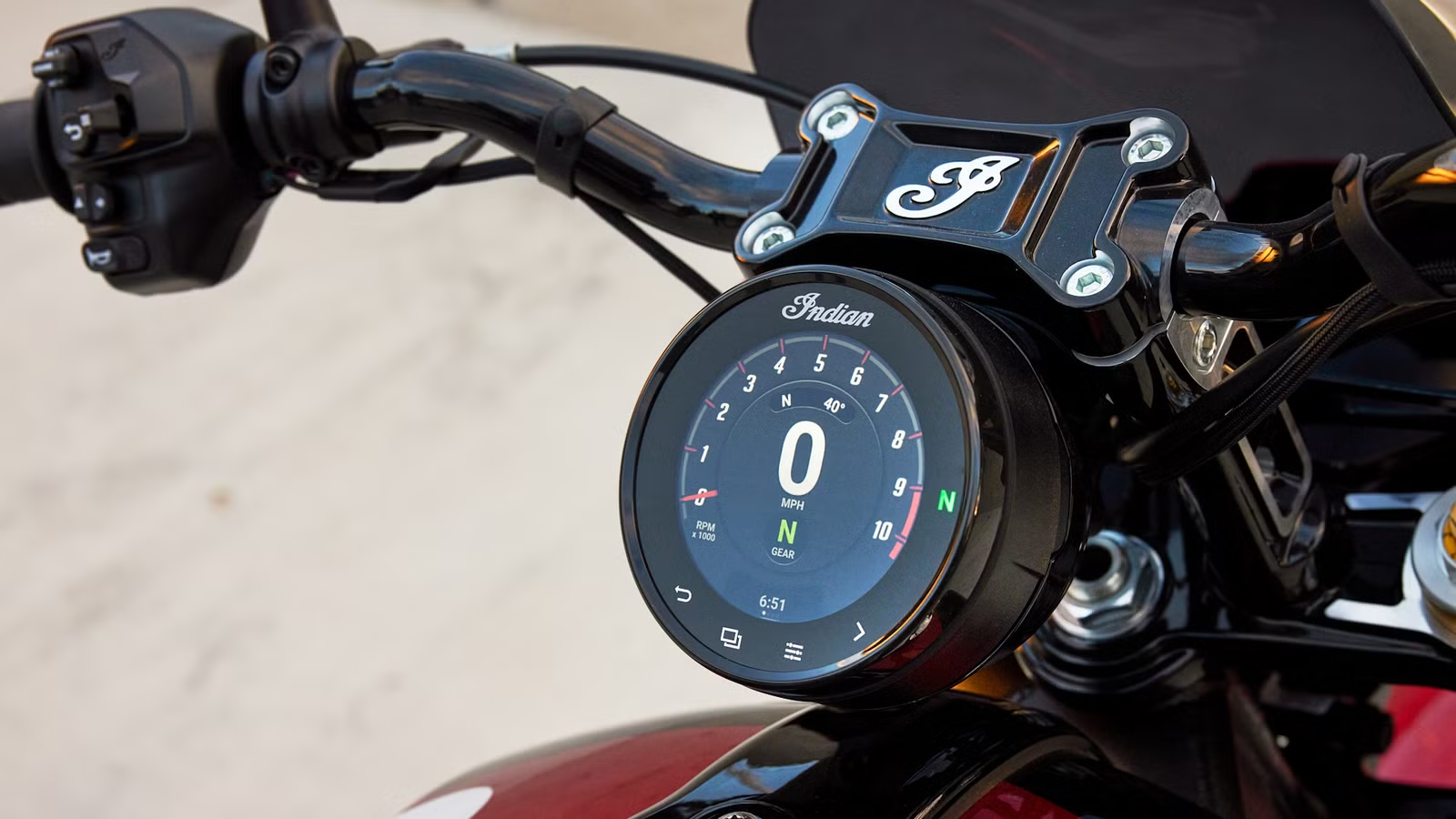
Cruiser riders tend to stay loyal to their motorcycle. Once they find a bike that fits them, there’s little reason to look elsewhere. This kind of loyalty isn’t manufactured by marketing. It’s earned mile by mile, through years of familiarity, and once it’s there, it’s hard to shake. More specifically, it’s the kind of familiarity that Harley-Davidson has earned from its riders over decades.

Which is exactly why it’s worth asking what it would actually take to shake it. What’s more, there is an Indian cruiser that often gets ignored in the process.
The Reason Harley Loyalty Is Almost Impossible To Break — And The One Thing That Can
Ask a longtime Harley owner why they’ve never ridden anything else, and the answer is rarely about horsepower figures or trim packages. It’s mostly about a sense of physical familiarity with the motorcycle. Cruisers are bought with the body as much as the brain, and that makes brand loyalty in this segment harder to break than almost anywhere else in motorcycling.

There’s also an identity component attached to cruiser ownership that doesn’t exist in the same way with sport bikes or adventure machines. The brand on the tank means something, the community around it means something, and switching can feel less like a purchase decision and more like a small defection. It’s a psychological hurdle, and it’s one most competing brands never manage to clear.
Why Matching The Feel Matters More Than Winning The Spec Sheet Argument

Winning such a rider over means matching what they already love, not just competing on spec sheets. It’s not about convincing someone their current bike is wrong. Instead, it’s about showing them something that hits the same emotional notes while quietly doing a few things better. That’s a much narrower window to succeed in. Most bikes never even get considered for it, because most manufacturers are still trying to win the argument on paper instead of in the saddle.
Meet The 101 Scout: A Different Kind Of American V-Twin

Indian’s 101 Scout walks through that window with more confidence than most. It’s unmistakably a V-twin cruiser, built around the same low-slung silhouette that’s defined the segment for a century. The engine underneath, however, is new enough that comparisons to the old air-cooled formula no longer hold up. The 1,250 cc mill has a compression ratio of 12.5:1 and churns out 111 horsepower and 82 pound-feet of torque, the twist peaking at 6,300 rpm.
Liquid cooling, a genuine bump in output, and a chassis that feels noticeably more modern all point to a bike that respects the Scout name without being trapped by it. Indian rebuilt the core of the bike while keeping every visual cue that makes it read as a Scout from thirty feet away. It’s a harder balance to strike than it sounds, and that is one of the main reasons the bike has drawn attention from riders who normally wouldn’t look twice at anything not wearing a Bar and Shield.
Handling That Might Surprise Milwaukee Loyalists

The first thing that tends to catch Harley riders off guard when they swing a leg over the 101 Scout isn’t the power — it’s how the bike moves underneath them. Cruisers have a reputation for handling like a couch on wheels, stable but reluctant to change direction. They are at their happiest going in a straight line. The 101 Scout doesn’t ride like that. It tips into corners with less hesitation, holds a line with less muscle input, and generally feels like it wants to be ridden rather than merely cruised.
That difference shows up most clearly in the kind of riding that cruisers usually aren’t built for: tight parking lots, U-turns on narrow roads, or quick direction changes in traffic. Where a heavier bike demands deliberate input and a wide turning radius, the 101 Scout accomplishes more with less.
At 549 lbs, It’s Lighter Than Most Harley Equivalents — And You Feel It Immediately

Much of that comes down to basic physics. At 549 lbs wet weight, the 101 Scout is lighter than most comparable Harley models, and what weight it does carry sits lower in the frame. That combination makes the bike easier to muscle around a parking lot at walking speed and more composed when a back road turns twisty.
It’s not a sport bike wearing a cruiser costume, but it’s noticeably more willing than what a lot of longtime cruiser riders are used to. That willingness tends to be the first crack in the “cruisers all handle the same” assumption that keeps many riders from ever testing the alternative.
All-Day Ergonomics And Just Enough Tech — Without The Cockpit Clutter

None of that agility comes at the expense of the all-day comfort cruiser riders actually care about. The riding position is still relaxed, the seat is still built for hours rather than minutes, and the bike still delivers that low, unhurried feel that makes cruisers what they are. Indian has layered in just enough modern convenience that it doesn’t feel like you’re stepping backward in time to get it.
Bars, Pegs, And Seat Height Dialed For Hour Six, Not Just The First Test Ride

The bars, pegs, and seat height are arranged in a way that keeps wrists and knees comfortable well past the first hour of a ride. Nothing about the layout feels stretched out or cramped. Small details such as seat padding density, peg placement relative to the hips, and bar reach add up over a full day of riding in ways that don’t show up in a five-minute test ride but absolutely show up on hour six of a road trip.
Keyless Ignition And Ride Modes That Know When To Disappear

A clean digital display, keyless ignition, and selectable ride modes tucked into the package add real convenience without turning the cockpit into something busy or overwrought. It’s tech that shows up when you need it and disappears when you don’t. That is exactly how it should work on a bike whose entire appeal is simplicity rather than spectacle.
Such restraint matters. Plenty of manufacturers, chasing a more premium feel, end up piling on screens and menus that fight the analog character riders came for in the first place. Indian seems to understand that a cruiser’s tech should feel like a quiet upgrade, not a redesign of what the bike is supposed to be.
The 101 Scout Checks Every Harley Box — Here’s What It Adds On Top

None of this is an argument that Harley riders are doing it wrong. It’s an argument that many of them have never actually swung a leg over the alternative, and that the assumptions keeping them from doing so are worth examining. The 101 Scout checks the boxes that matter most to Harley riders — weight, sound, low-end torque, comfort — while adding a bit more composure in the corners and a bit less friction in daily use.
It’s not a reason to abandon brand loyalty built over years or decades. Instead, it’s a reason to test the assumption underneath it, ideally on a Saturday afternoon with nothing else on the schedule and a dealer willing to hand over the keys for twenty minutes.
What Switching Actually Costs You

The short answer comes in at an MSRP of $16,999. The long answer is: less than most riders assume. Unlike the old days, parts availability, dealer networks, and aftermarket support have all caught up enough that owning an Indian doesn’t mean settling for less infrastructure than a Harley owner is used to. Resale value has followed a similar trajectory, closing a gap that used to be a real argument against looking anywhere else.
The real cost, however, isn’t a practical one — it’s a small one. It’s just the fifteen minutes it takes to sit on one and find out it feels more familiar than expected. For a rider who’s spent years assuming there’s nothing else out there worth the trouble, that’s a cheaper experiment than it sounds, and one that a surprising number of them walk away from wanting to repeat.
Source: Indian Motorcycle

Related posts




Latest Post


No Comments