
GM’s 6.2-Liter V8 Is In Nearly 1 Million Vehicles — And A Federal Investigation Just Made Every One Of Them A Question Mark
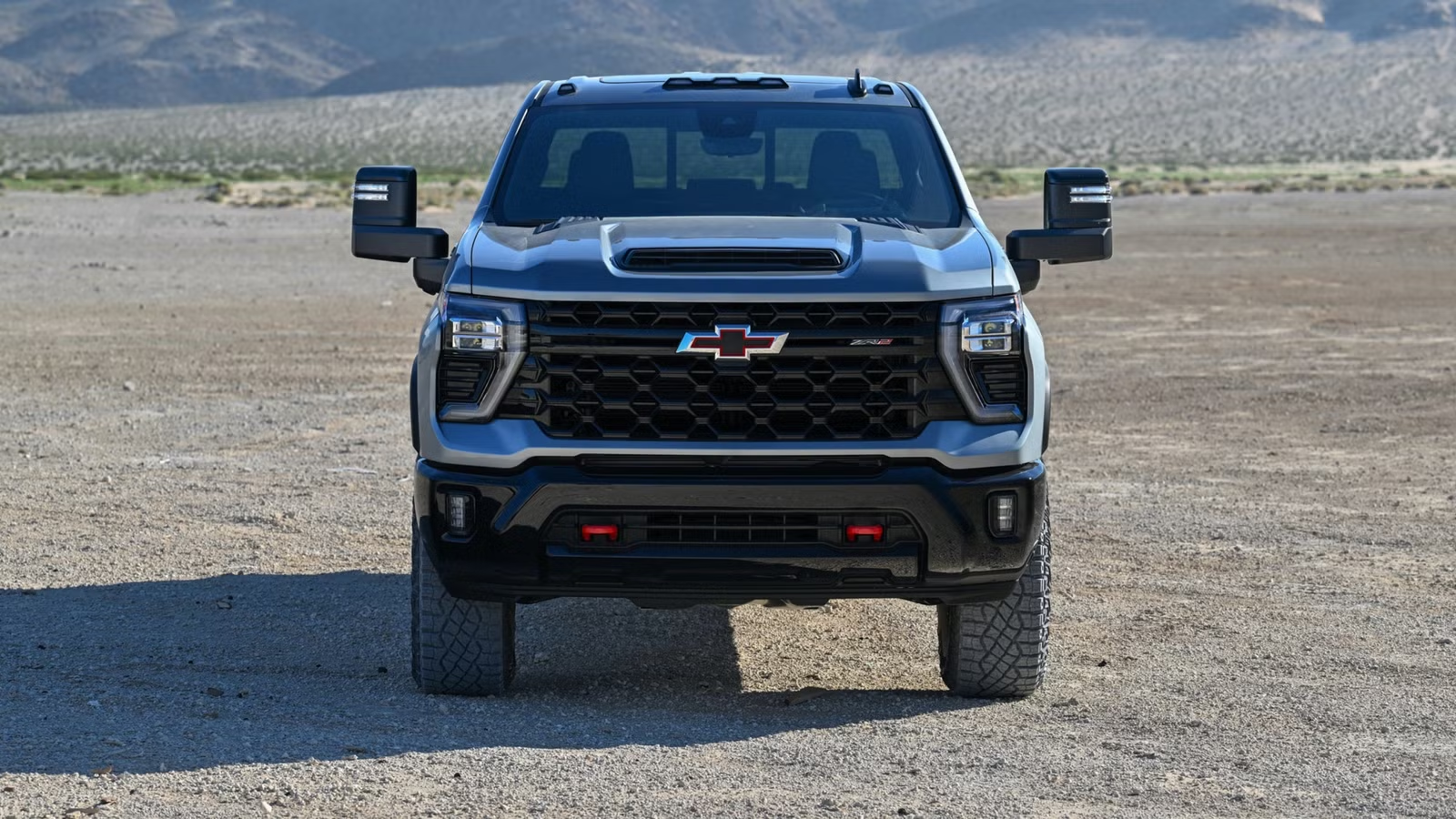
Federal safety regulators escalated their investigation into General Motors’ 6.2-liter L87 V8 on August 21, expanding a formal engineering analysis to cover an estimated 997,743 trucks and SUVs from the 2021 through 2026 model years. The National Highway Traffic Safety Administration acted after receiving nearly 500 owner complaints of continued engine failures on vehicles that had already been through GM’s official recall fix — and after GM itself acknowledged awareness of nearly 7,000 post-remedy failure reports internally.

This is not a routine recall story. GM issued a remedy in April 2025, owners reported it didn’t work, and the federal government is now formally assessing whether that fix was ever adequate. For anyone shopping — or already driving — a Chevrolet Silverado 1500, Tahoe, or Suburban, a GMC Sierra 1500, Yukon, or Yukon XL, or a Cadillac Escalade or Escalade ESV with the 6.2-liter engine, the investigation introduces a category of uncertainty that goes well beyond a typical recall notice.
What Failed, What Was Fixed, and Why the Fix Isn’t Holding
The original recall — campaign 25V274, launched in April 2025 — covered approximately 600,000 vehicles and traced the L87’s failures to manufacturing defects in rotating assembly components sourced from a third-party supplier. Two specific problems were identified: machining sediment left in connecting rods and crankshaft oil galleries, causing rod-bearing damage; and out-of-spec crankshaft dimensions with surface finish irregularities. The engine production window in question ran from March 1, 2021 through May 31, 2024.

The remedy dealers applied depended on the vehicle’s condition. Trucks and SUVs that failed a diagnostic scan for trouble code P0016 — which flags crankshaft or camshaft misalignment — were eligible for a full engine replacement. Those that passed inspection received a switch from the factory-spec 0W-20 oil to a thicker 0W-40 viscosity, a new oil filler cap, and a revised owner’s manual insert. That oil-viscosity change was the fix for the majority of affected vehicles.
The problem: NHTSA kept receiving failure reports after the remedy was applied. Of the 499 complaints the agency has logged post-remedy, 26 came from owners whose vehicles had received a full engine replacement — not just an oil change. Meanwhile, NHTSA also received 191 reports of catastrophic failures in L87 engines built after the original suspect production window, suggesting the issue may extend beyond what the April 2025 recall addressed.
What an Engineering Analysis Means — and What Could Come Next

NHTSA’s escalation to a formal engineering analysis, designated EA26005, is a significant step. A recall query asks whether a prior remedy is performing as intended; an engineering analysis is a deeper technical evaluation where regulators examine components, testing protocols, and supplier manufacturing controls. It is often the final administrative phase before the agency demands an expanded recall or a more comprehensive fix.
If NHTSA determines that switching to 0W-40 oil is insufficient to prevent spun bearings, broken connecting rods, or scarred crankshafts, GM could face a secondary recall requiring full engine replacements across nearly one million vehicles. That would be an enormous undertaking — and an enormous cost. GM has separately asked a federal court to dismiss owner lawsuits, arguing the recall already provides the remedy plaintiffs are seeking. NHTSA’s expanded investigation complicates that legal position considerably.
At least one crash and one injury have been linked to sudden loss of motive power from the failing engines, according to the Office of Defects Investigation’s findings.

The 6.2-liter V8 is not a base-trim engine. It sits at the top of GM’s full-size lineup — the performance and premium option in the Silverado and Sierra, the standard powerplant in the Tahoe and Suburban High Country, and the engine under the hood of the Cadillac Escalade. Buyers who paid a premium specifically for that engine are now the ones most exposed to this uncertainty.
For current owners of 2021–2026 models with the L87, the practical advice is straightforward: treat any warning light, unusual knocking, or sudden hesitation as urgent. Keep detailed service records of all recall work and oil changes, and report any post-remedy issues directly to NHTSA at safercar.gov. Owners can check whether their specific vehicle is included using their VIN at nhtsa.gov.
For prospective buyers cross-shopping a Silverado High Country, Tahoe Premier, or Escalade against Ford, Ram, or Toyota alternatives, the investigation is worth factoring into the decision. The 6.2-liter’s reliability record is under active federal scrutiny, and the outcome of EA26005 — whether it results in a secondary recall, a broader fix, or a clean bill of health — won’t be known for some time. Until NHTSA completes its analysis, the engine’s long-term reliability picture remains genuinely unresolved.

Related posts




Latest Post


No Comments