
Gas Charger Outsells Electric Daytona 15 To 1 In Q3 2026
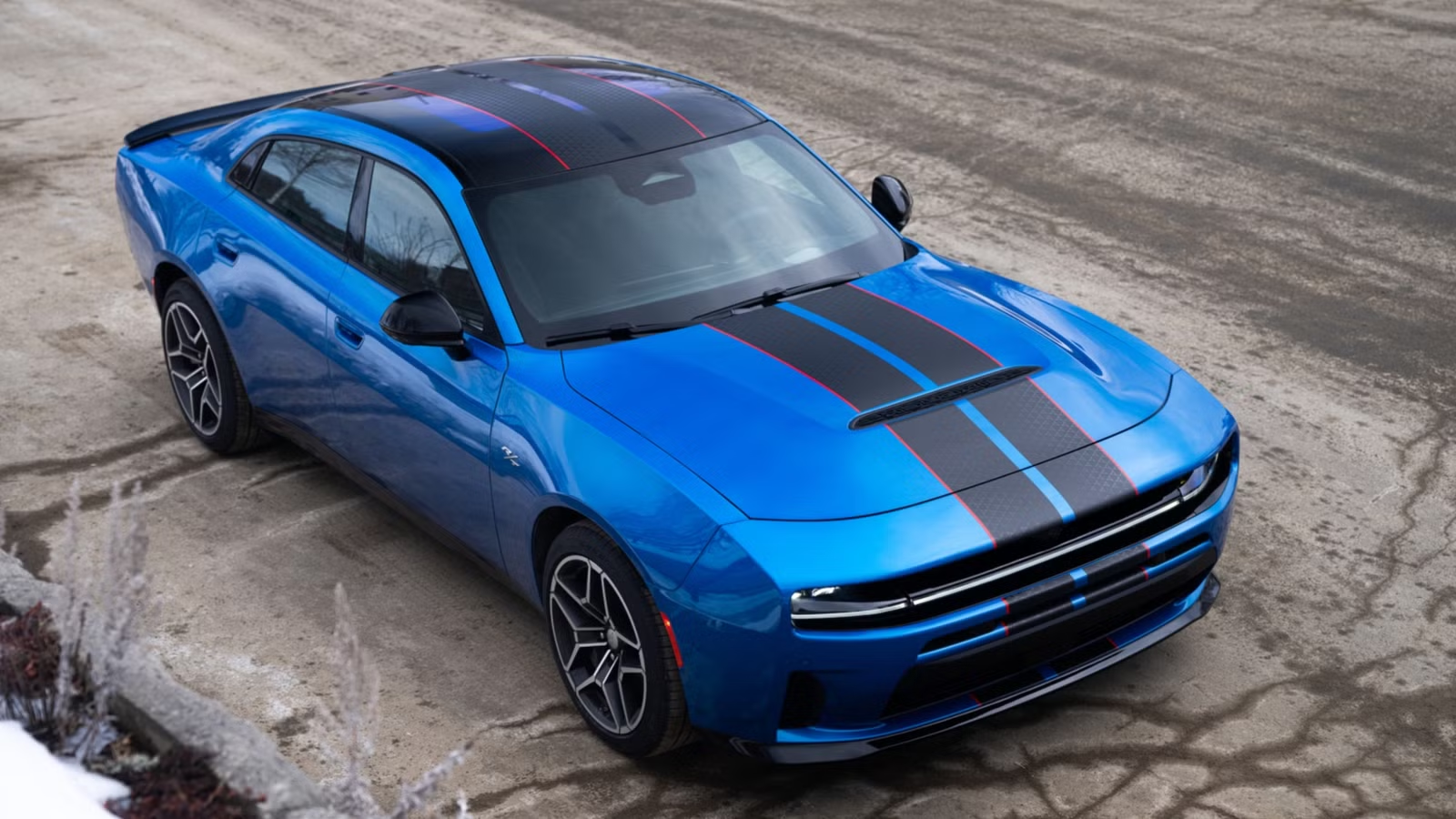
Stellantis just put a number on something muscle-car diehards have been saying since the Charger Daytona launched: nobody wants a battery where the Hemi used to live. The automaker’s Q3 2026 sales report shows the gas-powered Hurricane Charger outselling the electric Daytona by nearly 15 to 1, with 3,446 Hurricane-powered units moving versus just 233 Daytonas.

The gap isn’t a blip. It’s the clearest data point yet in the fight Dodge picked for itself when it killed the Hemi and bet the Charger nameplate’s future on electrons. Buyers have now had a full year to choose between the two, and they’re choosing combustion almost every time.
The Numbers Behind The 15-To-1 Split
Between July and September, Dodge sold 3,446 gas-powered Chargers, which include the R/T, Scat Pack, and Sixpack trims, all running the 3.0-liter twin-turbo Hurricane inline-six. That’s up 1,348% from the 238 units sold in Q3 2025, though a chunk of that jump comes from the fact the gas-powered eighth-gen Charger didn’t enter production until late last year.

The Daytona’s numbers moved in the opposite direction. Dodge sold just 233 of the EVs in Q3, down 92% from 2,776 a year earlier. Zoom out to the full year and the pattern holds: Hurricane Charger sales hit 8,029 units from January through September, a 330% jump over the same stretch in 2025, while Daytona sales cratered to 767 units, down 89%. Some of that EV collapse traces back to the expired $7,500 federal EV tax credit, which pulled buyers forward into 2025 purchases before drying up entirely.
The Hurricane Delivers Real Muscle-Car Numbers

This isn’t a case of buyers settling for less performance to get a tailpipe. The base Charger R/T Standard Output makes 420 horsepower and 468 lb-ft of torque, good for 0-60 in 4.6 seconds and a 168 mph top speed. Step up to the Scat Pack High Output and you’re looking at 550 horsepower, 531 lb-ft, a 3.9-second 0-60 run, and a 177 mph top end. Those are legitimate muscle-car figures, not consolation-prize specs.
The Daytona isn’t slow either. The base Daytona R/T makes 496 horsepower and 404 lb-ft with PowerShot engaged, hitting 60 in 4.7 seconds, while the dual-motor Daytona Scat Pack cranks out 670 horsepower and runs 0-60 in 3.3 seconds. On paper, the EV is faster. On the sales floor, it isn’t close. Enthusiasts keep coming back to the same complaint: a muscle car without a V8, or at least something that sounds and feels like one, doesn’t clear the bar no matter what the stopwatch says.
Dodge’s Hemi Comeback Can’t Come Soon Enough

Dodge already knows where the real demand lives. The automaker has promised a Hemi-powered Charger SRT Hellcat by 2030, built around the 6.2-liter supercharged V8 and expected to land around 700 horsepower, which would put it above the current Daytona Scat Pack’s output. Tim Kuniskis, who now runs Ram after steering Dodge through the EV pivot, has already proven the formula works elsewhere in the lineup.
The Ram 1500 Rumble Bee, powered by a 5.7-liter Hemi V8, sold out its initial allocation in 90 minutes when order books opened, with production slots through March 2027 claimed within 24 hours. Between that and the Charger sales split, the message from buyers is about as blunt as it gets. Until the Hemi actually comes back under a Charger’s hood, the Hurricane will keep doing the heavy lifting, and the Daytona will keep sitting on dealer lots waiting for someone to want it.

Related posts


Latest Post


No Comments