
Full test: Aston Martin DB12 S is a sharper, louder and lighter GT, but is it better?
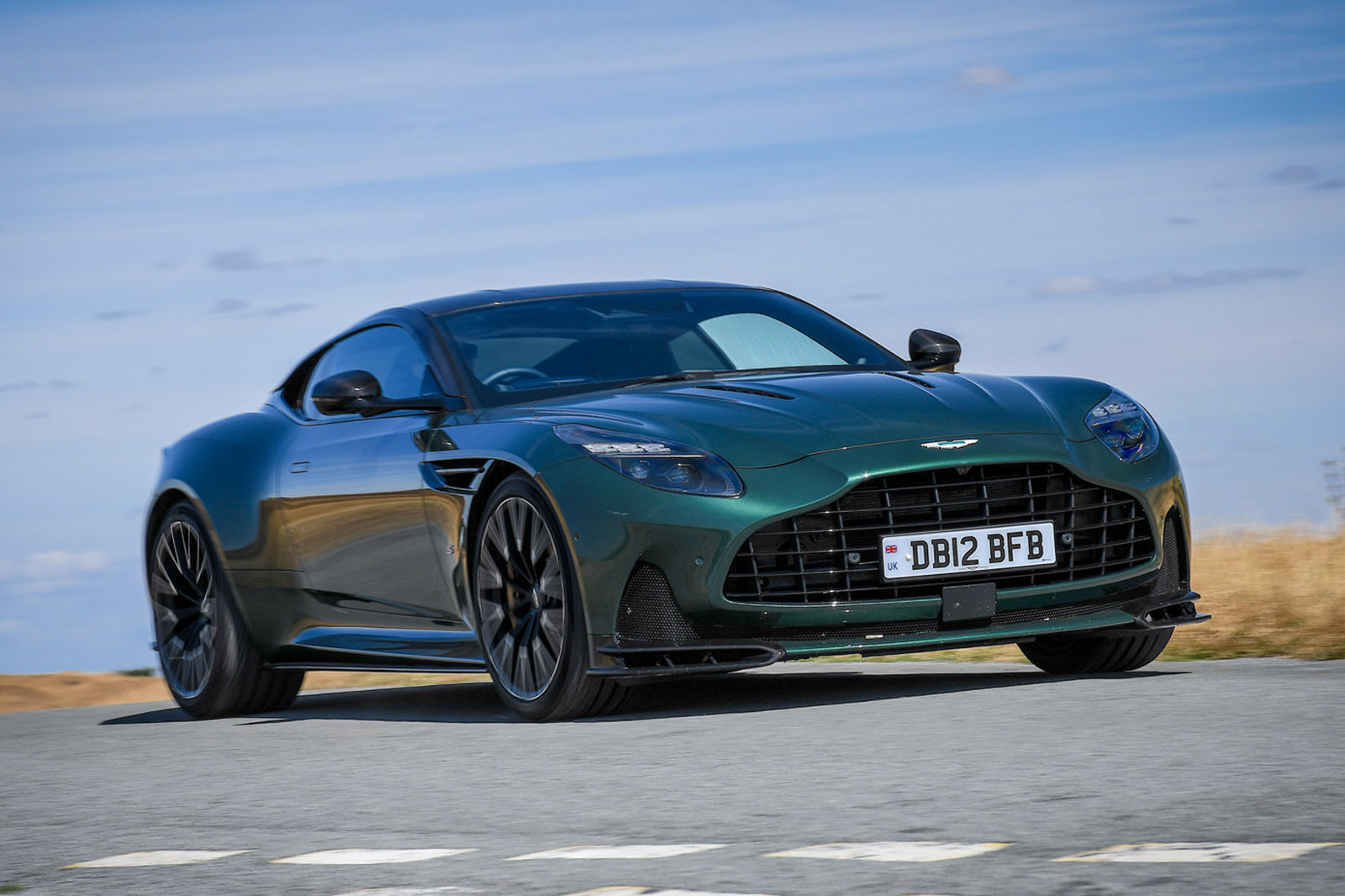
Torque fill is not in the DB12 S vocabulary, and so lower- and mid-range response for this entirely unhybridised V8 can be slightly soft to pedal inputs.
However, it is certainly robust-feeling when it lands and for a machine that will carry its occupants in real comfort, the Aston’s savagery can come as a shock. Moreover, no testers felt that turbo lag had been exacerbated by the dialling up of boost pressure versus the regular DB12. What you will notice in the S is the way the voice and ferocity of the delivery builds with revs, surging to the 7500rpm limiter without the slight breathlessness of the non-S.

And so to the numbers. Aston Martin has habitually tuned its ZF-sourced gearboxes for alacrity on the move rather than standing-start prowess (interestingly there’s a trade-off here). As such, during a launch-control start the revs are held at only 2000rpm. It’s the kind of stunt you can pull when 590lb ft arrives at only 2750rpm.
Our test car subsequently fired itself to 60mph in 3.4sec, matching Aston’s claim. This is just three-tenths shy of the time set by the 824bhp Vanquish. Surprisingly, by 100mph the DB12 S has closed the gap to just two-tenths, though thereafter the V12 power of its bigger sibling begins to tell. In fact, the new Vantage is also quicker than the DB12 S to 150mph. This is what you get from putting the same hulking powertrain in a considerably smaller machine.

Aston deserves credit for creating three models of similar speed but clearly demarcated in character and use case. You might want to look elsewhere, of course, and if straight-line speed and touring chops are what you want, the new 911 Turbo S is easily quicker than any of the front-engined Brits. Not quite as tractable, mind: 4.5sec for 30-70mph in fourth for the Porsche is beaten by the 4.2sec of the DB12 S.
The Aston Martin also stops well. Remarkably well, in fact. We know Michelin’s Pilot Sport S5 is a superb tyre and the carbon-ceramic discs resemble Chinese banquet tables, but in similar conditions our test car’s best 70-0mph stop of 39.2m bettered the best stop of the Turbo S. Is such monumental stopping power worth it for the not infrequent brushing and whimpering of the rotors in normal use? Possibly, especially since the car’s wet-braking display was every bit as impressive as the dry runs.
That slight feeling of mechanical presence, for want of a better word, is something you find elsewhere. The car uses a rear-mounted transaxle eight-speed automatic gearbox, whose shifts come pretty quickly, and also with just a hint of a clunk, and the odd vibration, on occasion. And you can detect a little bit of propshaft whine from the transmission tunnel at motorway speeds, but it’s all part and parcel of this car’s slightly old-fashioned, appealingly honest, muscular and mechanical mystique, which the S revisions seem to bring to the fore.

Related posts


Latest Post


No Comments