
Forget Harley’s Iron 883, This Japanese Bobber Packs More Torque And Less Weight
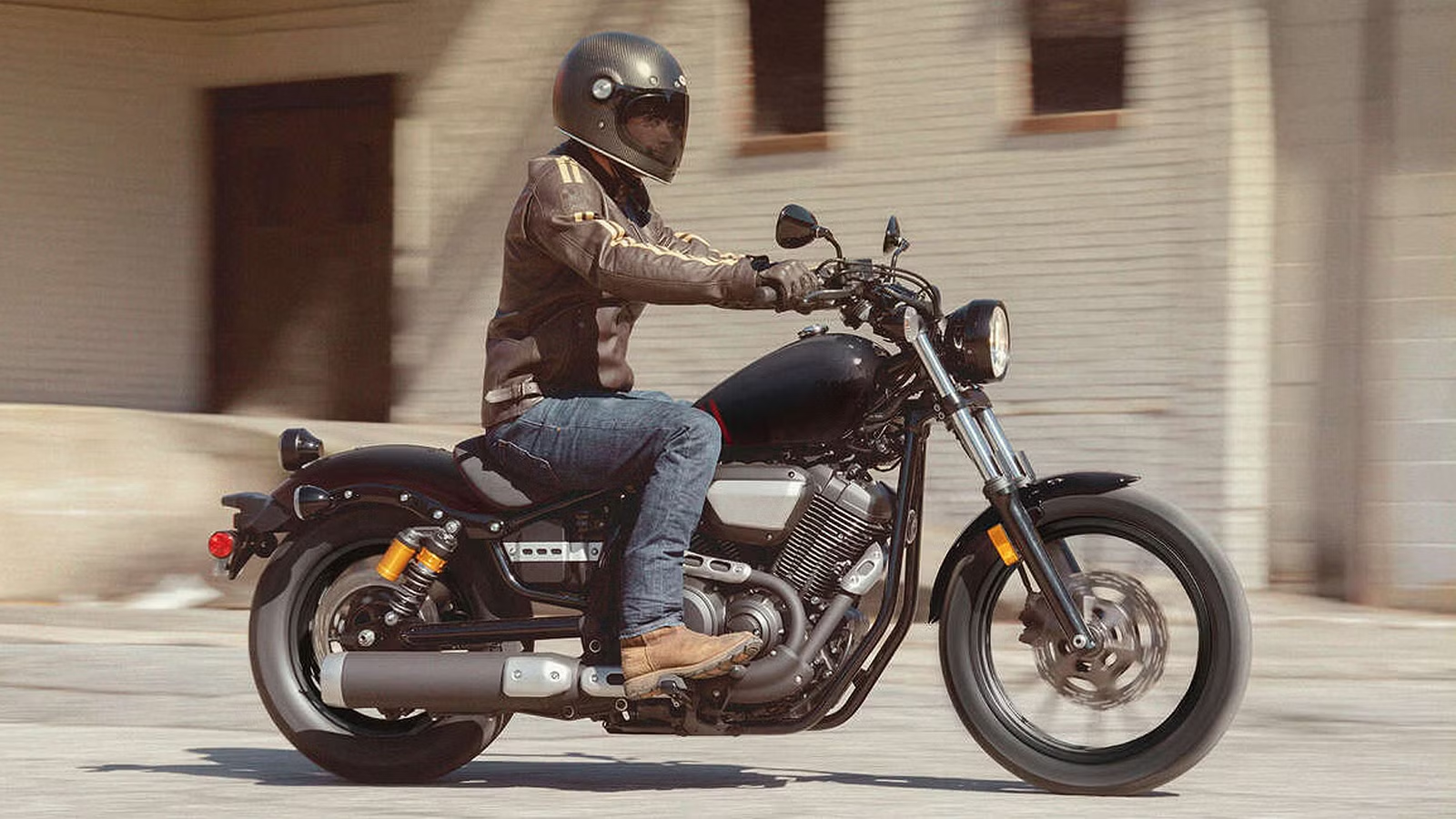
The Harley-Davidson Iron 883 was everything you’d expect from an old-school, macho American cruiser. It has stripped-back styling, plenty of character and a V-twin rumble. But, Harley discontinued the air-cooled Sportster lineup in 2022, leaving enthusiasts with fewer choices. Interestingly, a Japanese rival had already perfected the formula while offering more torque and with less weight.
Harley-Davidson Left The Traditional Sportster Behind

For decades, the Sportster was the entry point for the Harley-Davidson experience. It was affordable, approachable, and had an unmistakable American V-twin character without the bulk of the brand’s other larger motorcycles. The Iron 883, with its blacked-out styling, low-slung seat, and air-cooled Evolution motor, was particularly appealing. It was quite appreciated by riders who loved simple, traditional motorcycles.
However, things changed when Harley introduced the liquid-cooled, Revolution Max-powered Sportster S. With considerably more power, modern aids, and an entirely different engine character, the new Sportster was a major departure from the original formula. The traditional Iron 883 eventually disappeared from dealership floors, leaving riders who wanted that familiar experience at the mercy of used examples or alternatives from other manufacturers.
A Japanese Cruiser That Offered A Similar Experience


The Japanese manufacturers have been building cruisers for America for decades now. Most of the major Japanese bike makers had pitched their bikes in the American market. And, Yamaha, too, had considerable experience with V-twin cruisers. In fact, some of the best Japanese motorcycles have demonstrated just how well Japanese manufacturers can build cruisers.
But one motorcycle came particularly close to the Iron 883’s character. It had a similarly exposed air-cooled V-twin engine, a compact fuel tank, minimalistic bodywork, and a low-slung silhouette. It even had a belt drive, just like the Harley.
Rather than chasing outright performance or adding unnecessary gimmicks, the Japanese manufacturer concentrated on the basics of a good cruiser: a torquey engine, straightforward mechanical layout, and a silhouette that looked just as good parked outside a cafe as it did cruising down the freeway. And surprisingly, it had a few advantages over the Harley.
Say Hello To The Yamaha Bolt R-Spec

That motorcycle in consideration is the Yamaha Bolt R-Spec, introduced as part of the Bolt family, though it came out a year later in 2014 with the C-spec model. At its heart sits a 942 cc, air-cooled, 60-degree V-twin putting out approximately 65 horsepower and 59 lb-ft (80 Nm) of torque. In comparison, the Iron 883’s 883cc Evolution V-twin develops around 54 lb-ft (73 Nm). The difference isn’t enormous, but it’s noticeable, at least on paper, particularly for motorcycles designed around low and mid-range performance.
The Yamaha also weighs approximately 542 pounds wet, compared with the Harley’s 564 pounds. That’s a 22-pound advantage, which is always welcome when dealing with a relatively heavy cruiser. Both motorcycles use five-speed transmissions and belt final drive, and their minimalist styling makes the similarities difficult to ignore. However, the Bolt isn’t simply a Japanese copy of the Harley Sportster. It has done some interesting engineering beneath its familiar-looking bodywork.
Old-School Character Backed By Japanese Engineering

The Bolt’s air-cooled V-twin combines traditional cruiser character with modern engineering. Ceramic-composite-plated cylinders improve heat transfer and reduce friction, while forged aluminum pistons add durability. Electronic fuel injection and belt drive simplify ownership, while the R-Spec’s piggyback rear shocks add a distinctive touch.
None of this makes the Bolt particularly advanced, but that’s the point. Yamaha focused on delivering classic V-twin character without unnecessary complexity. Regular servicing is still essential, though, and maintenance costs aren’t necessarily lower than those of a well-kept Sportster.
Lighter And Stronger, But Not Better At Everything

The Bolt’s lower weight and additional torque make it an appealing alternative, but the Iron 883 still has a few advantages. For starters, the Harley has a lower seat. At approximately 25.7 inches (653 mm) laden, it’s noticeably lower than the Yamaha’s 27.2-inch (690 mm) seat height. That could make a difference for shorter riders or anyone who prefers being able to plant both feet firmly on the ground.
The Harley also has a distinctive riding experience that’s difficult to capture through specifications alone. Its engine vibrations, exhaust note, and unmistakable styling are a significant part of its appeal. The Bolt, meanwhile, feels relatively compact for a cruiser, although its 542-pound wet weight still demands respect when maneuvering at low speeds. Neither motorcycle is particularly suited to aggressive riding, and both prioritize relaxed riding over spirited performance. Ultimately, Yamaha’s advantages on paper don’t automatically make it the better motorcycle for everyone.
Why The Yamaha Bolt Makes More Sense Today

The Iron 883 is no longer available new, leaving buyers to navigate the used market, where service history, modifications, and condition matter. The Yamaha Bolt R-Spec, meanwhile, was still available new in 2025 for $8,999, complete with a factory warranty and traditional air-cooled V-twin character. It isn’t perfect, though. Equipment is basic, and the US-spec model lacks ABS. Still, for riders who value simplicity over modern technology, the Bolt remains an appealing alternative.
The Japanese Bobber That Kept The Old Sportster Spirit Alive
The Yamaha Bolt R-Spec isn’t faster, lighter, or more sophisticated than every cruiser on the market. Nor does it offer the same inheritance and customization culture that makes owning a Harley-Davidson special.
What it does offer is a familiar riding experience with a few, actually meaningful advantages. Its larger V-twin produces more torque than the Iron 883, it weighs less, and it also retains the simplicity that made traditional cruisers appealing in the first place. Harley-Davidson may have turned the Sportster in a different direction, but the Bolt shows that there’s still plenty to appreciate about the old formula.

Related posts

Latest Post


No Comments