-

Green Ford Maverick Parked In An Alley Ford -
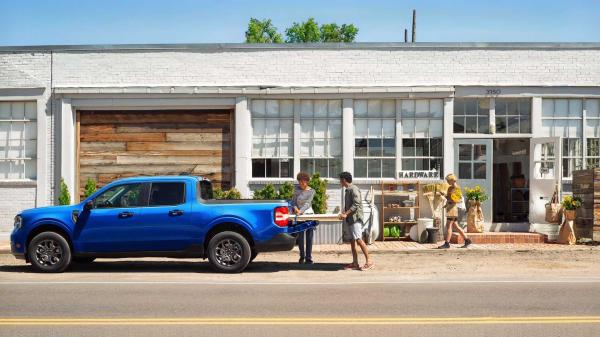
Blue Ford Maverick Being Loaded Ford

Ford Maverick: The Compact Hybrid Truck That Sells Out
13 minutes reading
Wednesday, 2 Sep 2026 11:00 0 40 autotech

For decades, the pickup truck formula was remarkably consistent. Put the body on a separate ladder frame, fit a powerful gas or diesel engine under the hood, give it a generous payload and towing rating, and make it big enough to do serious work. The bigger the truck, the more capable it was supposed to be. The Ford Maverick challenged almost every part of that formula. Instead of shrinking a conventional pickup, Ford approached the problem from the opposite direction.

50 autotech
The Maverick was designed as a compact, unibody truck with a hybrid powertrain, a relatively small footprint and a price aimed at buyers who might never have considered owning a pickup before. That combination sounds modest on paper. In practice, it proved to be one of the most consequential pickup ideas of the past few years. The Ford Maverick isn’t intended to replace an F-150 or Ranger for someone who regularly hauls heavy equipment or tows a large trailer. Its appeal lies elsewhere. It offers enough truck capability for everyday jobs while retaining the efficiency, maneuverability, and driving characteristics of a car-based vehicle. And that is the real Maverick story. Ford didn’t simply build a smaller truck. It questioned whether every pickup buyer actually needed a traditional truck in the first place.
The Maverick Formula: Why Unibody and Hybrid Work So Well Together
Why Ford Went Unibody
The most important thing to understand about the Maverick is that its compact dimensions aren’t merely a result of Ford making a smaller pickup. Its entire philosophy is different. Traditional body-on-frame trucks separate the cab and body from the chassis underneath. That architecture is exceptionally well suited to heavy towing, high payloads and demanding off-road work. The trade-off of this capable architecture is that it is also heavier and generally requires more hardware to deliver the same level of everyday refinement expected from a passenger vehicle.

35 autotech
The Maverick is built on Ford’s C2 platform architecture, utilizing a car-like unibody design that integrates the body and chassis into a single structure, instead of traditional body-on-frame truck construction. That allows Ford to keep the truck relatively light and compact while improving packaging and creating a driving experience that feels closer to a crossover than a conventional pickup. For the average owner, that matters more than it might sound.
A smaller truck is far better suited to urban environments and suburban neighborhoods, where most pickups spend the majority of their lives. It is easier to park and maneuver through narrow urban streets and less cumbersome in shopping-center parking lots. Its dimensions also make the bed easier to access and the vehicle less intimidating for someone buying their first pickup. The compromise is equally important. Unibody construction isn’t inherently inferior, but the Maverick isn’t designed around the same heavy-duty requirements as a body-on-frame truck. Its engineering priorities are efficiency and everyday versatility rather than maximum towing or payload. That distinction explains almost everything about the Maverick.
Ford Maverick Hybrid vs. EcoBoost


The Ford Maverick Hybrid takes the concept one step further by pairing the compact unibody platform with an electrified powertrain.
The Hybrid variant combines a 2.5-liter gasoline engine with electric assistance and an electronic continuously variable transmission (eCVT). This petrol-electric setup develops a combined 191 hp and 155 lb-ft of torque. Its appeal isn’t simply that it uses less fuel than a conventional truck; it’s that the hybrid system complements the Maverick’s intended role. In urban driving, where frequent stops and starts allow the system to recover energy through regenerative braking, the hybrid can make particularly good use of its electric motor. That is precisely the environment in which many compact-truck buyers will spend most of their time.
The alternative is the 2.0-liter EcoBoost, developing 250 horsepower and 280 lb-ft. While most of the 2.0-liter EcoBoost-powered Mavericks utilize an 8-speed automatic transmission, the street-styled Lobo trim pairs the EcoBoost engine with a specialized 7-speed automatic transmission featuring paddle shifters. With turbocharged gasoline power and available all-wheel drive, it is the performance-oriented choice and the more obvious option for buyers who regularly carry heavier loads, need additional traction, or simply want more acceleration.
That creates an interesting split within the range. The hybrid is arguably the purest expression of the Maverick’s original philosophy: small, efficient and useful. The EcoBoost broadens the truck’s capability and makes it more attractive to buyers who still want some of the traditional pickup experience. The important point is that neither powertrain transforms the Maverick into a heavy-duty truck. Instead, they allow buyers to choose which part of the compact-pickup formula matters most: efficiency or performance.
Ford Maverick Price, Trims and the Capability Sweet Spot
XL, XLT, Lariat, Lobo and Tremor: Where the Maverick Makes Sense
The Maverick’s original appeal was closely tied to its accessible pricing. A new pickup that could be bought for significantly less than many conventional trucks immediately attracted buyers who had previously regarded new pickups as financially out of reach. In 2026, that still rings true, with the current model lineup starting from under $30,000; however, that value proposition has evolved as Ford has updated the vehicle, added equipment, and adjusted pricing, but affordability remains central to the Maverick’s identity.
At the entry point, the XL represents the most straightforward interpretation of the concept. Priced from $28,145, it focuses on providing the core ingredients: a compact pickup body, practical bed and useful capability without paying for every luxury feature. The XLT raises the starting MSRP to $30,645. This model occupies the middle ground and is arguably the sweet spot for many buyers. It adds convenience and technology while retaining the Maverick’s fundamental value proposition. The Lariat is priced from $35,930 and takes the truck further toward everyday comfort, adding equipment aimed at buyers who don’t want their pickup to feel like a basic work vehicle.
The Lobo adds a sportier twist to the lineup, with a lowered stance, street-focused suspension tuning and performance-oriented styling aimed at buyers who want their Maverick to feel more like a compact street truck. The Maverick Lobo demands a significantly higher starting price at $38,090 compared to the base model. Then there is the Ford Maverick Tremor, which changes the emphasis from affordability and efficiency to off-road capability. The starting price for the apex Maverick is $40,645, netting off-road equipment such as an advanced 4WD with a twin-clutch rear drive unit, rear drive unit lock, off-road-tuned suspension with unique springs and shocks, and skid plates.
The crucial thing is not to assume that the most expensive Maverick is automatically the best one. The range is designed around different types of owners. Someone commuting every day may get more value from the hybrid XLT than from a loaded Tremor, while an owner regularly traveling down gravel roads may have a very different set of priorities.
Ford Maverick Towing Capacity: How Much Truck Is It?
The question every compact pickup eventually has to answer is whether it can actually do truck things. The answer with the Maverick is yes, but within reason. Depending on specification and equipment, the Ford Maverick offers a towing capacity of up to 4,000 pounds with the appropriate configuration. That’s enough for many small recreational trailers, motorcycles, compact boats and DIY equipment. It is also where the Maverick’s limitations become apparent.
A buyer who regularly tows a large trailer or transports heavy construction equipment should probably be looking at a larger body-on-frame pickup. The Maverick isn’t designed to compete with those vehicles on maximum towing or payload. That isn’t necessarily a weakness. It is simply a reflection of what the truck was built to do. For someone who needs a vehicle capable of carrying garden equipment on a Saturday, collecting furniture, transporting bicycles or towing a modest trailer, the Maverick can provide more than enough capability. The mistake is judging it against a truck designed for a completely different job.
Ford Maverick Tremor and the Reality of Everyday Ownership
What Can the Maverick Tremor Actually Do?
-
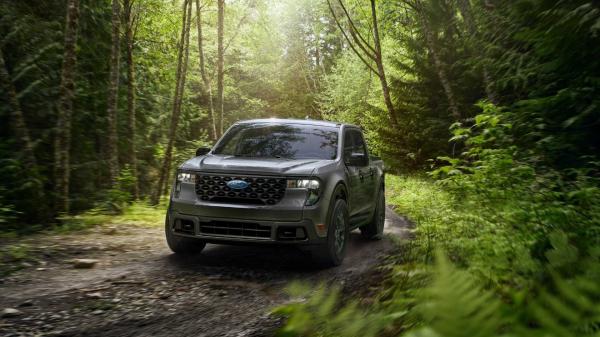
Front 3/4 shot of 2026 Ford Maverick Tremor with fx4 Off-Road Package driving Ford -
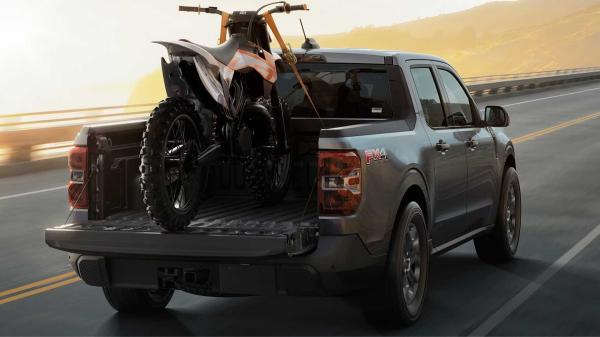
Rear 3/4 of Grey Ford Maverick Driving with Motorcycle in Load Bed Ford -
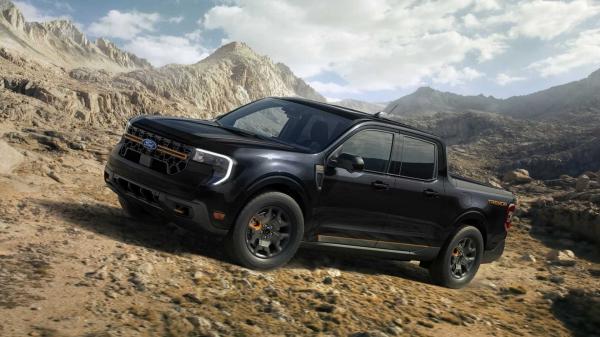
Front 3/4 shot of 2026 Ford Maverick Tremor 2.0L EcoBoost driving Ford
The Tremor demonstrates how far Ford can push the Maverick’s compact architecture without abandoning its everyday usability. With off-road-focused hardware, all-terrain tires, suspension changes, and enhanced traction capability, the Tremor is better equipped for gravel, dirt, and moderate trails than a standard Maverick. Its compact size is actually an advantage in some situations. A smaller pickup can be easier to position on narrow tracks and less cumbersome when navigating tight terrain.
The Tremor, however, needs to be viewed in context. This is a light-duty off-road pickup, not a dedicated rock crawler. Its ground clearance, suspension travel, wheel and tire setup, and overall architecture place limits on the terrain it should tackle. It can be a very capable companion for camping trips, gravel-road adventures and rough access tracks, but expecting it to replicate the abilities of a much larger, purpose-built off-road truck would miss the point. The Tremor works because it adds capability without turning the Maverick into something fundamentally different. It remains a compact pickup first.
Ford Maverick MPG, Maintenance and Five-Year Ownership

Fuel economy is where the Maverick’s unconventional formula becomes especially compelling. The Ford Maverick MPG story is about more than its official EPA rating. Real-world consumption depends heavily on how and where the truck is driven. City traffic, temperature, terrain, tire choice, payload, and driving style can all influence the final number. The hybrid should perform at its best in urban and mixed driving, where regenerative braking and electric assistance can repeatedly contribute. Highway driving tends to reduce the hybrid advantage, while towing or carrying heavy loads can increase fuel consumption substantially.
That makes the Maverick particularly interesting as an everyday vehicle. A conventional pickup often carries the running-cost penalty of a truck even when its owner spends most of the week commuting. The hybrid Maverick attempts to remove some of that penalty. Ownership costs extend beyond fuel, of course. Routine servicing, tires, insurance, and depreciation all matter over five years. The hybrid’s regenerative braking can potentially reduce brake wear, while its battery system introduces a different long-term consideration. Ford’s hybrid battery warranty provides some reassurance, but the Maverick is still a relatively new product. There isn’t yet the same depth of long-term ownership data available for the Maverick as there is for established conventional pickups. That doesn’t make the hybrid a risky purchase by default. It simply means buyers considering very long-term ownership should distinguish between what has been demonstrated and what remains to be proven.
Ford Maverick vs. Hyundai Santa Cruz: The Compact Truck Battle
Maverick vs. Santa Cruz: Which One Makes More Sense?


The Ford Maverick versus Hyundai Santa Cruz comparison is unavoidable because both vehicles occupy the same unusual territory: compact pickups designed for buyers who want a cargo bed without accepting the size and cost of a traditional truck. The two take slightly different approaches. The Maverick puts greater emphasis on value, utility and hybrid efficiency. Its compact dimensions and practical interior reinforce the idea that this is a truck designed to fit into normal, everyday life. The Santa Cruz, meanwhile, leans further toward crossover refinement. It is aimed at buyers who want pickup functionality but place a high value on cabin comfort, technology and a more polished road-going experience. Neither approach is inherently better.
For the buyer who wants maximum efficiency and straightforward utility, the Maverick’s hybrid powertrain gives it a strong advantage. For someone who values interior refinement and a more crossover-like driving experience, the Santa Cruz can make a compelling alternative.
The more interesting comparison is what both vehicles say about the changing pickup market. They demonstrate that the modern truck buyer isn’t necessarily looking for maximum capability. Many want just enough capability, and they are willing to sacrifice some towing and payload capacity in exchange for lower running costs, easier maneuverability, and a more manageable purchase price.
Why Demand for the Maverick Has Been So Strong
The Maverick’s appeal ultimately comes down to a gap in the market. Traditional pickups have grown increasingly capable, but that capability often comes with increased size, complexity and cost. For buyers who only occasionally need a cargo bed, paying for all that additional capability can be difficult to justify. The Maverick offers another answer.
It can be used as a daily commuter during the week and a practical utility vehicle on the weekend. It can carry bicycles, tools, camping equipment, or home-improvement supplies without requiring the owner to drive a large truck every day. That versatility is the real reason the Maverick became such an important vehicle. Its success also forced buyers and manufacturers to reconsider the definition of a pickup. If a unibody vehicle can provide sufficient towing, payload and cargo flexibility for a large percentage of truck buyers, then the traditional body-on-frame formula isn’t the only answer.
The 2026 Ford Maverick therefore represents more than another update to Ford’s compact pickup. It is part of a broader shift toward trucks that are designed around how people actually use them rather than how much work they theoretically could do. And that may be the Maverick’s biggest achievement.
The Ford Maverick didn’t redefine the pickup by trying to become more truck-like. It did the opposite. By using unibody construction, offering a hybrid powertrain, and keeping its dimensions compact, Ford created a pickup for people who wanted the usefulness of a truck without the traditional compromises that came with owning one. There are obvious limits. The Maverick cannot match a larger body-on-frame pickup for heavy towing, payload or serious off-road work. The Tremor doesn’t turn it into a dedicated trail machine, and the hybrid isn’t designed to deliver maximum performance. But those limitations miss the point.
The Maverick’s success comes from recognizing that most buyers don’t need the maximum. They need enough. Enough towing capacity for a trailer. Enough bed space for weekend projects. Enough off-road ability for a campsite. Enough performance to make daily driving enjoyable. And, in hybrid form, enough efficiency to make owning a pickup less painful at the fuel pump. That is why the Maverick matters. It didn’t simply make the compact pickup smaller. It made the idea of a pickup more accessible and proved that a truck doesn’t have to be enormous to be useful.
Sources: Ford, CarBuzz, J.D.Power

Related posts



Latest Post


1 hour ago
4 autotech

No Comments