
Fastest BMW Sports Cars, Ranked
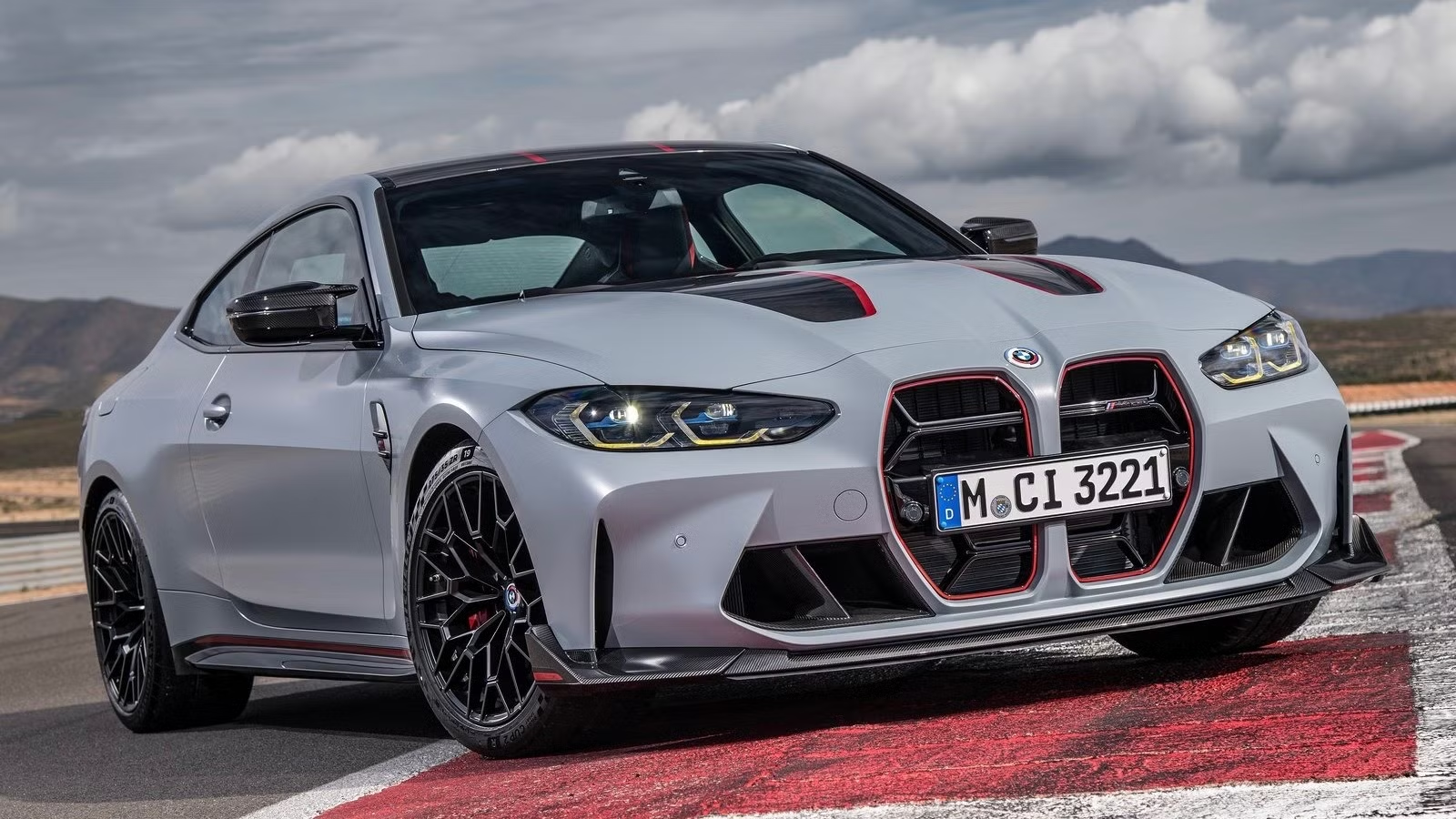
BMW prides itself on making the ultimate driving machines. While that certainly is a topic to debate, the Bavarian carmaker has, on many occasions, gotten it right when it comes to giving us a proper driver’s car. Performance and motorsport pedigree has been embedded in the vast majority of BMW models, even those that don’t have the full M-treatment. Naturally, it is BMW’s Motorsports division that provides the most badass Bimmers you can buy.

Although BMW currently doesn’t offer a flagship supercar like most of its peers, its M-badged sports cars often give even exotic models a run for their money. BMW’s cars have long moved away from the simplistic, Germanic, no-nonsense offerings in favor of tech-heavy, do-it-all-for-you toys. Granted, some of the M offerings still require your full attention behind the wheel, as they pack serious power, often in a small package with a torquey engine. Without further ado, these are the fastest BMW models that can best satisfy your need for speed and raw acceleration.
Looking at data from BMW, we have compiled a list of the fastest cars by comparing the top speed of each individual model.
20
2022 BMW Z4 M40i
Top Speed: 155 MPH

The BMW Z4 is in its third generation since 2018, and although it doesn’t have a full-on M-version, it’s not without teeth. It is well-known that the Toyota GR Supra shares its chassis and drivetrain with the G29 Z4. In the Bavarian roadster, the B58 3.0-liter, turbocharged inline-six is rated at 340 horsepower and 369 pound-feet of torque.
Performance
|
0 to 60 MPH |
3.8 seconds |
|---|---|
|
Top Speed |
155 MPH |
|
Curb Weight |
3,535 pounds |
|
Horsepower |
382 horsepower |
|
Torque |
369 pound-feet |
|
Layout |
front-engine, rear-wheel drive |
19
2017 BMW i8
Top Speed: 155 MPH

In 2013, BMW gave us its first modern-day, mid-engine sports car — the BMW i8. Unlike most of its competitors who focused on big power and raw performance, BMW took a more environmentally-friendly approach by giving the M1-resembling coupe (and later, roadster) a Plug-in hybrid powertrain. It includes a 1.5-liter, turbo-three-cylinder paired with an electric motor that powers the front axle. This gives the car all-wheel-drive capabilities and up to 374 horsepower in later versions. Peak torque is rated at 420 pound-feet. The i8 came with two transmissions – a six-speed automatic sending power to the rear and a two-speed automatic for the electric motor at the front.
Performance
|
0 to 60 MPH |
4.2 seconds |
|---|---|
|
Top Speed |
155 MPH |
|
Curb Weight |
3,455 Pounds |
|
Horsepower |
357 horsepower |
|
Torque |
420 pound-feet |
|
Layout |
front-engine, rear motors, all-wheel drive |
18
2021 BMW M240i
Top Speed: 155 MPH

With the modern M3 generations gradually becoming larger, heavier, and more complex, the BMW 1M was deemed the spiritual successor to the legendary E30 M3. Eventually, this led to the BMW M240i, which is currently the entry-level M-lite coupe that BMW will sell you. The G42 generation still retains a compact package, rear-wheel-drive layout, and a torquey inline-six. All the trim levels come with rear-wheel-drive as standard, but if you opt for the iDrive addition, you can upgrade to an all-wheel drive layout.
Performance
|
0 to 60 MPH |
4.3 seconds |
|---|---|
|
Top Speed |
155 MPH |
|
Curb Weight |
3,856 pounds |
|
Horsepower |
335 horsepower |
|
Torque |
369 pound-feet |
|
Layout |
front-engine, rear or all-wheel drive |
17
1978 BMW M1
Top Speed: 163 MPH

While not the fastest, the BMW M1 transcends time and space to make sure all the new BMW fans understand the foundation on which their favorite model stands on. Even though the history of the M1 is wrapped in drawbacks due to the fluctuating automotive industry and market trends of the era, it still stands as a testament to the Bavarian brand’s pursuit of perfection, even if it was short-lived. Being that the M1 was a genuine race car, it features a mid-engine layout to accommodate further racing tuning, should the need arise. The naturally-aspirated 3.5-liter M88 inline-six pumped out 277 horses, and was powerful enough to earn the M1 the title of fastest German road sports car of the era.
Performance
|
0 to 60 MPH |
5.6 seconds |
|---|---|
|
Top Speed |
163 MPH |
|
Curb Weight |
2,866 pounds |
|
Horsepower |
273 horsepower |
|
Torque |
243 pound-feet |
|
Layout |
mid-engine, rear-wheel drive |
16
2023 BMW M2
Top Speed: 177 MPH

The G87 M2 is the first rear-wheel-drive BMW to drop into the three-second range. The entry-level M-coupe comes only as a rear-wheel-drive proposition but still manages to reach 60 MPH in under four seconds. For this, you must opt for the ZF eight-speed automatic, which is 0.2 seconds quicker than the manual BMW M2. The S58, 3.0-liter, twin-turbo inline-six, is a derivative of the B58 that can pump out almost 460 horses, with the upcoming model projected to produce even more power. With bulging fenders and chunky front and rear aprons featuring large air ducts, the M2 is a visual overload. If you opt for the M Driver’s package, the top speed limiter extends from 155 MPH to 177 MPH.
Performance
|
0 to 60 MPH |
3.6 seconds |
|---|---|
|
Top Speed |
177 MPH |
|
Curb Weight |
3,850 pounds |
|
Horsepower |
453 horsepower |
|
Torque |
406 pound-feet |
|
Layout |
front-engine, rear-wheel drive |
15
2011 BMW M3 CRT
Top Speed: 180 MPH

Along with being one of the fastest, the 2011 BMW M3 CRT is also one of the most rare, with only 67 units produced. The CRT stands for Carbon Racing Technology, and it showcases the use of carbon fiber reinforced plastic in the body and chassis of the car. This made for an ultra light, ultra durable shell that harkens back to the days of worldwide dominance and raw Bavarian engineering prowess. Aside from its custom body composition and styling, the M3 CRT also boasts a juicy 4.4-liter V-8 engine that spouts out 450 horses. The growling eight-cylinder can carry the lightweight sedan from 0 to 60 MPH in 4.4 seconds, though its top speed is what earned it a spot on this list.
Performance
|
0 to 60 MPH |
4.4 seconds |
|---|---|
|
Top Speed |
180 MPH |
|
Curb Weight |
3,483 pounds |
|
Horsepower |
450 horsepower |
|
Torque |
325 pound-feet |
|
Layout |
front-engine, rear-wheel drive |
14
2023 BMW 3.0 CSL
Top Speed: 186 MPH

Last year, BMW unveiled an M4 CSL-based homage to the BMW 3.0 CSL “Batmobile.” Only 50 examples were built, each with a price tag of $750,000. While not exactly the performance bargain of the century, the S58 twin-turbo inline-six has been pumped up while the torque has been limited to its original amount. That’s because, like the 1972 original, the 2023 3.0 CSL comes exclusively as rear-wheel drive and a six-speed manual. The generous use of carbon fiber has resulted in a curb weight figure which is 165 pounds lighter than a standard M4 manual.
Performance
|
0 to 60 MPH |
3.8 seconds |
|---|---|
|
Top Speed |
186 MPH |
|
Curb Weight |
3,580 pounds |
|
Horsepower |
553 horsepower |
|
Torque |
406 pound-feet |
|
Layout |
front-engine, rear-wheel drive |
13
2024 BMW M4 CS
Top Speed: 188 MPH

Imbued with the M racing genes and enough racing buffs to make anyone feel like a track day hero, the BMW M4 CS captures the essence of the M4 Comp with the uncompromising force of the M4 CSL. This unique recipe makes it a viable daily driver, though it would be wasteful to hark over its commuting ability. The M4 CS can turn into a sharpshooter at the drop of a dime, owing its swiftness to not only the 500-plus-horsepower 3.0-liter M TwinPower straight-six and standard xDrive AWD, but its eight-speed M Steptronic automatic transmission with Drivelogic.
Performance
|
0 to 60 MPH |
3.4 seconds |
|---|---|
|
Top Speed |
188 MPH |
|
Curb Weight |
3,850 pounds |
|
Horsepower |
550 horsepower |
|
Torque |
479 pound-feet |
|
Layout |
front-engine, rear-wheel drive |
12
2016 BMW M4 GTS
Top Speed: 188 MPH

The BMW M4 GTS uses technology that once graced the old turbocharged Oldsmobile engine in 1962 and 1963; water injection. How it works is actually simple and very effective, allowing better performance by lowering the operating temperature of the turbochargers by up to 70 degrees. This cooling is conducted by pumping liquid through the hot chambers of the turbo, cooling the excessive heat to allow the unit to pump out more horsepower than it would generally be able to.
Performance
|
0 to 60 MPH |
3.4 seconds |
|---|---|
|
Top Speed |
188 MPH |
|
Curb Weight |
3,550 pounds |
|
Horsepower |
493 horsepower |
|
Torque |
443 pound-feet |
|
Layout |
front-engine, rear-wheel drive |
11
2024 BMW M3 CS
Top Speed: 188 MPH

The BMW M3 G80/G81 is an overachiever in any version. In M3 CS guise, the Bavarian performance sedan is at its quickest. Unlike the M4 CSL, the weight-saving diet wasn’t as drastic. The M3 CS lost just 75 pounds to the standard car’s weight, which is not exactly lightweight. But thanks to clever tech like the ZF, eight-speed automatic, and all-wheel-drive system, the BMW M3 CS can manage launch times close to the three-second mark. This is on par with the official time of the BMW M3 Competition xDrive, from which we have seen numbers as low as 2.9 seconds. Like the M4 CSL, the S58 engine in the M3 CS has received a bump in power to 550 horsepower.
Performance
|
0 to 60 MPH |
3.2 seconds |
|---|---|
|
Top Speed |
188 MPH |
|
Curb Weight |
3,891 pounds |
|
Horsepower |
543 horsepower |
|
Torque |
479 pound-feet |
|
Layout |
front-engine, all-wheel drive |

Related posts




Latest Post


Fastest BMW Sports Cars, Ranked
BMW prides itself on making the ultimate driving machines. While that certainly is a topic to debate, the Bavarian carmaker has, on many occasions, gotten it right when it comes to giving us a proper driver’s car. Performance and motorsport pedigree has been embedded in the vast majority of BMW models, even those that don’t have the full M-treatment. Naturally, it is BMW’s Motorsports division that provides the most badass Bimmers you can buy.
Although BMW currently doesn’t offer a flagship supercar like most of its peers, its M-badged sports cars often give even exotic models a run for their money. BMW’s cars have long moved away from the simplistic, Germanic, no-nonsense offerings in favor of tech-heavy, do-it-all-for-you toys. Granted, some of the M offerings still require your full attention behind the wheel, as they pack serious power, often in a small package with a torquey engine. Without further ado, these are the fastest BMW models that can best satisfy your need for speed and raw acceleration.
Looking at data from BMW, we have compiled a list of the fastest cars by comparing the top speed of each individual model.
20
2022 BMW Z4 M40i
Top Speed: 155 MPH

The BMW Z4 is in its third generation since 2018, and although it doesn’t have a full-on M-version, it’s not without teeth. It is well-known that the Toyota GR Supra shares its chassis and drivetrain with the G29 Z4. In the Bavarian roadster, the B58 3.0-liter, turbocharged inline-six is rated at 340 horsepower and 369 pound-feet of torque.
Performance
|
0 to 60 MPH |
3.8 seconds |
|---|---|
|
Top Speed |
155 MPH |
|
Curb Weight |
3,535 pounds |
|
Horsepower |
382 horsepower |
|
Torque |
369 pound-feet |
|
Layout |
front-engine, rear-wheel drive |
19
2017 BMW i8
Top Speed: 155 MPH
In 2013, BMW gave us its first modern-day, mid-engine sports car — the BMW i8. Unlike most of its competitors who focused on big power and raw performance, BMW took a more environmentally-friendly approach by giving the M1-resembling coupe (and later, roadster) a Plug-in hybrid powertrain. It includes a 1.5-liter, turbo-three-cylinder paired with an electric motor that powers the front axle. This gives the car all-wheel-drive capabilities and up to 374 horsepower in later versions. Peak torque is rated at 420 pound-feet. The i8 came with two transmissions – a six-speed automatic sending power to the rear and a two-speed automatic for the electric motor at the front.
Performance
|
0 to 60 MPH |
4.2 seconds |
|---|---|
|
Top Speed |
155 MPH |
|
Curb Weight |
3,455 Pounds |
|
Horsepower |
357 horsepower |
|
Torque |
420 pound-feet |
|
Layout |
front-engine, rear motors, all-wheel drive |
18
2021 BMW M240i
Top Speed: 155 MPH
With the modern M3 generations gradually becoming larger, heavier, and more complex, the BMW 1M was deemed the spiritual successor to the legendary E30 M3. Eventually, this led to the BMW M240i, which is currently the entry-level M-lite coupe that BMW will sell you. The G42 generation still retains a compact package, rear-wheel-drive layout, and a torquey inline-six. All the trim levels come with rear-wheel-drive as standard, but if you opt for the iDrive addition, you can upgrade to an all-wheel drive layout.
Performance
|
0 to 60 MPH |
4.3 seconds |
|---|---|
|
Top Speed |
155 MPH |
|
Curb Weight |
3,856 pounds |
|
Horsepower |
335 horsepower |
|
Torque |
369 pound-feet |
|
Layout |
front-engine, rear or all-wheel drive |
17
1978 BMW M1
Top Speed: 163 MPH
While not the fastest, the BMW M1 transcends time and space to make sure all the new BMW fans understand the foundation on which their favorite model stands on. Even though the history of the M1 is wrapped in drawbacks due to the fluctuating automotive industry and market trends of the era, it still stands as a testament to the Bavarian brand’s pursuit of perfection, even if it was short-lived. Being that the M1 was a genuine race car, it features a mid-engine layout to accommodate further racing tuning, should the need arise. The naturally-aspirated 3.5-liter M88 inline-six pumped out 277 horses, and was powerful enough to earn the M1 the title of fastest German road sports car of the era.
Performance
|
0 to 60 MPH |
5.6 seconds |
|---|---|
|
Top Speed |
163 MPH |
|
Curb Weight |
2,866 pounds |
|
Horsepower |
273 horsepower |
|
Torque |
243 pound-feet |
|
Layout |
mid-engine, rear-wheel drive |
16
2023 BMW M2
Top Speed: 177 MPH
The G87 M2 is the first rear-wheel-drive BMW to drop into the three-second range. The entry-level M-coupe comes only as a rear-wheel-drive proposition but still manages to reach 60 MPH in under four seconds. For this, you must opt for the ZF eight-speed automatic, which is 0.2 seconds quicker than the manual BMW M2. The S58, 3.0-liter, twin-turbo inline-six, is a derivative of the B58 that can pump out almost 460 horses, with the upcoming model projected to produce even more power. With bulging fenders and chunky front and rear aprons featuring large air ducts, the M2 is a visual overload. If you opt for the M Driver’s package, the top speed limiter extends from 155 MPH to 177 MPH.
Performance
|
0 to 60 MPH |
3.6 seconds |
|---|---|
|
Top Speed |
177 MPH |
|
Curb Weight |
3,850 pounds |
|
Horsepower |
453 horsepower |
|
Torque |
406 pound-feet |
|
Layout |
front-engine, rear-wheel drive |
15
2011 BMW M3 CRT
Top Speed: 180 MPH
Along with being one of the fastest, the 2011 BMW M3 CRT is also one of the most rare, with only 67 units produced. The CRT stands for Carbon Racing Technology, and it showcases the use of carbon fiber reinforced plastic in the body and chassis of the car. This made for an ultra light, ultra durable shell that harkens back to the days of worldwide dominance and raw Bavarian engineering prowess. Aside from its custom body composition and styling, the M3 CRT also boasts a juicy 4.4-liter V-8 engine that spouts out 450 horses. The growling eight-cylinder can carry the lightweight sedan from 0 to 60 MPH in 4.4 seconds, though its top speed is what earned it a spot on this list.
Performance
|
0 to 60 MPH |
4.4 seconds |
|---|---|
|
Top Speed |
180 MPH |
|
Curb Weight |
3,483 pounds |
|
Horsepower |
450 horsepower |
|
Torque |
325 pound-feet |
|
Layout |
front-engine, rear-wheel drive |
14
2023 BMW 3.0 CSL
Top Speed: 186 MPH
Last year, BMW unveiled an M4 CSL-based homage to the BMW 3.0 CSL “Batmobile.” Only 50 examples were built, each with a price tag of $750,000. While not exactly the performance bargain of the century, the S58 twin-turbo inline-six has been pumped up while the torque has been limited to its original amount. That’s because, like the 1972 original, the 2023 3.0 CSL comes exclusively as rear-wheel drive and a six-speed manual. The generous use of carbon fiber has resulted in a curb weight figure which is 165 pounds lighter than a standard M4 manual.
Performance
|
0 to 60 MPH |
3.8 seconds |
|---|---|
|
Top Speed |
186 MPH |
|
Curb Weight |
3,580 pounds |
|
Horsepower |
553 horsepower |
|
Torque |
406 pound-feet |
|
Layout |
front-engine, rear-wheel drive |
13
2024 BMW M4 CS
Top Speed: 188 MPH
Imbued with the M racing genes and enough racing buffs to make anyone feel like a track day hero, the BMW M4 CS captures the essence of the M4 Comp with the uncompromising force of the M4 CSL. This unique recipe makes it a viable daily driver, though it would be wasteful to hark over its commuting ability. The M4 CS can turn into a sharpshooter at the drop of a dime, owing its swiftness to not only the 500-plus-horsepower 3.0-liter M TwinPower straight-six and standard xDrive AWD, but its eight-speed M Steptronic automatic transmission with Drivelogic.
Performance
|
0 to 60 MPH |
3.4 seconds |
|---|---|
|
Top Speed |
188 MPH |
|
Curb Weight |
3,850 pounds |
|
Horsepower |
550 horsepower |
|
Torque |
479 pound-feet |
|
Layout |
front-engine, rear-wheel drive |
12
2016 BMW M4 GTS
Top Speed: 188 MPH
The BMW M4 GTS uses technology that once graced the old turbocharged Oldsmobile engine in 1962 and 1963; water injection. How it works is actually simple and very effective, allowing better performance by lowering the operating temperature of the turbochargers by up to 70 degrees. This cooling is conducted by pumping liquid through the hot chambers of the turbo, cooling the excessive heat to allow the unit to pump out more horsepower than it would generally be able to.
Performance
|
0 to 60 MPH |
3.4 seconds |
|---|---|
|
Top Speed |
188 MPH |
|
Curb Weight |
3,550 pounds |
|
Horsepower |
493 horsepower |
|
Torque |
443 pound-feet |
|
Layout |
front-engine, rear-wheel drive |
11
2024 BMW M3 CS
Top Speed: 188 MPH
The BMW M3 G80/G81 is an overachiever in any version. In M3 CS guise, the Bavarian performance sedan is at its quickest. Unlike the M4 CSL, the weight-saving diet wasn’t as drastic. The M3 CS lost just 75 pounds to the standard car’s weight, which is not exactly lightweight. But thanks to clever tech like the ZF, eight-speed automatic, and all-wheel-drive system, the BMW M3 CS can manage launch times close to the three-second mark. This is on par with the official time of the BMW M3 Competition xDrive, from which we have seen numbers as low as 2.9 seconds. Like the M4 CSL, the S58 engine in the M3 CS has received a bump in power to 550 horsepower.
Performance
|
0 to 60 MPH |
3.2 seconds |
|---|---|
|
Top Speed |
188 MPH |
|
Curb Weight |
3,891 pounds |
|
Horsepower |
543 horsepower |
|
Torque |
479 pound-feet |
|
Layout |
front-engine, all-wheel drive |



No Comments