
Ducati’s Rarer, Cheaper Streetfighter Has More Torque Than BMW’s 218-HP M 1000 RS
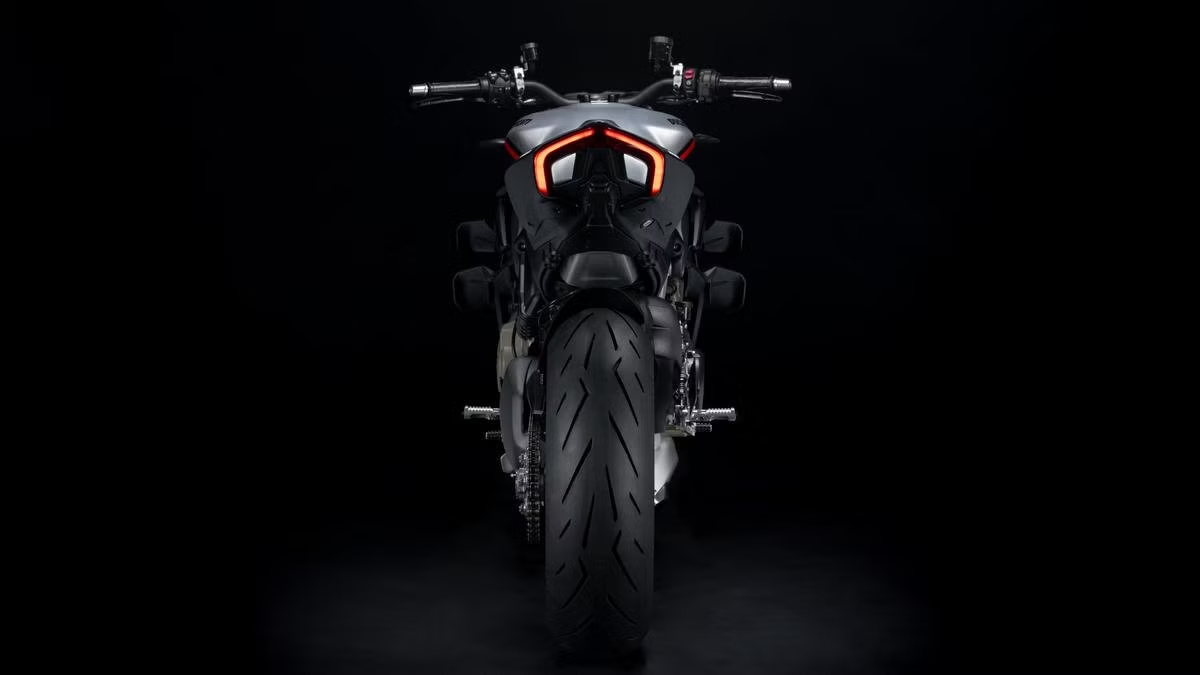
The BMW M 1000 RS has an impressive headline number: 218 HP from a 999cc inline-four. That makes it one of the most powerful naked motorcycles around, but peak horsepower tells you only part of the story. Its Italian rival produces less power while delivering more torque, costs less in its home market, and will be considerably harder to find. Both motorcycles use premium components, carbon wheels, and sophisticated electronic suspension, but they approach performance differently. BMW has the horsepower advantage, while Ducati makes a compelling case with larger displacement, stronger torque, and a smaller production run.
BMW’s 218-HP Superbike Engine Gives It A Narrow Power Advantage

The M 1000 RS takes its performance credentials directly from BMW’s M 1000 RR superbike. Its 999cc, liquid-cooled inline-four produces 218 HP at 14,500 rpm and 83.3 lb-ft of torque at 11,000 rpm. BMW claims a 0-62 mph time of around 3.2 seconds and a top speed of 176 mph, figures that put it firmly among the fastest naked motorcycles on the market. The engine also features a full titanium exhaust system and carbon fiber winglets.
However, BMW prioritizes peak performance over increasing displacement to improve torque delivery. The engine’s 218 HP output comes at high revs, with maximum torque arriving at 11,000 rpm. That makes the powerplant more suited for riders who prefer higher revs while riding.
The M 1000 RS also gets Dynamic Damping Control electronic suspension, M Carbon wheels, and extensive carbon-fiber bodywork. Its 33.4-inch seat height and revised footpeg positioning also point to a more aggressive riding position. BMW has essentially brought superbike hardware into a naked-motorcycle package, with very little compromise in its pursuit of outright performance.

The Ducati Streetfighter V4 SP Makes More Torque With A Bigger V4

The motorcycle challenging BMW’s horsepower advantage and rarity is the Ducati Streetfighter V4 SP. Its 1,103cc Desmosedici Stradale V4 produces 214 HP at 13,500 rpm, a four-horsepower deficit against the German machine. However, the Ducati generates 88.5 lb-ft of torque at 11,250 rpm, 5.2 lb-ft more than BMW’s quoted figure.
That difference matters because a naked motorcycle’s performance isn’t exclusively about peak horsepower. Greater displacement gives Ducati an advantage in torque production, potentially making its power delivery more substantial at the lower reaches of the powerband as well. It still needs to be ridden enthusiastically, but its larger engine has a different character from BMW’s 999cc superbike-derived four-cylinder motor. The Ducati also uses a counter-rotating crankshaft, Desmodromic valve timing, and a six-speed gearbox with a quickshifter. Its STM EVO-SBK dry clutch adds another racing-derived component to the package.
Neither motorcycle is short on performance, but Ducati’s larger V4 makes an interesting argument: losing four horsepower does not necessarily mean giving up the more rewarding engine.
Carbon Wheels And Electronic Suspension Make Both Motorcycles Track-Ready

Both motorcycles make extensive use of lightweight materials and sophisticated suspension technology, but their equipment reflects slightly different interpretations of a premium performance special. The Streetfighter V4 SP gets carbon-fiber wheels, which reduce rotational inertia and unsprung mass. Ducati claims its carbon wheels are approximately 950 grams lighter than the forged aluminum wheels fitted to the V4 S. The motorcycle also gets Öhlins Smart SC 3.0 electronic suspension, Brembo braking hardware, and a lightweight 520 chain. Its track-focused equipment includes adjustable machined footpegs and a dedicated track kit.
BMW counters with M Carbon wheels, electronically controlled Dynamic Damping Control suspension, carbon-fiber winglets, and a full titanium exhaust. Its revised ergonomics and superbike-derived footrests also make it more track-oriented than a conventional naked motorcycle.
Both motorcycles are closer on the weighing scale, despite the way of measurement. BMW quotes the M 1000 RS at 436.5 lbs fully fueled. Ducati lists the Streetfighter V4 SP at 414 lbs without fuel, which, with its 4.2 gallons of fuel (fuel tank capacity), would add another 25 to 26 pounds, bringing its weight to 439 or 440 lbs.
The Ducati Streetfighter V4 S Costs Less And Is Twice As Rare As The BMW M 1000 RS

Let’s make one thing clear here. The BMW M 1000 RS is cheaper in the USA than the Ducati. The US-spec BMW is priced at $38,395, while the Streetfighter V4 S here costs $39,995. However, the US-spec M 1000 RS is considerably detuned as well, delivering just 205 HP. So for the sake of a full-blown comparison, we will consider the full-fat M 1000 RS version sold in Germany and compare it with the Ducati prices there.
Exclusivity is another area where Ducati has an advantage over its German rival. The Streetfighter V4 SP will be produced in just 500 numbered examples worldwide. BMW, meanwhile, will manufacture 1,000 examples of the M 1000 RS. Both are limited-production motorcycles, but Ducati’s production run is half the size. Interestingly, in Germany, the Italian Ducati Streetfighter V4 SP is listed at €36,990, compared to €40,000 for the BMW M 1000 RS. That makes the Ducati €3,010 cheaper despite offering greater peak torque and more exclusivity.
Ultimately, BMW has the headline horsepower advantage and an impressive superbike-derived engine. However, Ducati counters with more torque, a lower German price, and greater production exclusivity.

Related posts


Latest Post


No Comments