
Chrysler Built A Hemi Drag Racer So Extreme The NHRA Rejected It
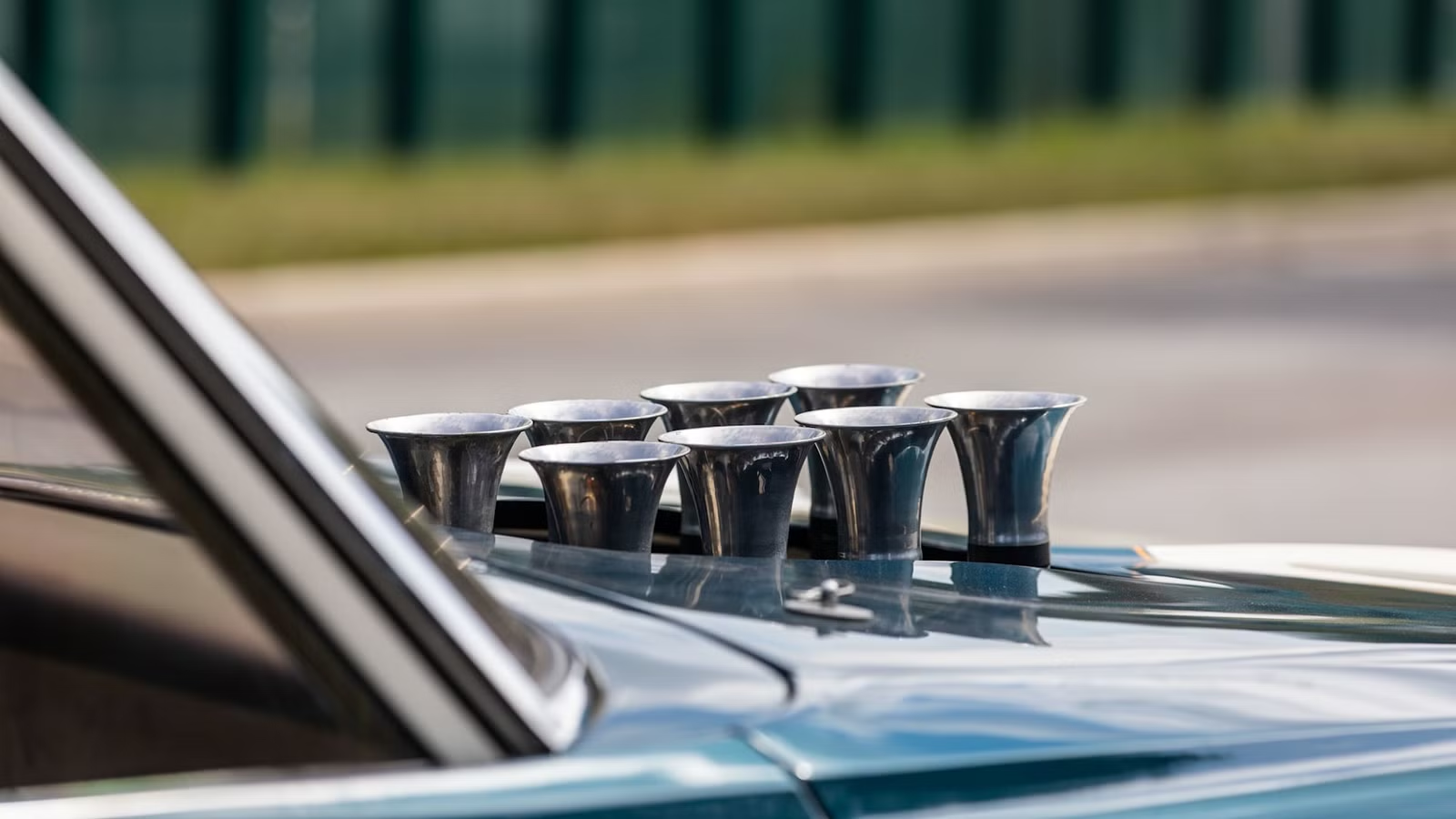
Every driver at a drag strip wants more grip. Some solve the problem with bigger tires. Others add weight over the rear axle. Chrysler’s Ramchargers found a far stranger way to get a Hemi-powered Dodge off the line. They weren’t interested in making the car look better. They wanted it to leave the starting line in a hurry. What they did next made perfect sense to a physicist. But it broke the unspoken rule that had been governing factory-backed drag racing for years.
The Ramchargers Took Detroit’s Factory Drag Racers To Another Level

The 1960s were the Wild West in Detroit: the Big Three built small batches of gnarly Super Stock drag racing specials to qualify for NHRA competition, selling or allocating them to selected racers. In the cutthroat competition for bragging rights—and increased sales—they pulled out all the stops. In 1963, Pontiac engineers drilled roughly 120 holes in Catalina frames to reduce weight even further. For 1964, Ford managed to wrap a midsize (partially fiberglass) Fairlane body around its NASCAR-tuned 427, creating the legendary Thunderbolt. The unspoken agreement was “Do anything you want to a drag car, as long as it still looks stock from the grandstands.”
It was often Chrysler leading the charge. And not just because of its “Hemi” engine. Chrysler’s other secret weapon was the Ramchargers. The Michigan-based club included many Chrysler engineers who raced after hours, including chassis specialist Jim Thornton and engine builders Tom Hoover and Dan Mancini. They had campaigned the ‘High and Mighty’ Plymouth, then a 1961 Super Stock Dodge, and won Stock Eliminator at both the 1963 NHRA Winternationals and Nationals. This quirky crew was part racing club, part extracurricular engineering department. But other racers knew better than to make fun of the Ramchargers’ pocket protectors, unless they could back up their trash talking when the drag strip lights turned red.
Ford’s Cammer Left The Ramchargers Searching For Another Advantage


By late 1964, the horsepower war threatened to leave Chrysler behind. Ford had engineered its new 427 SOHC ‘Cammer’ to breathe freely at high RPM. Its rating of 657 hp at 7,500 rpm would make a modern Hellcat shiver. In 1964, Chrysler countered with plans for a 32-valve, dual-overhead-cam A925 ‘Doomsday Hemi.’ But with all-out engine war brewing, NASCAR barred overhead-cam engines. Chrysler cut the project before the Ramchargers had a running A925. But Ford could still drag-race the Cammer. The Ramchargers were in trouble.
The team attacked the rest of the car like it owed them money. For 1965, Chrysler sent steel shells to a Southern California aircraft supplier with the only “chemical-milling” tank large enough for an automobile. Acid dipping shed about 200 pounds from each shell. The solution was extreme. In fact, residual acid kept eating through the paint where their candy-stripe livery belonged. But aviation-grade weight reduction wasn’t their most controversial idea.
Chrysler Moved Both Axles On Its 1965 Dodge And Plymouth Racers

Meet the 1965 Dodge Coronet and Plymouth Belvedere “altered-wheelbase” Hemi racers. Engineers moved the front axles 10 inches forward and the rears 15, leaving the Dodge with a 111-inch wheelbase and the Plymouth with 110. Nearly 56% of their roughly 3,050-pound weight rested on the rear tires, improving launch traction. The Ramchargers ultimately ran an 8.91-second quarter-mile in a later fuel-modified car. Chrysler’s 1965 factory batch numbered roughly a dozen, with even its Dodge-versus-Plymouth split disputed.
The innovation hadn’t appeared from nowhere. The Ramchargers had already moved a 1964 Dodge’s front axle approximately three inches and its rear axle slightly forward. Similar cars raced legally in the NHRA’s Factory Experimental class. Dick Landy modified a 1964 Dodge, too. Mercury was considering its own radical drag-racing modifications, although accounts disagree about the extent of these early Comet wheelbase changes. There may have been a good reason other factories hesitated before making such visible changes.
The NHRA Drew The Line, But The Ramchargers Kept Racing

The NHRA’s answer to the altered wheelbase car was “Absolutely not!” It rushed through a two-percent axle-relocation limit, disqualifying the 1965 Chryslers before they could race. Chrysler’s radical 1965 Mopars weren’t allowed into the Super Stock class. But shockingly, they were also banned from the Factory Experimental class–even though the latter had existed since 1962 to accommodate more adventurous factory race cars. The Ramchargers’ restrained 1964 wheelbase changes had been accepted, and Ford’s 427-powered Thunderbolt had already competed in A/FX. The Ramchargers had broken that sacred rule: your wildly modified drag racers must at least look stock from the grandstands.

Fortunately, NHRA wasn’t the only game in town. The AHRA welcomed altered cars into Ultra/Stock, and the Mopars dominated the January 1965 AHRA Winternationals in Phoenix. At March’s Fuel and Gas Championships in Bakersfield, Dick Landy’s Dodge ran 10.26 seconds at 138 mph, then beat Butch Leal’s Plymouth in the Mr. Stock Eliminator final. Match-race promoters booked the thrilling new cars for the entire season.
NHRA Eventually Made Room For A New Breed Of Racer

Spectators dubbed these oddly proportioned, wheel-standing racers “Funny Cars.” By 1966, Mercury’s tube-chassis, flip-top Comets pushed the idea further. At the 1966 NHRA World Finals in Tulsa, the organization staged its first official Funny Car eliminator, where Eddie Schartman defeated Don Nicholson in a Mercury-versus-Mercury final. NHRA hadn’t established the event specifically to welcome Chrysler’s rejected Mopars. It recognized a movement those cars helped ignite.
Chrysler went back to building rulebook-legal factory racers. Many of the Ramchargers’ later cars fit into this category, but the team dabbled in a few more altered wheelbase racers as well. Its altered-wheelbase experiment had forever changed the sport. Instead of shifting the engine rearward, the engineers simply shifted the tire contact patches forward to put more weight on the drive wheels. It was a solution so absurd and elegant, only an engineer would think of it. You can’t fight physics. But you can recruit it.
Sources: NHRA, Ramchargers LLC, Hot Rod archives; Mecum Auctions; Automotive History Preservation Society.

Related posts




Latest Post


No Comments