
Call for action as speed limit assist tech fails real-world tests
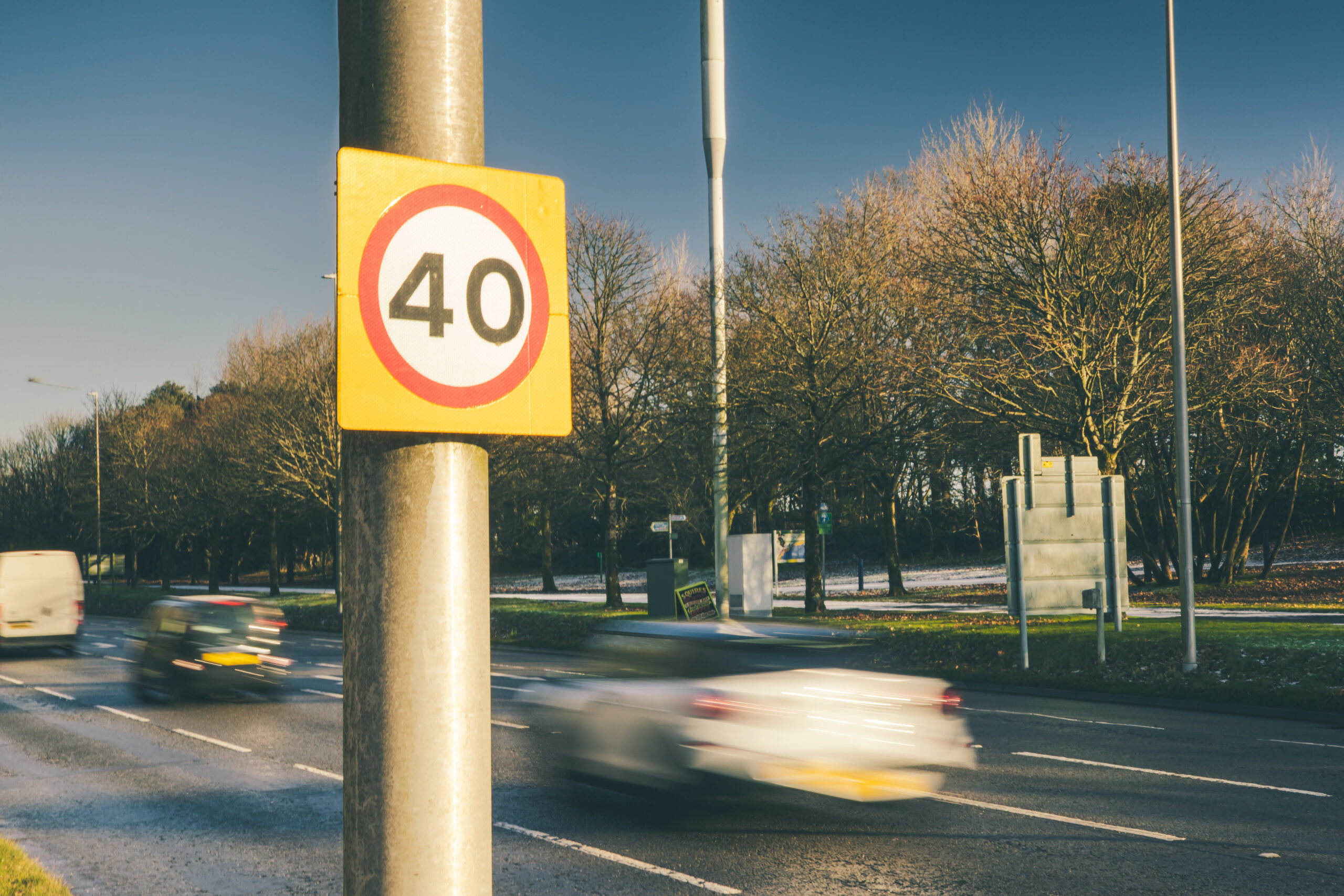
A major UK safety body is calling for revisions to the way in-vehicle speed limit recognition technology is tested and approved after its own tests revealed serious inaccuracies.
Intelligent speed assist (ISA) is one of a number of safety technologies collectively known as advanced driver assistance systems (ADAS). It has been a mandatory fitment in new cars sold in the European Union and the UK since 2024.

Using an in-car camera, satellite navigation, electronic map data or a combination of all three, ISA displays the prevailing speed limit and alerts the driver when it changes. In response, the driver can adjust the speed of their car or choose to ignore it. In some vehicles, the system will automatically limit the car’s speed to the new limit, a function the driver can override. According to charity The Road Safety Trust, ISA helps drivers stay within speed limits and reduces the risk of collisions and injury.
To determine the accuracy of ISA systems, the EU regulation governing it (EU 2019/2144) requires cars to be tested over a combination of roads totalling a distance of 250 miles. To pass the test, the system must recognise the correct speed limit for at least 90% of the travelled distance. In addition, it must be able to display the speed limit, at the latest, within two seconds of the vehicle passing the road sign.
However, a new programme devised by UK-based vehicle testing organisation Thatcham Research to investigate the performance of ADAS technologies in the real world has found inconsistencies in the performance of the ISA systems in three cars when judged on their performance at each change of speed limit, rather than over distance travelled, as required by the EU. It says the three systems are representative of 10% of those in new cars.

Ignoring all system response times of up to two seconds, the worst performing vehicle, an MG ZS, achieved 91.3% accuracy across the driven distance or just above the EU’s approval threshold. However, against Thatcham’s performance-based metric, its system was 74.3% accurate.
This means that for roughly one in four events, the MG’s ISA displayed the wrong speed limit. The best-performing vehicle, a BMW i5, scored 98.39% accuracy across the driven distance, comfortably within the requirements of the EU regulation. However, its event-based accuracy was 90.3%, meaning that around one in 10 speed limit changes were either incorrectly identified by the system or not at all. In the case of all the vehicles tested, ISA displayed speed limits that are not legal in the UK. They included multiple instances of 5, 10, 15 and 100mph.
Thatcham Research says ISA systems that misread speed limits can lead to unexpected or inconsistent responses, while in the case of implausible speed limits, they could cause unwanted harsh braking or acceleration in a car also fitted with adaptive cruise control (ACC). Thatcham Research is concerned that, presented with incorrect speed limit information, drivers will lose confidence in the technology and switch it off, meaning its intended safety benefits are lost.
The cars that Thatcham tested were fitted with systems already tested and rated by Euro NCAP, the independent European vehicle safety organisation that awards safety ratings. Its test requires a car to be driven on mixed roads for 60 miles, during which engineers check its ISA responses.
Its responses to a range of speed limits are then also evaluated on a dedicated test track. It awarded the 2024-model MG ZS a four-star rating and reported that its speed assistance systems were ‘adequate’. It didn’t test the BMW i5 separately but bundled it with the 2024-model 5 Series, to which it awarded five stars. However, it noted that its speed assistance systems were also only ‘adequate’.

Related posts



Latest Post


No Comments