
BYD GROUP FLASH Charging – Key Questions Answered
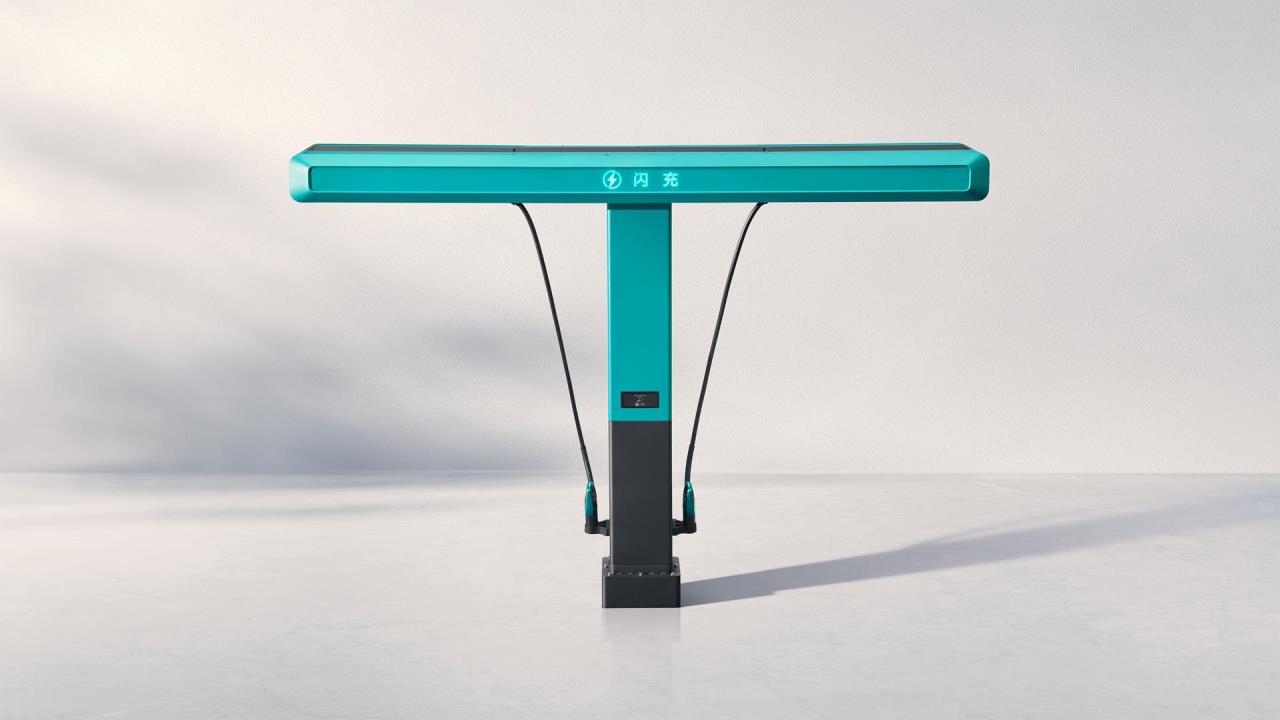
However, FLASH Charging is about more than just exceptional speed: BYD has carefully considered every aspect of the process to make it a highly intuitive and practical solution to electric vehicle charging. Here, we answer 12 key questions, relating to the technology, the user experience and the pricing.
What is FLASH Charging?

In practical terms, this means that adding 200 miles or more of driving range takes the same amount of time as filling an internal combustion-engine car with petrol or diesel.
How fast is it?
FLASH Charging operates on the principle of ‘Ready in Five, Full in Nine, Cold Add Three’: a 10-70% charge takes five minutes, a 10-97% charge takes nine minutes, and a 20-97% charge, even in freezing temperatures of -30°C, takes 12 minutes. The maximum potential charging rate is up to 1,500kW through a single connector. There are two connectors on each FLASH Charger, meaning it can charge two cars at the same time; when used simultaneously, they can supply up to 1,000kW each.
How does it achieve these speeds?
The 1,500kW peak is made possible through the on-site installation of storage batteries. Every FLASH Charger uses two units with a capacity of 185kWh each, leading to a total of 370kWh per charger. Depending on local infrastructure and vehicle traffic, the battery storage can draw energy from the grid from roughly 100kW and up to 560kW when necessary.

This means that when a vehicle arrives to charge, the stored energy can be transferred to the vehicle at a significantly higher rate than would be possible from a typical grid connection.
What technology can accept this rate of charge?
These speeds are only possible in conjunction with BYD’s Blade Battery 2.0. This second-generation technology has introduced several breakthroughs that have enabled such high charging speeds. The introduction of the Flash-Release cathode, Flash-Flow electrolyte and Flash-intercalate anode significantly reduce internal resistance – and therefore heat generation – which enables industry-leading charging speeds.
Battery charging rates can be expressed as a C-rate; this expresses the battery’s charge speed relative to its maximum overall capacity. 1C, for example, means that a battery can fully charge in one hour. BYD’s Blade Battery technology enables a peak C-rate of 10C.
Which cars benefit from FLASH Charging?
The first car coming to the UK that is capable of such charging speeds is the DENZA Z9 GT, while the DENZA Z supercar is also FLASH Charge-enabled.
However, it isn’t only fully electric cars that will benefit – DM-i plug-in hybrid models are also compatible. The DENZA D9 premium MPV has a 58.5kWh battery which provides an electric-only range of 130 miles and a 10-70% charge in five minutes.
In the future, some BYD cars will also be compatible in Europe with FLASH Charging.
Where will FLASH Charging sites be installed?
BYD plans to install 300 FLASH Chargers nationally within the next 12 months. The rollout will take in a variety of locations, with priority given to BYD and DENZA sites covering core towns and cities, as well as high-traffic areas like motorway service stations and existing charging hubs.
What practical considerations have been explored with FLASH Charging?
It isn’t simply outright speed that sets FLASH Chargers apart from the competition; usability has also been carefully considered, resulting in the most intuitive charging processes on the market.
Many other public chargers have two drawbacks: first, the thick cables are mounted low, which makes them heavy to move around, and second, they often drag onto the floor, which in poor weather can make the cables wet or dirty to handle. Both issues are eradicated with the design of the FLASH Charging system. The T-shape structure houses two connectors; these are each mounted on a rail, so that it’s easy to reach a car’s charging point – regardless of its location – while the vertical hanging position both keeps them out of rain and dirt, and allows gravity to take the strain of the cable so it’s light and easy to manoeuvre the plug into position.
Can non-DENZA or BYD owners use FLASH Chargers?
Yes. FLASH Charging is compatible with any CCS2-equipped vehicles. However, they will not be able to take optimal advantage of the leading-edge charging technology, as the FLASH Chargers will be limited by the non-BYD/DENZA vehicle – not the charger.
Will these chargers use green energy?
Solar PV installation will be rolled out selectively across our charging hub network as a core part of our solar-plus-storage integrated design. This will include rooftop or carport solar arrays at large-scale hub sites, including motorway service stations, out-of-town retail parks and major dealer forecourts where space permits. This means that the battery energy storage system can store green power generated on-site for charger consumption when required.
For compact urban small-scale charging points with limited available space, we will rely on certified off-site renewable power procurement instead of on-site solar setup.
How much will it cost?
All FLASH Charger services will be priced per kilowatt-hour. DENZA and BYD owners whose cars are factory-fitted with FLASH Charging qualify for exclusive preferential electricity rates that will be considerably lower than prevailing ultra-rapid charging retail prices across the UK market. The exact discounted unit tariff will be announced upon official launch.
Non-BYD/DENZA customers, meanwhile, will pay the published standard per-kWh pay-as-you-go rate for charging. Regardless, pricing will be competitive with leading ultra-rapid charging providers.
Payment will be possible by one of four methods:
• Plug & Charge (Autocharge)
• Scan-to-charge via BYD FLASH fast charging app
• Credit card payment
• RFID electric card roaming payment
How do you stop slower charging cars from occupying the chargers for too long?
Several management rules will be in place to prevent low-speed-charging EVs from occupying ultra-fast FLASH Chargers unnecessarily. After the battery reaches a reasonable full-charge threshold or preset stay limit, an extra overstay parking surcharge can be applied to discourage long-term unnecessary parking.
What provisions are there for users with mobility issues?
FLASH Charging sites are being rolled out with provisions complying with the UK PAS 1899 standard, to accommodate drivers with mobility impairments. These include:
• Dedicated accessible parking and charging bays
• Optimised charger hardware design
• On-site auxiliary support
*From a suitable charger
**YouGov survey, 2024
Photo credit: BYD UK
Posted on Autotech-plus.com
Related Posts

Related posts




Latest Post


No Comments