
2028 Ford Mustang Concept Goes Mid-Engine, Just Like The Very First Mustang Did
Ford has never sold a mid-engine Mustang, and the 2026 lineup still sticks with the front-engine, rear-wheel-drive layout the pony car has used since it launched in 1964.

Chevrolet went the other way for 2020, moving the C8 Corvette’s V8 behind the seats while keeping the starting price under $60,000. Ford never answered with a mid-engine Mustang of its own.
Funnily enough, the Mustang name didn’t start life with its engine up front. At HotCars, we imagined what a 2028 Mustang would look like if Ford went back to that idea.
The First Car To Wear The Mustang Name Was A Mid-Engine Roadster

The Mustang I was a tiny aluminum roadster that Ford built in 1962, and the first car to wear the Mustang name. Its 1.5-liter V4 and transaxle came from the German Ford Taunus, mounted behind the seats to drive the rear wheels. A tube frame, independent suspension, and a 90-inch wheelbase gave it the bones of a European race car.
The V4 made just 89 hp in street tune, but the whole car weighed under 1,600 lbs. Troutman and Barnes, a race shop in Culver City, California, turned the design into a running prototype in about 100 days.
Dan Gurney drove it at the United States Grand Prix at Watkins Glen in October 1962, topping 100 mph in front of roughly 40,000 spectators.
According to Hagerty, though, Henry Ford II had already approved Lee Iacocca’s Falcon-based four-seater a month earlier. That car became the 1964 Mustang, borrowing only the roadster’s name, galloping-horse emblem, and side-scoop styling cue.
This 2028 Mid-Engine Mustang Concept Puts A 5.0 V8 Behind The Seats

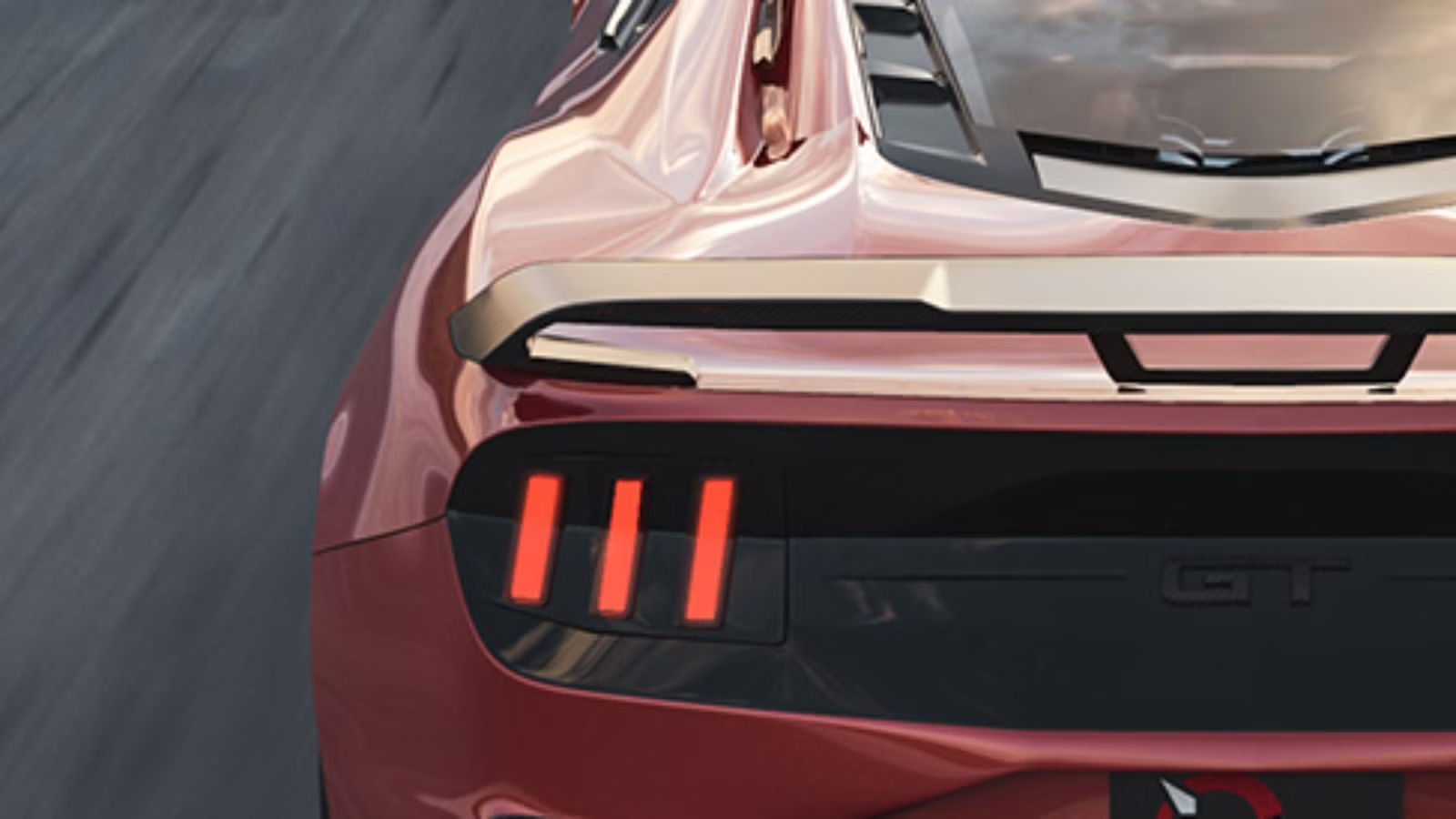
The HotCars Exclusive concept imagines a 2028 Mustang that puts the engine back where the very first one had it. Ford hasn’t announced anything like this, so think of it as a design study of a pony car chasing the Corvette head-on.
From the side, the cabin sits well forward and the rear deck stretches out long, giving it the stance of a supercar instead of a fastback. The front end still looks like a current Mustang, with tri-bar LED headlights, a pony badge set in a mesh grille, and a vented hood.
The 5.0 badges on the doors hint that a Coyote V8 now lives behind the seats. For reference, today’s front-engine Mustang GT makes 480 hp, or 486 hp with the active exhaust, while the Dark Horse squeezes 500 hp and 418 lb-ft from its modified Coyote.

Large intakes behind the doors would feed air to the mid-mounted engine. They also nod to the side scoop on the original Mustang I, a deep cut that hardcore Mustang fans will spot right away.
Out back, a louvered glass cover shows off the engine bay, framed by tri-bar taillights and a GT badge. Quad exhaust tips, a chunky diffuser, and a tall rear wing finish the look with plenty of track-day attitude.
The Corvette C8 And Mustang GTD Make A Mid-Engine Mustang Feel Overdue

The Corvette C8 proved in 2020 that an American sports car could go mid-engine without a supercar price tag. It launched with 495 hp, hit 60 mph in under three seconds, and started below $60,000.
Ford has already started shifting weight toward the back of the Mustang. The 815-hp GTD sends power through a carbon-fiber driveshaft to a rear-mounted 8-speed transaxle for near 50/50 weight distribution, but its supercharged 5.2-liter V8 still sits up front, which makes it a halfway step instead of a true mid-engine car.

Rear seats remain the biggest hurdle, since every Mustang in today’s lineup seats four. A V8 behind the driver would take that space, which is the same trade-off that sank the Mustang I back in 1962. Ford is now set to reveal the Mustang Cobra in 2027 to sit between the Dark Horse and Dark Horse SC, but a mid-engine platform is not something we would hold our breath for.

Related posts


Latest Post


No Comments