
Bugatti Veyron Restomod Render vs. La Maison Pur Sang Official
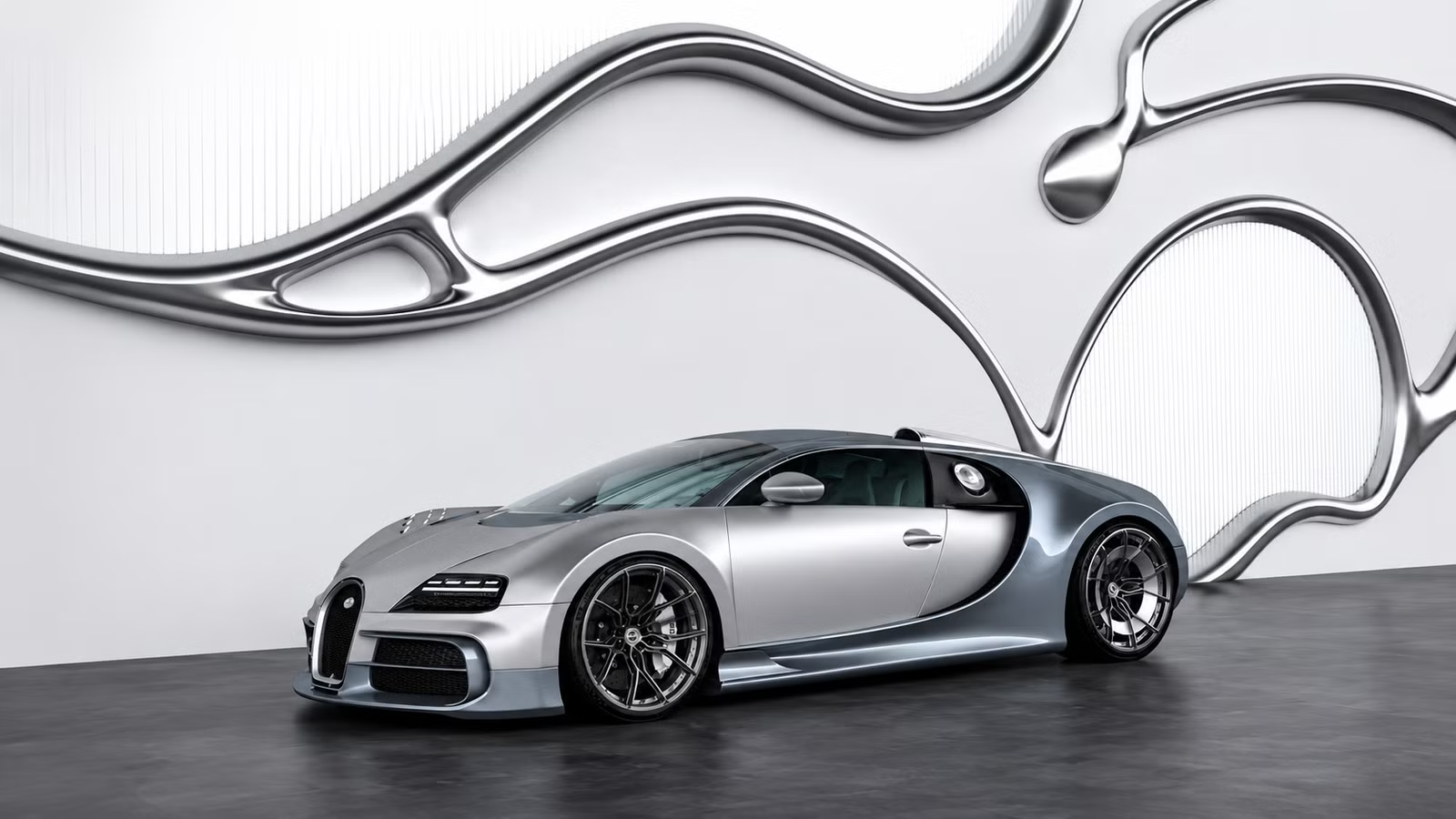
Bugatti spent the better part of Monterey Car Week showing the world exactly how it believes the Veyron should be honored — with reverence, restraint, and a Côte de Genève console finish borrowed from Swiss watchmaking. Digital artist Iung Anissa, posting as @anissadothings, had a different idea entirely. Two days after the La Maison Pur Sang Veyron 20 Years debuted at Pebble Beach, Anissa dropped a CGI restomod render that throws Bugatti’s conservative playbook straight out the horseshoe grille.

The timing is deliberate and the contrast is stark. Where Bugatti‘s one-off anniversary car carefully stitches together design threads from the Chiron and Tourbillon while keeping the Veyron’s silhouette essentially untouched, Anissa’s render pulls the W16 icon in a direction Molsheim’s atelier would never sanction — and the result is a genuinely compelling argument that the Veyron’s shape can absorb radical change and still read as a Veyron.
What Bugatti Actually Did at Monterey Car Week
To understand why Anissa’s render lands with such force, the official restoration needs context. The La Maison Pur Sang Veyron 20 Years is a one-of-one commission built from one of the 450 Veyrons produced during the car’s 10-year production run. Bugatti’s heritage program — launched at Rétromobile in Paris in 2020 — doesn’t simply return cars to factory spec. At its most expressive, it allows owners to introduce new materials and finishes while preserving the vehicle’s essential identity.

For this anniversary car, that meant a two-tone exterior pairing Rouge Rembrandt (a shade developed for the Tourbillon) with Petrol Blue (a Chiron signature), neither of which was ever offered on a production Veyron. The intake areas received new three-dimensional mesh elements, and the wheels were reinterpreted from the original Machiavelli design in larger dimensions — 20 inches front, 21 inches rear — enabling Chiron-spec tire fitment. Inside, Magnolia leather with Mocassin stitching covers the cabin, and the center console received that watchmaking-inspired Côte de Genève finish. The Veyron’s proportions, roofline, and overall architecture? Untouched. That’s the rule La Maison Pur Sang follows: evolve the details, preserve the sculpture.
Anissa’s Render Breaks Every One of Those Rules
Anissa’s CGI project starts from the same Veyron silhouette and then systematically dismantles the restraint Bugatti considers non-negotiable. The body is widened — immediately signaling that the proportions are no longer sacred. The front end gets a full LED headlight redesign that replaces the Veyron’s original lamp treatment with something sharper and more contemporary. The horseshoe side vent, one of the Veyron’s most recognizable design signatures, is extended rather than preserved. At the rear, the exhaust outlets grow into larger oval central units, and slim LED taillights replace the original units with a cleaner, more integrated look.
For the finish, Anissa went deliberately retro rather than forward-looking. The color scheme — Polar Metallic combined with Satin Argent Silver — was chosen, in the artist’s own words, to “remind me of the early specs and the aesthetic from the Veyron’s release era.” White calipers, a beige and white interior, and a set of staggered Z Performance Wheels complete the package. The contrast with Bugatti’s official approach couldn’t be sharper: where La Maison Pur Sang reaches forward to the Chiron and Tourbillon for its color references, Anissa reaches back to the Veyron’s own launch era.
Two Philosophies, One Silhouette

What makes the comparison interesting isn’t that one approach is right and the other is wrong — it’s that both demonstrate something about the Veyron’s design resilience. Bugatti’s version proves the W16 coupe can absorb modern Bugatti design language without losing its identity. Anissa’s render proves it can absorb a widebody treatment, redesigned lighting, and a retro-forward color palette and still read unmistakably as a Veyron.
Bugatti’s Design Director Frank Heyl put the official philosophy plainly at the Monterey unveiling: “Any adjustment to that original, legendary formula must begin with respect.” Anissa’s render begins somewhere else entirely — with imagination unconstrained by provenance, resale value, or the expectations of a heritage program built to protect both. The official car is the product of collaboration between Bugatti specialists and a customer with a significant asset to protect. The render is what happens when none of those considerations apply. For Veyron enthusiasts watching the W16 icon transition into blue-chip collector territory, both versions of this conversation are worth having.
Anissa’s render won’t go into production, and nobody at Bugatti is losing sleep over it. But as a counterpoint to the careful, heritage-first work La Maison Pur Sang unveiled at Pebble Beach, it’s a sharp reminder that the Veyron’s shape still sparks genuine creative energy — twenty years on from when it first rewrote what a production road car could be.

Related posts






Latest Post


No Comments