
BMW Australia’s CEO Says EVs Are Keeping Its V8s Alive, And The New X5 Could Get One Next

BMW Engines
The G65 BMW X5 launches in Australia with six-cylinders only, and BMW hasn’t committed to the S68 V8 due globally in 2027.
Article Summary
- BMW sold 5,187 EVs in Australia in 2025, led by the iX1 (1,888) and the iX2 (1,194).
- The NVES target for passenger cars and most SUVs drops from 117 g/km to 92 g/km on January 1, 2027.
- The M350 xDrive keeps the B58 inline-six with 437 hp (326 kW) and arrives in early 2027 at AU$128,900.
BMW hasn’t had to pull a single model from sale under Australia’s New Vehicle Efficiency Standard (NVES), and its local boss says electric cars are the reason. BMW Group Australia CEO Vikram Pawah says EVs made up nearly 20 percent of BMW’s Australian sales in 2025, enough of a cushion to keep its V8s and inline-sixes in showrooms as the rules tighten.
Speaking to carsales, Pawah said BMW isn’t preparing to drop its big engines or to pass emissions penalties on to buyers through higher prices. “At the moment, at BMW, we’re not so much worried about it,” Pawah said. In some parts of the range, he added, electric versions already take 35 to 40 percent of orders.
How Australia’s Emissions Rules Let EVs Pay For V8s

NVES doesn’t ban anything. It sets a fleet-average CO2 target for each automaker, adjusted for vehicle mass, and charges a penalty for every gram per kilometer a brand’s average lands above it. Every EV goes into that average at zero, which buys headroom for a twin-turbo V8 sitting far above the line.
The sales figures back Pawah up. BMW sold 5,187 EVs in Australia in 2025, or 19.3 percent of its total, led by the iX1 (1,888 units) and the iX2 (1,194). BMW’s smallest electric crossovers are covering the emissions of its most expensive engines. The schedule is the harder part. The headline target for passenger cars and most SUVs is 117 g/km this year and drops to 92 g/km on January 1, 2027, a 21 percent cut in twelve months.
Will Australia Get The New V8 BMW X5?

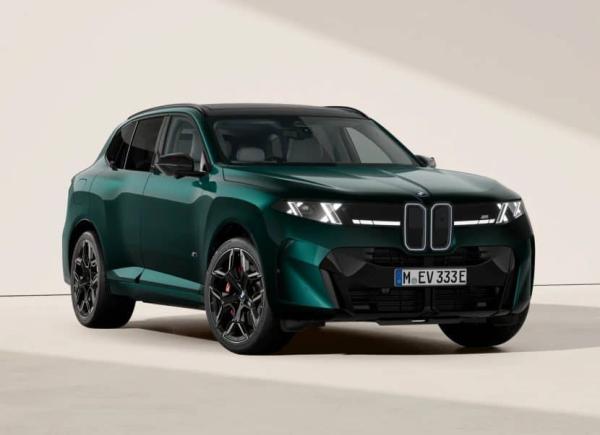
The X5 is where Pawah’s confidence gets its first real test. The new G65 X5 reaches Australian showrooms this quarter with two six-cylinder mild hybrids: the 40d xDrive from AU$143,900 and the 40 xDrive from AU$145,900, both before on-road costs. The X5 50e xDrive plug-in hybrid and the electric iX5 60 xDrive follow in early 2027.
Globally, BMW has confirmed a V8 M Performance X5 for 2027, expected to use the S68 4.4-liter twin-turbo V8 and likely to be called the X5 M60. BMW Australia hasn’t committed to it.
Why BMW’s Six-Cylinder And V8 Engines Should Last Into The 2030s
The engines themselves are covered. BMW M CEO Frank van Meel says both the inline-six and the V8 have been brought up to Euro 7, which should keep them in production into the 2030s.
The first new car to benefit in Australia is the M350 xDrive, the M340i’s replacement, which keeps the B58 3.0-liter inline-six with a 48-volt mild-hybrid system and 437 hp (326 kW). It costs AU$128,900 before on-road costs and arrives in early 2027. With EVs carrying so much of BMW’s emissions load, carsales notes, six-cylinder cars like the M350 and M3 aren’t under threat.

Related posts
Latest Post


No Comments