
Big Differences Between New And Old Honda Africa Twin
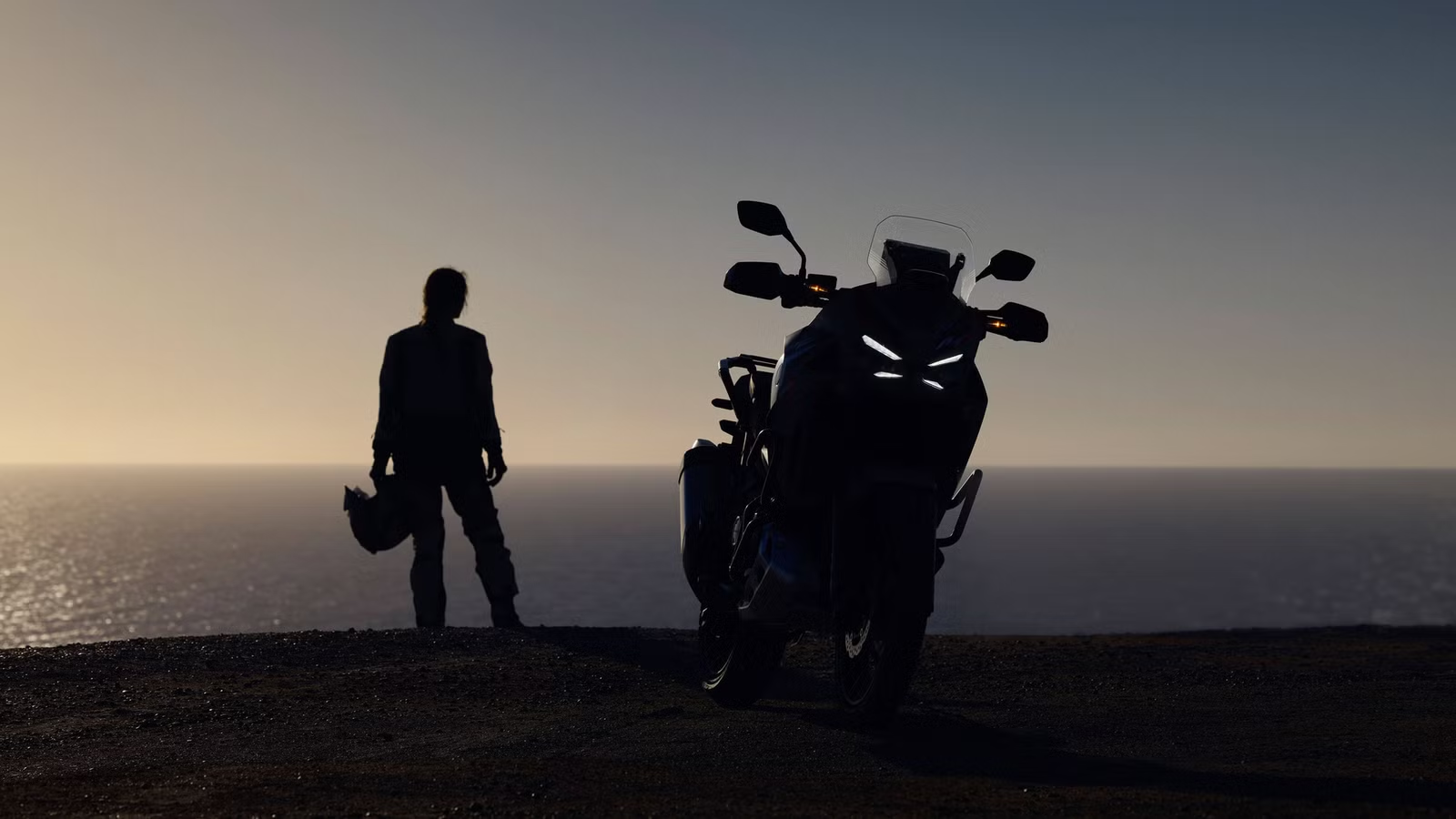
The Honda CRF1100L Africa Twin has held its ground since debuting for the 2020 model year, but after seven years on the market, the platform was undeniably due for a change. Enter the newly launched CRF1150L, fresh from its global reveal at EICMA. This generational shift raises an obvious question: has Honda finally caught up with the Joneses in the fiercely competitive full-size adventure segment? To find out, it is necessary to look past the new styling and examine exactly how much has actually changed underneath. Here are eight big differences that make the new Africa Twin a superior machine compared to the outgoing model.
Low-Slung Split-Cell Fuel Tank Fixes Top-Heavy Balance
Dual-Cell Packaging Lowers Center Of Gravity Across All Variants

The Africa Twin now uses a split-cell fuel tank to keep the crown of the Japanese ADV with the highest riding range. One is nearly in the conventional location, in front of the rider but not on top of the frame. Honda has now engineered it to lie low on the sides, and there is a second fuel cell under the rider’s seat. Honda hasn’t released individual figures for the tanks, but the standard Africa Twin and Enduro Sports hold 4.97 gallons of fuel, whereas the Adventure Sports can hold 6.39 gallons.
Dual TFT Displays Feature Faster Booting And Optically Bonded Screens
7-Inch Upper Touchscreen Meets 5.7-Inch Lower Vehicle Information Display

Honda has reimagined the instrument cluster of the old Africa Twin by giving it two different TFT displays. The one on the top is a large 7-inch touchscreen, whereas the LCD at the bottom has now been replaced by a 5.7-inch color display. The touchscreen is glove-friendly and offers rider access to infotainment, riding modes, and connectivity features. As before, Bluetooth and navigation are standard, but the 2027 Africa Twin has wireless Apple CarPlay and Android Auto as standard. It boots up in five seconds flat and now cuts sun glare substantially thanks to optical bonding. There is now multi-channel Bluetooth connectivity for intercom pairing and rider-to-passenger audio routing.

Six Factory Ride Modes Introduce Dedicated Off-Road+ Control
Tailored DCT Shift Mapping And In-Mode Parameter Tuning

The Africa Twin was the ultimate versatile motorcycle, and now the new Africa Twin has six default riding modes, which is two more than the old bike. It has customizable user modes as well. These modes are present across the lineup, but they are tuned differently for the different variants. What is new for 2027 is the Off Road+ ride mode; it is designed for technical single-track, deep sand, mud, and steep descents. For the Enduro Sports, it has the least intrusive level of HSTC and dedicated aggressive off-road shift patterns for the DCT. The automatic box will even hold gears on steep climbs and not upshift. You can also change baseline parameters in all six modes, where previously you could do it only in the user profile.
Honda Sensing Ride Suite Adds Radar-Guided Safety And Linked Braking
Front And Rear Radar Tech Exclusive To Adventure Sports DCT

The Honda Sensing Ride suite is exclusive to the Adventure Sports DCT, which has the same long-haul goals as before. It has forward- as well as rearward-facing radar. It allows for adaptive cruise control. The cruise control also allows the motorcycle to come to a complete halt and then restart. The Group Ride Assist recognizes a staggered formation and manages distance to the motorcycle directly ahead without worrying about the adjacent rider, whereas Distance Assist adjusts if the Africa Twin closes too quickly on a vehicle in the front. Forward collision warning, brake pulse alerts, and emergency brake assist are included too.
The rearward radar offers blind-spot information, rear distance information if the vehicle behind is following too closely, and rear collision warning as well. This is combined with the electronically controlled combined ABS that is standard across the Adventure Sports. The lever actuates a system that proportions braking force to whichever end of the vehicle requires it the most. It also gets data from the IMU to reduce slippage. The brakes also de-link themselves off-road. None of these features were available on the older Africa Twin.
Key Convenience Upgrades Become Standard Factory Equipment
Electric Windscreen, Keyless Fuel Cap, And Standard Heated Grips

The Africa Twin and Adventure Sports have an electrically adjustable windscreen that can be moved 130 mm vertically and tilted 10 degrees while riding. There is also a lockable smartphone storage compartment with a USB-C charging port. Keyless ignition is now tied to the steering lock and the fuel cap lock. Heated grips, handguards, and an aluminum rear luggage carrier are now standard equipment; they were optional extras earlier. The wheels still feature cross-spoke tubeless tires, and although the headlamp design is new, it is still all LED and incorporates integrated cornering lights. Vehicle hold control — Honda’s name for hill-hold assist — is standard. Once again, these items weren’t available on the older model, and they make the ultimate adventure motorcycle even better.
Larger 1,131cc Twin Delivers More Horsepower And Torque
Power: 117.3 Horsepower

The 2027 Africa Twin has its most significant overhaul in a decade, beginning with an engine with more displacement at 1,131 cc and a higher compression ratio of 12.1:1. It has gained the extra capacity by increasing the bore and therefore makes more power at 117.3 horsepower and more torque at 87.8 pound-feet. The outgoing model generates 100.5 horsepower and 82.6 pound-feet from 1,084 cc under a lower 10.5:1 compression ratio. There are larger 52 mm throttle bodies, but the new model’s peak power is found at the exact same revs at 7,500 RPM, while the peak torque has moved up by 250 RPM to 5,750 RPM. The gear ratios have been revised as well for the new engine.
Showa EERA Semi-Active Suspension Is Now Standard
Skyhook Damping Control With Beefier 49 mm Inverted Front Forks

The Africa Twin always felt right no matter where you rode it, but the suspension has got major updates. The beefier front fork tubes now have an inner diameter of 49 mm. In addition, the Showa EERA electronic suspension with Skyhook control is now standard across the Africa Twin and the Africa Twin Adventure Sports. The old bike had electronic suspension as an optional extra. The CRF1150L offers 8.27 inches of travel at the front and 7.87 inches at the rear in conjunction with a 21/18-inch wheel set for the Africa Twin and the well-known 19/ 18-inch set for the Adventure Sports. Making the suspension’s job a little easier is a curb weight featuring a chassis and swingarm 3.09 pounds lighter than the outgoing CRF1100L.
Dakar-Inspired Africa Twin Enduro Sports Joins The Lineup
Rally-Spec Showa Closed-Cartridge Suspension

The old Africa Twin lineup had just the base Africa Twin and the Adventure Sports, but a new variant has been added called the Enduro Sports. As the name suggests, this is a Dakar-inspired off-road variant. It shares almost everything with the other two, but there are a few differences, and it has fully adjustable 49 mm Showa closed-cartridge inverted forks derived from the CRF450 Rally and a fully adjustable Showa Pro-Link rear monoshock. It also has the most travel at 9.45 inches in the front and 9.06 inches at the rear, along with 10.24 inches of ground clearance.
It weighs 502.6 pounds or 526.9 pounds depending on whether you pick the manual or the automatic transmission. It looks different as well, with the high front fender, the low fixed flyscreen, a minimalist tail section, and an exclusive red livery. You also do not get heated grips, the aluminum luggage rack, or conventional two-channel ABS, which can be switched off at the rear. There is no combined ABS.
Source: Honda PowerSports

Related posts




Latest Post


No Comments