
America’s First Production Car With An All-Aluminum Engine Block
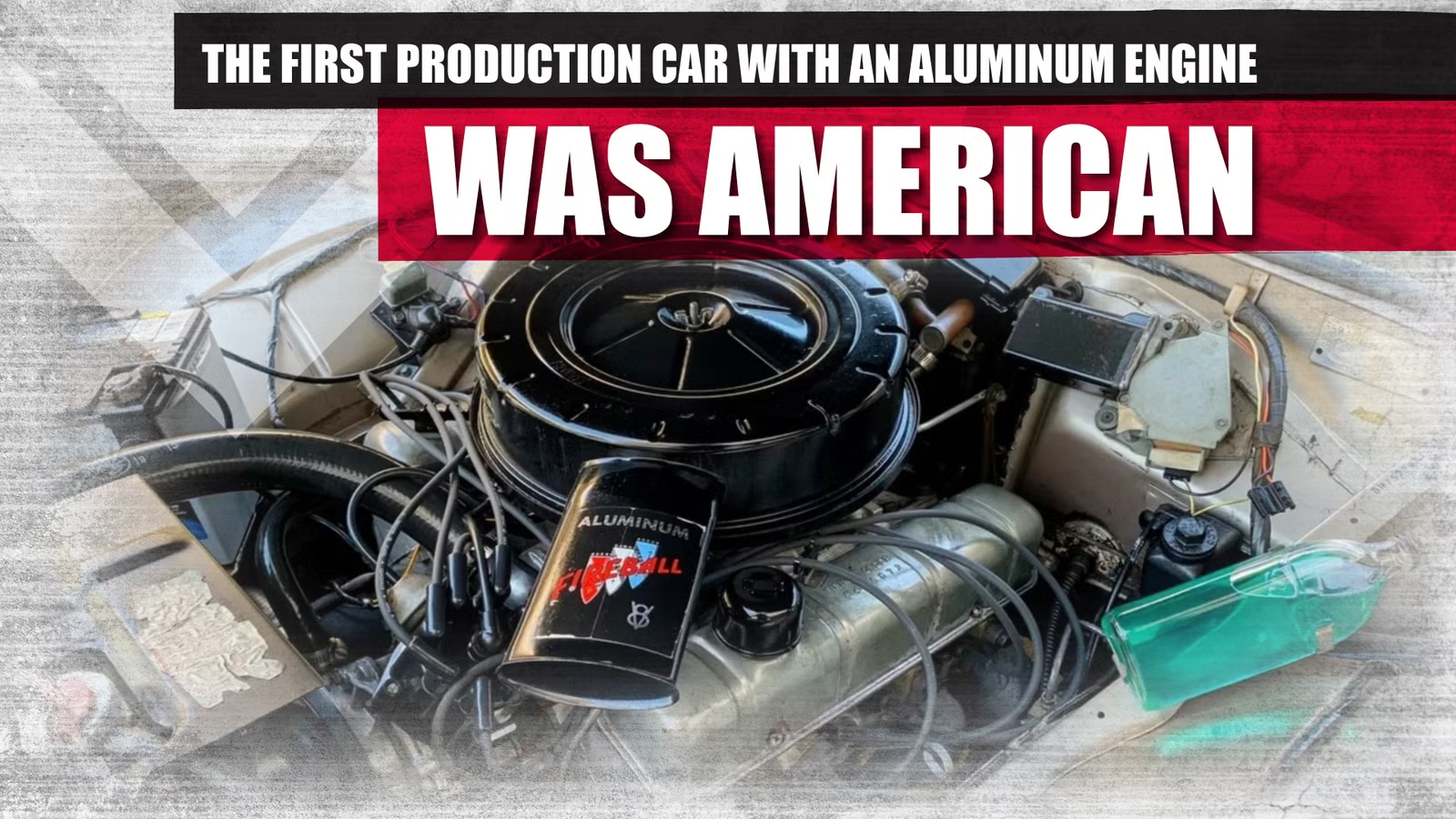
Aluminum engines are everywhere today — turbocharged, lightweight, and taken for granted under the hoods of everything from economy cars to supercars. But someone had to go first, and that someone was an American brand most people wouldn’t guess. Long before lightweight construction became an industry obsession, Buick engineers were wrestling aluminum into a mass-production V8, betting that a radical departure from cast iron could redefine what a compact car could do. The story of how they pulled it off — and what happened next — is one of the more fascinating chapters in American automotive history.

Despite the hurdles of working with an unfamiliar material at production scale, engineers pushed forward, developing groundbreaking all-aluminum engine designs that would forever change the landscape of American cars and automotive engineering.
The First American Production Car With An All-Aluminum Engine Block Was The 1961 Buick Special
In the early 1960s, Buick set out to revolutionize the automotive industry by developing a lightweight yet powerful engine for its new compact car, the Buick Special. The result was an all-aluminum 215 cubic-inch V8 engine — a groundbreaking achievement in American automotive engineering. By trimming significant mass from the powertrain, Buick simultaneously improved performance and fuel efficiency, setting a new standard for future engine designs.

According to British V8, the decision to use aluminum was driven by the desire to improve fuel economy without compromising performance. By reducing the engine’s weight, Buick engineers achieved a more balanced and responsive vehicle, catering to consumers seeking both power and efficiency. This strategic move showcased Buick’s commitment to innovation and its ability to adapt to evolving market demands.
The introduction of the aluminum V8 in the 1961 Buick Special marked a significant departure from traditional cast-iron engines. This approach not only distinguished Buick from its competitors but also laid the groundwork for future advancements in engine technology, influencing designs for decades to come.
The 215 Cubic-Inch Aluminum V8 Was An Engineering Marvel
Buick’s 215-cubic-inch aluminum V8 was quite the engineering feat, tipping the scales at approximately 324 pounds — significantly lighter than its cast-iron counterparts. According to Hemmings, that weight reduction was achieved by casting major components — including the block, heads, and intake manifold — from aluminum alloy. Beyond saving pounds, aluminum’s superior thermal conductivity improved heat dissipation, contributing to the engine’s efficiency and longevity.
Specs
|
1961 Buick Special |
1961 Buick Special |
|
|
Engine |
215-cubic-inch aluminum V8 |
215-cubic-inch aluminum V8 |
|
Fuel System |
Two-barrel carburetor |
Four-barrel carburetor |
|
Horsepower |
155 hp |
185 hp |
|
Torque |
220 lb-ft |
230 lb-ft |
To address aluminum’s lower strength compared to iron, engineers incorporated cast-in-place iron cylinder liners and cast-iron main bearing caps. This hybrid approach ensured durability while preserving the benefits of reduced weight. The engine featured a bore of 3.5 inches and a stroke of 2.8 inches, resulting in a compact design that delivered impressive performance for its displacement.
The aluminum V8 was offered in two configurations: a two-barrel carburetor version producing 155 horsepower and a four-barrel variant delivering 185 horsepower. These options gave consumers meaningful choices to suit their preferences, further demonstrating Buick’s commitment to innovation and customer satisfaction.
Overcoming Challenges In Aluminum Engine Production

Developing an all-aluminum engine introduced several challenges related to manufacturing processes and material properties. Hagerty reported that Buick engineers employed a semi-permanent mold casting technique, combining steel molds for the exterior surfaces with sand cores for the internal passages. This method ensured dimensional accuracy and a high-quality finish while accommodating the complexities of aluminum casting.
1961 Buick Special Fun Facts:
- In 1962, Buick experimented with turbocharging, creating the first-ever turbocharged American production car, the Buick Special Skylark with the “Turbo Fireball” V8.
- The aluminum 215 V8 weighed around 324 pounds, about 150 pounds lighter than a typical cast-iron small-block V8.
- Despite its advanced engineering, production issues, and high costs, GM discontinued the aluminum V8 after 1963, selling the rights to Rover.
Managing aluminum’s thermal expansion was crucial to maintaining proper sealing and component integrity. Engineers designed the engine with expansion rates carefully accounted for, incorporating features such as cast-in iron cylinder liners with grooved exteriors that locked them securely within the aluminum block — an elegant solution to the differential expansion problem.
Ensuring corrosion resistance was another critical concern. The aluminum alloy, designated GM 4097-M, contained 11–13% silicon and a small percentage of copper for improved corrosion resistance. Careful attention to coolant chemistry and maintenance practices further protected against potential corrosion issues, safeguarding the engine’s long-term reliability.
Buick’s 1961 Special Was A Platform For Innovation
The 1961 Buick Special served as the ideal platform to showcase the capabilities of the new aluminum V8 engine. As Buick entered the compact car market, the Special was designed to balance performance, efficiency, and comfort. The lightweight engine contributed significantly to the vehicle’s nimble handling and responsive acceleration, setting it apart from competitors in the growing compact segment.
Consumers appreciated the Buick Special’s combination of power and fuel economy — attributes directly linked to the innovative aluminum V8. The vehicle’s success demonstrated the market’s readiness for advanced engineering solutions that prioritized both performance and efficiency, encouraging further exploration of alternative materials and designs in automotive engineering.
Integrating the aluminum V8 into the Buick Special not only enhanced the car’s performance but also underscored Buick’s reputation as a forward-thinking automaker. This strategic move reinforced the brand’s commitment to delivering new technology and superior driving experiences to its customers.
Legacy And Influence On Future Engine Designs

The introduction of the 215 cubic-inch aluminum V8 in the 1961 Buick Special had a lasting impact on engine design and automotive engineering. Its innovative use of aluminum paved the way for future developments in lightweight engine construction, influencing designs across various manufacturers. The engine’s principles were later adopted and adapted by companies such as Rover, which utilized the design in their vehicles for decades.
Despite its relatively short production run, the aluminum V8’s influence extended into motorsports and performance applications. Enthusiasts and racers recognized the engine’s potential, leading to its use in various high-performance and racing vehicles. This widespread adoption highlighted the engine’s versatility and the effectiveness of its lightweight design. These days, the Special looks expensive, but it is a pretty affordable classic car.
Classic.com Values:
- Average Price: $11,655
- Lowest Sale: $4,350
- Top Sale: $23,000
- Most Recent: $4,350
The 1961 Buick Special’s aluminum V8 set a precedent for using alternative materials in engine construction. Its legacy is evident in the continued pursuit of lightweight, high-performance engines throughout the automotive world.
Sources: Hemmings, Hagerty, Classic.com.

Related posts





Latest Post


No Comments