
Americans Couldn’t Officially Buy The Best-Handling Sportbike Of The 1980s
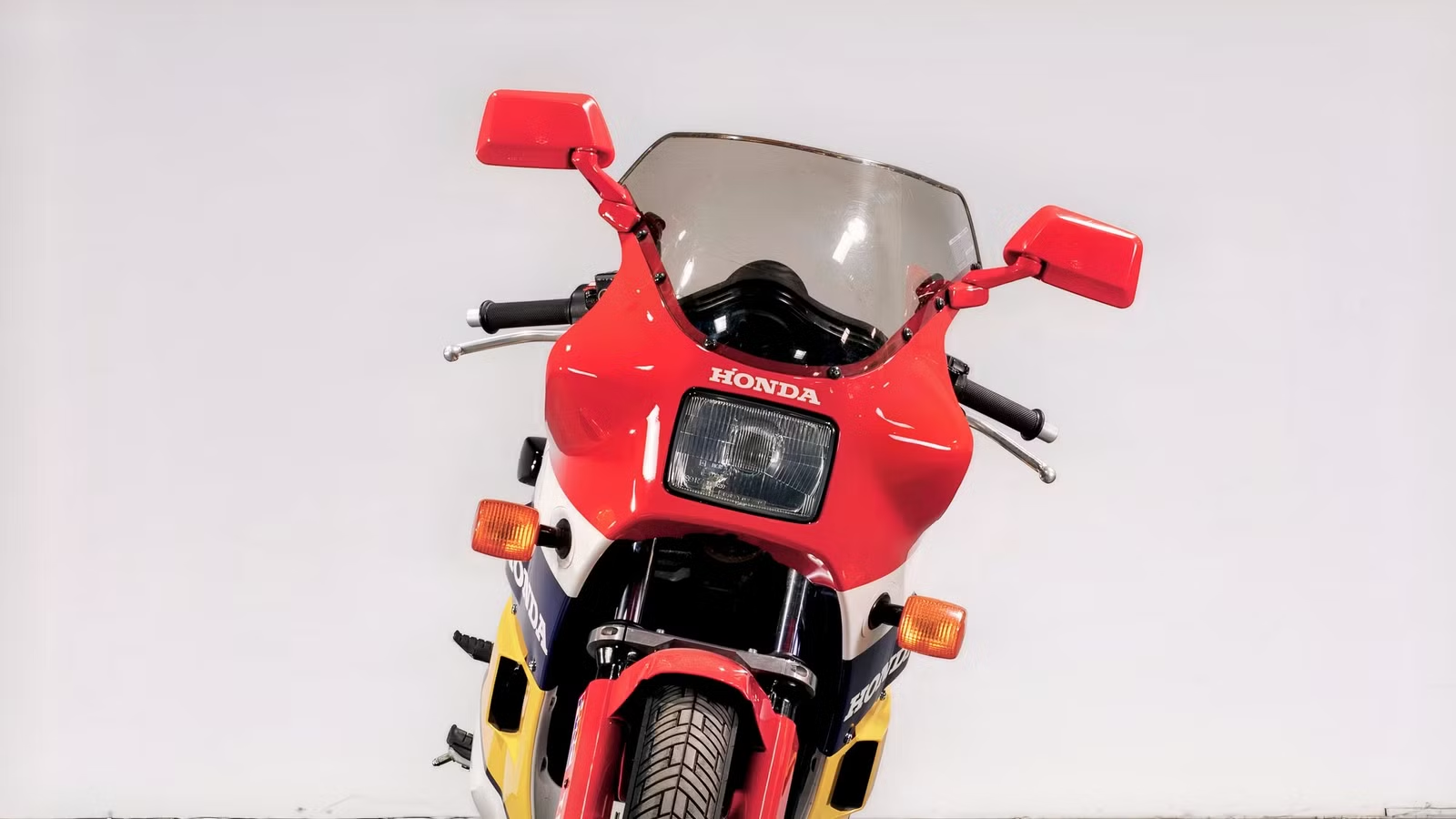
It’s a human tendency to long for things that seem unobtainable. The ongoing work to set up a civilization on Mars and the exorbitant price of the Honda NS400R in the US used bike market are some of its testimonies. While the former is a story for another day, the Honda NS400R is something that deserves mention even today, despite its production having been limited to just 12,000 units in the 1980s.

A replica of Honda’s NS500 GP race machine, the NS400R went on sale in its home country, Japan and European markets with varying power output. The US market, however, was left deprived of it for reasons still unknown. That didn’t stop enthusiasts and collectors from importing it to the US through the gray market at high prices, not just to flaunt it as a showpiece but also to ride it, even though that meant cumbersome maintenance due to spares not being readily available. All the trouble not just for its rarity but also due to the technical wonder that it was.
Race-Bred Hardware, Not Just Race-Replica Styling
The NS400R was more than a fully-faired road-going motorcycle dressed up as a race machine. It was an engineering marvel in many ways, with its engine being the star of the show. The V3 layout was derived from Freddie Spencer’s championship-winning NS500, but the displacement witnessed a drop from 498cc to 387cc. This allowed Honda to position the NS in the under-400cc licensing bracket in Japan which allowed riders to get a license through a cheaper and less complicated process as compared to bigger bikes.

The two-stroke, three-cylinder configuration was the same as the race machine, but the NS400R had its cylinders placed differently – two positioned horizontally at the front and one vertically with all of them being 90 degrees to each other. This was the secret sauce for the NS’ engine being much lighter and slimmer than its Japanese contenders. It also helped with gaining an apt centre of gravity which aided in nimble handling.

Another engineering wizardry trickling down from its MotoGP bike was the Automatic Torque Amplification Chamber (ATAC). It alters two-stroke exhaust volume by utilising chambers located right under the exhaust ports. At lower revs, the chambers open to deliver stronger torque while they close at higher rpms for more horsepower. To improve its handling, Honda also employed Torque Reactive Anti-Dive Control (TRAC) forks comprising valves that progressively stiffen up the front under braking, thereby assisting in safer trail braking.
There were more links to its GP sibling, such as the Nikasil coating on its cylinders to minimise friction and heat, thereby causing slower wear and improving reliability. The NS400R, hence, has several unique traits which gave its owners a lot to brag about in a gathering of motorcyclists and justifies the longing among sportbike aficionados in the United States.
Built For Japan’s 400cc Bracket

In the 1980s, Honda’s Japanese contemporaries had come up with 500cc replicas of their MotoGP steeds — Suzuki had the RG500, for instance, and Yamaha brought out the RD500LC. Honda, however, went the unconventional way to tackle the complicated licensing system in its home country. Obtaining a license for motorcycles over 400cc means more training hours, tougher tests, and is more expensive compared to two-wheelers under 400cc. Making a race-replica for the latter category meant Honda could make it more accessible for a larger demographic.
Honda detuned the NS400R’s engine to 59 hp for Japan’s 400cc class restrictions, while European models produced 72 hp at 9,500 rpm. Despite trailing its Suzuki and Yamaha rivals in power, the NS400R’s 359-pound dry weight made it incredibly agile through corners.
However, its 387cc two-stroke V3 was notoriously thirsty, returning just 23–25 mpg, or as little as 16 mpg during aggressive riding. Comfort was also divisive, with some riders finding it cramped while others had no complaints.
From Forgotten Oddity To Six-Figure Collector Status

After its debut in 1985, the Honda NS400R was on sale only for a couple of years in whichever market it went on sale. This limited production run and its revolutionary hardware have made it rare and precious. From being perceived a specialized, fuel-guzzling two-stroke during its era to being known as one of the best-handling sportbikes now, the NS400R has aged gracefully.
Clean examples still fetch over $10,000 in the US, with people respecting the trouble purchasers took to import it through the gray market. In fact, a pristine unit of the motorcycle was sold for $19,902 last year through Iconic Motorbikes Auctions. The fact that buyers are queuing up to get their hands on the motorcycle despite sourcing spares and overall maintenance being a hassle is a testimony to its value appreciation.
The V3 Legacy Returns: From NS400R To Honda’s Electric-Supercharged Future

Honda did not dump the idea of a V3 after the NS400R and its race derivative. Their spiritual descendant was shown at the 2024 EICMA show in Milan in the form of a 75-degree V3 powerplant. A year later, the V3R 900 prototype broke cover, sporting the same engine. With the world’s first electric compressor, this engine is as revolutionary as Honda’s V3 of the bygone era. The debut of this new platform has certainly strengthened the memories of its ancestor and made it a bit more relevant and valuable in modern times.
Why The Longing Still Matters

The respect earned by the Honda NS400R in the US is not just because of its ground-breaking engineering and GP-derived tech, but it is also admired due to its scarcity. Show up at a meet-up riding one, and the well-informed folks will know that it’s a rarity and importing it would’ve been a tricky affair. And Honda bringing back the V3 formula validates the fact that the architecture worked then and it works now, though the present iteration is completely different.

Related posts



Latest Post


No Comments