
A Secret Corvette Dominated Shelby’s Cobras By Roughly 10 Seconds A Lap
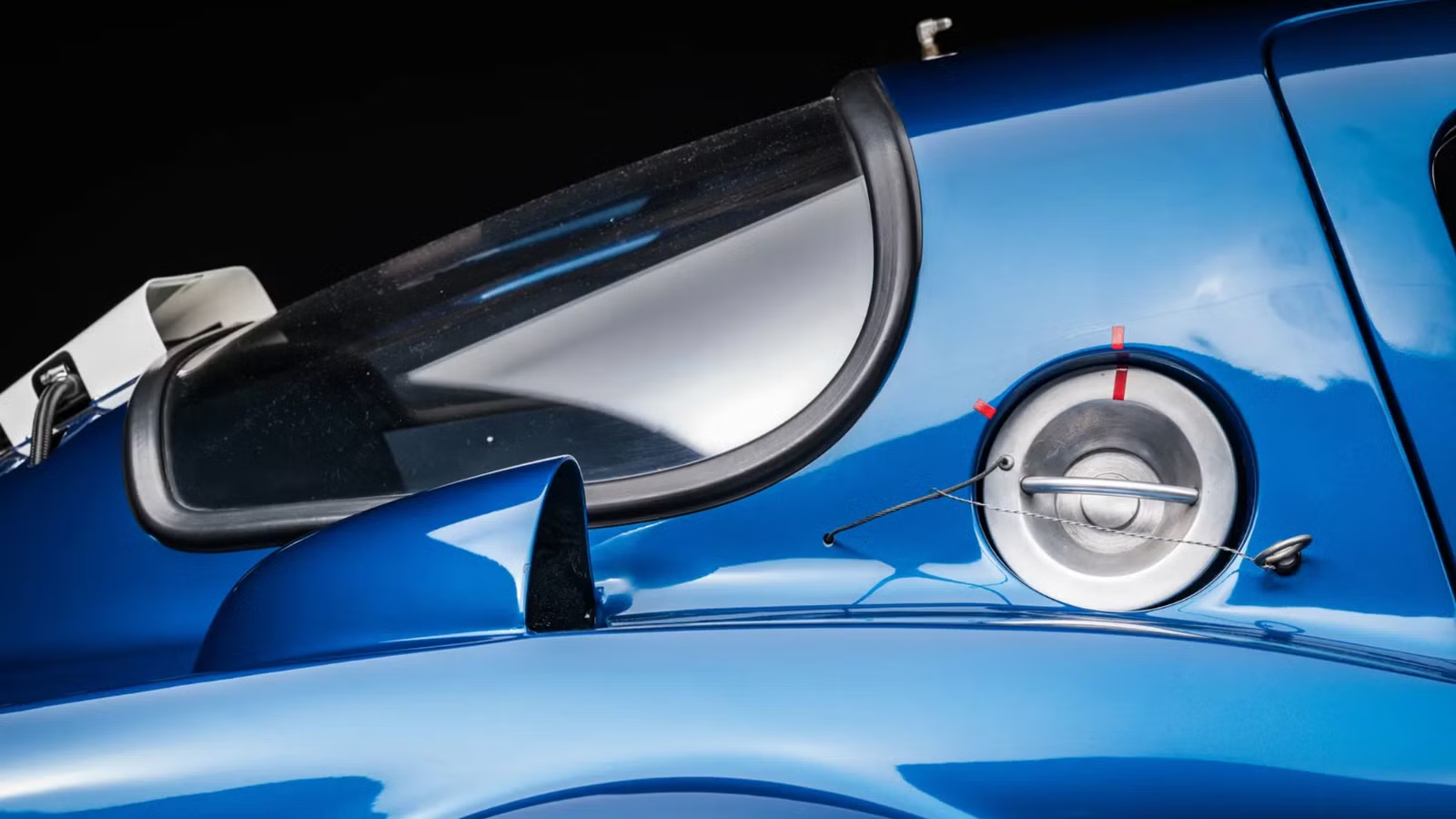
In 1963, Chevrolet took a proper run at Carroll Shelby with a top-secret skunkworks Corvette codenamed Project Mongoose. It was an exceptional machine that humiliated Shelby’s Cobras on the racetrack before falling victim to the worst instincts of corporate bureaucracy, with only a handful of examples ever built.
Carroll Shelby’s Cobras Were Giving Chevrolet A Headache

By the early 1960s, Chevy had spent nearly a decade establishing its Corvette as America’s sports car. The 1963 arrival of the second-generation Sting Ray gave enthusiasts plenty of reasons to believe it deserved the title, including an available 360-horsepower V8 and the first-ever Z06 competition package. Enter Carroll Shelby.
Shelby’s AC Cobra paired a lightweight British roadster with undeniably American power, creating a formidable opponent for the heavier and more traditional Corvette. The Cobra was powered by a 260-cubic-inch V8 and weighed roughly 1,000 pounds less than the Sting Ray, essentially changing the game for American sports cars of the time.
The cars in this new rivalry were nearly perfect analogues of the companies behind them: the Corvette a product of the large and established traditional car manufacturer, and the Cobra an Anglo-American collaboration from a tiny company that had no need to be distracted by non-racing trivialities like selling Impalas in Peoria.

For Zora Arkus-Duntov, the legendary engineer widely credited with turning the Corvette into a serious performance car, the prospect of Shelby’s lightweight creation running circles around Chevy’s pride and joy was a problem that needed to be solved, and fast.
Chevy’s Secret Weapon: Project Mongoose

Duntov wasn’t the type to merely keep pace with Shelby. He wanted to beat these new Cobras outright, and do so under the Corvette umbrella he had helped define. The project began in 1962 with the blessing of Chevrolet’s leadership, but nobody involved was eager to share their plans with the General Motors brass upstairs.
The program was codenamed Project Mongoose, an unsubtle nod to the small but ferocious mammal best known for eating cobras. If that name doesn’t ring a bell, the resulting one will. Duntov and his team were creating the very first Grand Sport. It was a purpose-built racing machine that borrowed its appearance from the new Sting Ray, but retained few of its underpinnings.
The plan was to produce 125 examples, enough for the new Grand Sport to qualify for international GT racing under FIA homologation rules. And since GM had officially placed a moratorium on factory racing, the idea was to get the cars into private hands and avoid technically violating that directive, even if the powers that be ended up not seeing it that way.
The Grand Sport Was Built To Beat The Cobra

This kind of grudge match doesn’t just play out at the local track, so Duntov and Chevy set their sights on competing at Sebring and Le Mans, where the Grand Sport could take on Europe’s finest, in addition to whatever the Shelby Cobra was considered.
Size and weight were obviously significant points of distinction between the Corvette and the Cobra, so among the top orders of business for developers was to cut weight from the Grand Sport. A purpose-built tubular steel frame and exceptionally thin fiberglass body panels helped shave more than 1,000 pounds compared to a showroom Sting Ray, with reported weights ranging from roughly 1,900 to 2,150 pounds. The car also picked up four-wheel disc brakes, lightweight magnesium wheels, and updated bodywork that supported both cooling and aerodynamics.
The early Grand Sports built used a modified 327-cubic-inch V8, but engineers were also at work developing a more exotic solution for under the hood: a 377-cubic-inch all-aluminum small-block V8 with a reported output of between 485 and 550 horsepower.
The Grand Sport Embarrassed Shelby At Nassau
Fast-forward to December 1963 and the Grand Sport program is dead. General Motors had gotten wind of Project Mongoose and shut it down. But Duntov and his team weren’t quite ready to call it quits.
Three Grand Sports would arrive at Nassau Speed Week in the Bahamas under the banner of John Mecom Jr., a wealthy Texas oil heir whose private racing team provided a layer of plausible deniability between the competing Grand Sports and Chevy corporate. The Grand Sport engineering team was conveniently on hand for support, having decided that it was a good week to take some personal vacation time in the islands.
The driving roster was no joke. Roger Penske, Jim Hall, and Dick Thompson were among the drivers who piloted the Grand Sports as Shelby and his Cobras arrived ready to race. This time, though, the Chevy cars had the upper hand, with reports that the Grand Sports were turning in lap times roughly 10 seconds quicker, a definitive gap in a showdown that had been a long time coming.
Mechanical trouble kept the Grand Sports from sweeping the event, but the point had been made. Penske finished third overall in the Governor’s Trophy race, with two other Grand Sports finishing fourth and sixth. Chevy had built exactly what Duntov had set out to build: a Corvette capable of going toe-to-toe with Carroll Shelby and coming out ahead.
GM Killed Its Cobra-Killer Before It Could Reach Its Potential

The story ends with a thud. Chevrolet had come up with a proper answer to the up-and-coming Shelby, but General Motors wasn’t amused by a semi-authorized racing effort operating in direct conflict with corporate policy.
According to RM Sotheby’s account of the program, word of the Grand Sport’s performance at Nassau reached GM chairman Frederic Donner, who discovered that Chevrolet had continued supporting the Corvettes despite orders to stop. The party was over.
That was the end of factory involvement, although the Grand Sports themselves continued racing in private hands. Of the 125 cars planned to reach the FIA homologation threshold, only five officially documented examples were completed, though Mecom himself later claimed to have had six.
In August of 2026, chassis #003 sold via RM Sotheby’s for $18,705,000.
Sources: Chevrolet, MotorTrend, RM Sotheby’s

Related posts


Latest Post


No Comments