
A 1969 Subaru Sambar 360 Van Is On Bring a Trailer — And It’s How Subaru First Came To America
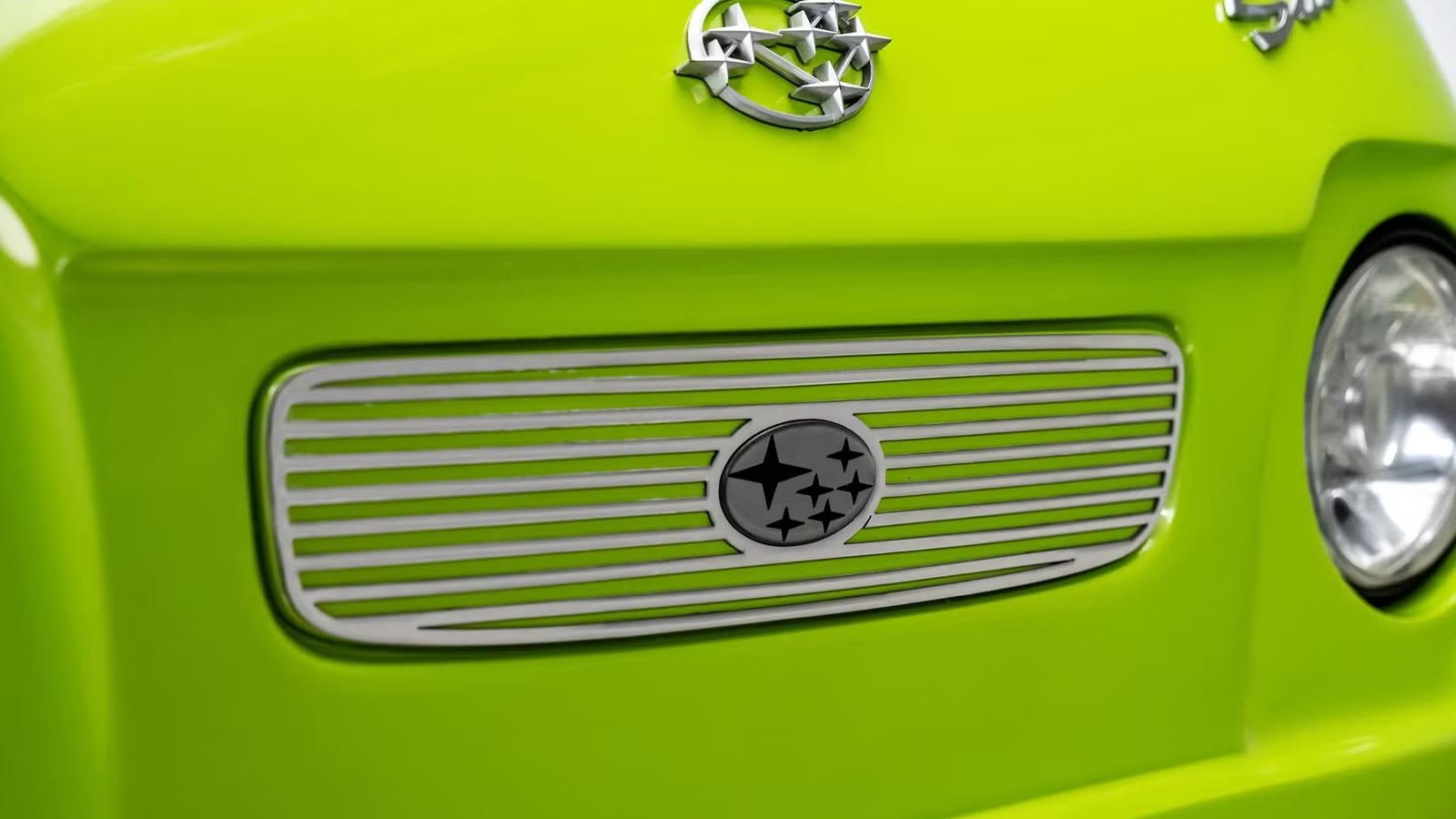
Before the Outback, before the Forester, before Subaru became synonymous with all-wheel-drive wagons and rally heritage, the brand entered the American market with something far stranger: a two-stroke microvan barely longer than a park bench. A 1969 Subaru Sambar 360, painted in metallic lime and wearing approximately 32,000 miles on its odometer, is currently live on Bring a Trailer with the auction closing August 13. It’s not just a quirky old van — it’s a direct artifact of one of the more audacious import gambits in American automotive history.
The car that started it all was the Subaru 360 sedan, which arrived in the U.S. in 1968 courtesy of serial entrepreneur Malcolm Bricklin. He saw an opening: Americans were warming to fuel-efficient small cars, and the 360’s diminutive size let it skirt certain import regulations. The Sambar van was a natural extension of that same platform, and a handful made it stateside alongside the sedan. This particular example is one of the rare left-hand-drive versions — most surviving kei-era Japanese vehicles are right-hand-drive domestic-market imports, which makes this one a genuine find for collectors.
Why Malcolm Bricklin Bet on a 356cc Microvan
Bricklin’s instinct in 1968 was straightforward: the American market was showing early signs of appetite for economy cars, and the Subaru 360 could be positioned as an affordable, fuel-sipping alternative to anything Detroit was offering at the time. The 360 sedan was already an established product in Japan, built to the country’s kei-car regulations — a class of ultra-compact vehicles that qualified for reduced road tax and insurance premiums by staying within strict limits on engine displacement, power output, and overall dimensions.

The Sambar van shared the 360’s rear-mounted 356cc two-stroke two-cylinder engine and its basic architecture, but packaged it as a commercial-style microvan. Despite a footprint under ten feet in length, the layout freed up a surprising amount of cargo space behind the front seats — a practical argument that made it useful rather than merely novel. Bricklin’s pitch was economy and utility, and the Sambar delivered both, even if 25 horsepower left little room for highway ambition.
Kei Regulations, Left-Hand Drive, and Why This One Is Different

Japan’s kei-car rules have always been written for the domestic market, and the vehicles built to meet them were almost universally right-hand drive. When these cars surface at auction today — whether it’s a Suzuki Carry, a Honda TN360, or a Mazda Bongo — they’re typically Japan-market examples brought over as gray-market imports, which means the steering wheel is on the wrong side for American roads.
This Sambar is the exception. As a unit that was originally exported to the U.S. market through Bricklin’s import operation, it was built in left-hand-drive configuration — a meaningful distinction for a daily driver or show-circuit car. It’s also what makes it a traceable piece of Subaru’s American origin story rather than a generic kei import. The metallic lime paint, the green cloth accents on the vinyl seats, and the color-matched bare-bones interior are all original to the era, and the odometer reading of around 32,000 miles — true mileage unverified — suggests a life spent mostly at rest.
What Collector Appetite for Pre-Legacy Kei Vans Looks Like Right Now
The broader market for early Japanese microvans has been building quietly for several years. Bring a Trailer has become the natural venue for these cars, surfacing everything from Honda N600s to early Daihatsu Midgets to Subaru 360 sedans. Prices have climbed as the supply of clean, documented examples thins out and as a generation of collectors who grew up with Japanese cars moves into serious buying territory.
The Sambar 360 van is a rarer proposition than the 360 sedan — fewer were exported, fewer survived, and the left-hand-drive configuration adds another layer of scarcity. The BaT listing does not include a published pre-auction estimate, so the final hammer price will be the market’s clearest signal yet for this specific variant. Given comparable kei microvans in good condition have cleared five figures at auction in recent years, this lime-green example could surprise. It closes August 13, and for collectors tracking the pre-legacy Japanese microcar segment, the result is worth watching.
For Subaru enthusiasts, the Sambar 360 is less a curiosity than a cornerstone — the van that helped prove there was a market for Japanese economy cars in America before anyone else had figured that out. Whatever it brings at auction, the car itself has already made its case.
Source: Bring a Trailer

Related posts



Latest Post



No Comments