
Why V-Strom Owners Don’t Care About Fancy Gadgets
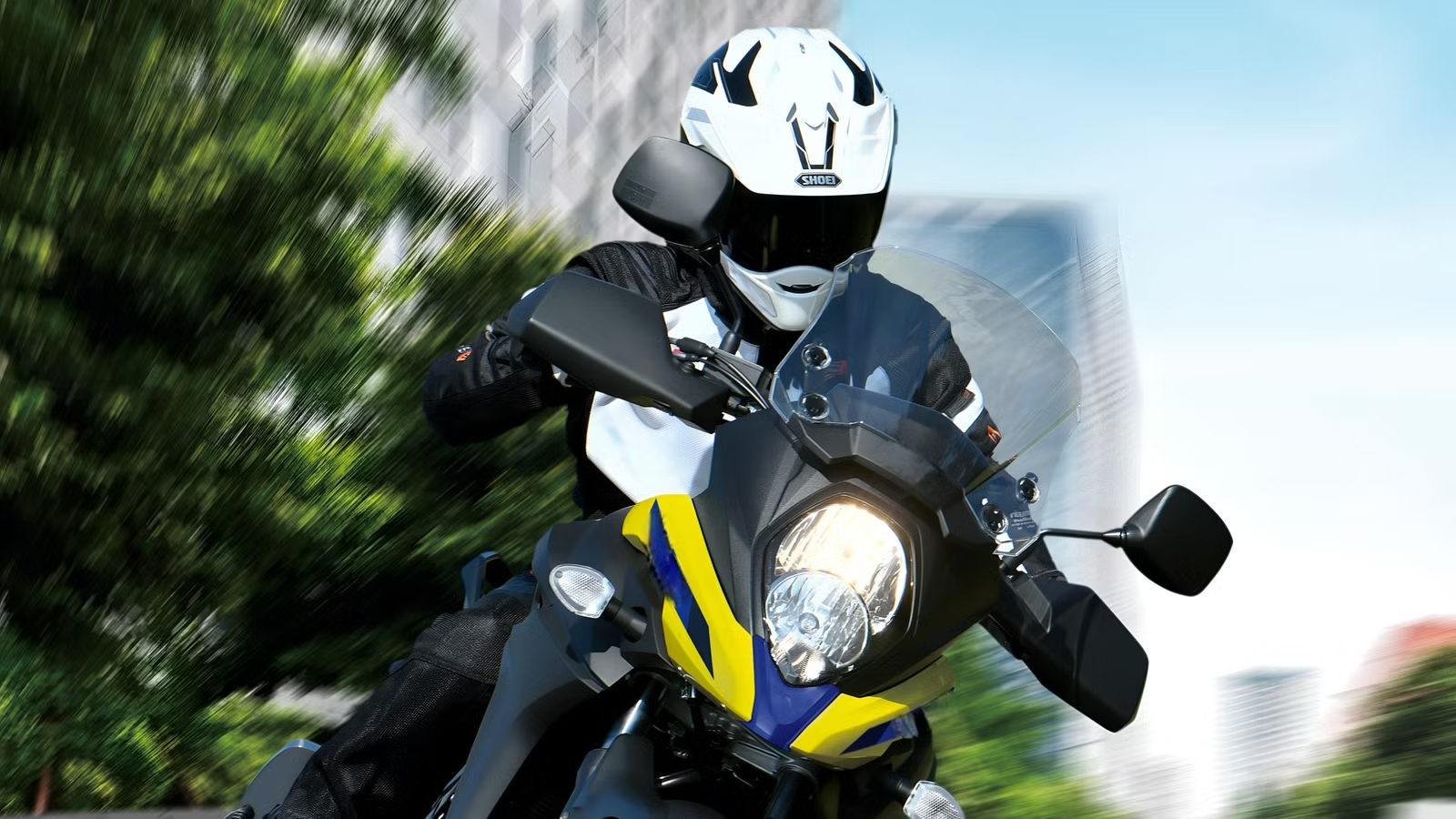
Adventure motorcycles have become one of the hottest segments. What began as a relatively straightforward idea of building motorcycles that could perform well on and off the road has evolved into a segment packed with technology, with some models now rivaling cars in the electronics department. Ducati, BMW, and most recently Triumph are among such manufacturers. Amid all this commotion, Suzuki and its V-Strom family seem content playing a slightly different game. Some might call the approach vanilla, but it’s a formula Suzuki has stuck with for more than two decades, and it appears to be working just fine.
Suzuki’s V-Strom Formula Is A Case Of If It Ain’t Broke, Don’t Fix It

Extremes tend to get attention, and it’s particularly easy to go extreme in the adventure motorcycle segment. You can build something affordable, reliable, and capable, and people will buy it for the value it offers. Or you can go the other way with a liter-class engine, sophisticated suspension, and enough technology to appeal to riders with deep pockets. Both approaches attract very different audiences, with buyers choosing motorcycles for very different reasons.
Suzuki, however, has always taken a more brutally pragmatic route. V-Strom owners aren’t chasing the bling or the blips on a spec sheet, or demanding a bike that can conquer the loosest gravel. They’re generally after a dependable motorcycle that’s honest about what it can do, offers plenty of everyday versatility, and comes at a sensible price.

Take the original V-Strom 1000, introduced in 2002. Suzuki was clear about what it was selling: a sport adventure tourer, with a beak-style front end and a V-twin at its heart. Today’s 650, 800, and 1050 have moved on in plenty of ways, but you can still see traces of that original thinking across the range. And the best real-world example of this approach working? A motorcycle introduced in 2015 that, even with no major mechanical changes since 2017, is still selling in 2026.

The V-Strom 650 XT Is The Formula At Its Most Convincing

The V-Strom 650 arrived in 2004, two years after its bigger sibling, and quickly established itself as a more accessible take on Suzuki’s adventure-touring formula. The XT version followed for the 2015 model year in the US, bringing spoked wheels, handguards, and an engine under-cowl for a more rugged look. The idea was simple: take an already capable middleweight tourer and give it a little more adventure-bike character. The bike received a substantial update in 2017, but has largely carried on with the same mechanical package since.
Today, the standard V-Strom 650 ABS starts at $9,299 in the US, while the 650XT ABS costs $9,799. That’s a pretty sensible asking price for a middleweight adventure tourer, and it also undercuts alternatives such as the Honda Transalp. Sure, the rivals bring more modern technology to the table, so it’s not exactly an apples-to-apples comparison. But strip things back to the basics of motorcycling, and the Suzuki makes a pretty convincing case.
A Legendary 650 V-Twin And Straightforward Underpinnings Do The Heavy Lifting

The V-Strom’s engine is another big part of its appeal. It’s a 645cc, liquid-cooled, 90-degree V-twin based on the architecture used in the SV650, a motorcycle that has earned a legendary following of its own. The engine produces around 70 horsepower at 8,800 rpm and 45.7 lb-ft of torque at 6,300 rpm, and sends its power through a six-speed gearbox. The engine sits inside an aluminum twin-spar frame, paired with a 43mm telescopic front fork offering 5.9 inches of travel and a link-type rear suspension with 6.3 inches of travel. Both ends offer adjustment, with spring preload at the front and spring preload and rebound damping at the rear.
Electronic Hand-Holding Is At A Minimum

It might seem a little counterintuitive to dedicate a section to electronics on a motorcycle that doesn’t chase technology, but it’s worth looking at what’s actually included. You get ABS, three traction-control settings (two intervention levels and Off), Suzuki Easy Start, and Low RPM Assist. Compared with newer alternatives, there’s quite a bit missing: no IMU-based rider-aid suite, electronic suspension, cruise control, or elaborate selection of riding modes. The instrument panel is fairly traditional, too, with an analog tachometer and LCD. That’s worth being upfront about. Still, the V-Strom’s loyal following means there’s plenty of aftermarket support for owners who want to add luggage, protection, lighting, and other touring essentials.
The Newer V-Stroms Have More Technology, But Stay True To Their Roots

The V-Strom family has grown over the years, with the 650XT joined by the newer 800 and 1050. The 800 marked a major shift, replacing the traditional V-twin with a 776cc parallel twin, while the 1050 retains its 1,037cc V-twin. The 800DE and 1050DE also bring more serious off-road hardware, including 21-inch front wheels, longer-travel suspension and Gravel modes. Modern conveniences such as TFT displays, ride modes, quickshifters and IMU-based rider aids have arrived, too. Yet even Suzuki’s liter-class flagship keeps things relatively restrained, skipping extravagant features such as electronic suspension found on some European rivals.
The V-Strom’s Loyalty Goes Beyond The Spec Sheet
Spend some time browsing V-Strom owner forums, and you’ll quickly notice a pattern. The motorcycles have developed an almost cult-like following, with plenty of owners buying another V-Strom when it’s time for a change. Some have tried other bikes and eventually come back to Suzuki. An almost 14-year-old video review of an older V-Strom makes for a particularly amusing example. The motorcycle had covered close to 41,600 miles, yet the reviewer was visibly excited as he inspected its condition.
No corrosion, no apparent issues, and he was so impressed that he could barely contain his excitement. Perhaps that’s the appeal: Japanese reliability, straightforward engineering, and a motorcycle that knows exactly what it’s supposed to do. Whatever the reason, its owners seem perfectly happy to stick with it.
Sources: Suzuki Cycles USA; Honda Powersports; Kawasaki Motors USA.

Related posts

Latest Post


No Comments