
The Most Underrated Small Block Muscle Cars Of The ’60s And ’70s
Muscle cars of the 1960s and ’70s never really go out of style — if anything, collector enthusiasm keeps growing. While household names like the Mustang, Camaro, Charger, and GTO command top dollar at auction, a handful of equally thrilling machines from that era still fly under the radar. These are the cars that rewarded drivers with genuine performance without demanding a premium badge, and they remain surprisingly attainable today.

Plenty of underrated muscle cars utilized small-block V8 engines, giving drivers plenty of power from smaller, lighter packages. On today’s collector market, these cars can still be found for less than $40,000, making them budget-friendly entry points into classic American performance.
The used car prices provided in this article are sourced from Classic.com (based on the average sale price for models sold in the last five years) as well as Hagerty’s valuation tool’s good-condition estimates. The cars on this list are sorted by price, from most expensive to cheapest.
1968 Mercury Cougar XR-7: $31,350
Quarter Mile: 14.5 Seconds

Mercury served as Ford’s slightly upmarket, premium-level brand, which made the Cougar a more refined cousin to the Mustang. Over time, though, Mustang’s dominance flipped the desirability script, leaving the Cougar in the Mustang’s shadow. That works in a buyer’s favor today: a 1968 Mercury Cougar XR-7 is considerably more affordable than a comparable Mustang, and it offers a more comfortable, upscale cabin to boot.
The Mercury Cougar was offered with two small-block V8 engines in 1968. One was a 302 cu-in model, which was more popular, and the other was a 390 cu-in unit that earned the Marauder name. That larger engine delivered 325 horsepower and 427 lb-ft of torque through a four-speed manual transmission, propelling the Cougar XR-7 to a top speed of 131 MPH.
1969 Buick Skylark GS: $36,020
Quarter Mile Time: 15.5 Seconds

The Buick Skylark came with two engine options and three transmissions in 1969. The small-block V8 was the venerable GM 350 — nearly bulletproof in reputation — which gave the Skylark GS a torque-heavy character well suited to effortless cruising. Many buyers searching for flashier models overlook the Skylark entirely, but this Buick is more than capable of holding its own.
When equipped with the three-speed manual gearbox, the 350 cubic-inch V8 produced 280 horsepower and 375 lb-ft of torque sent to the rear wheels. That output was good for a respectable quarter-mile sprint and a top speed of 121 MPH — admirable figures for any small-block muscle car of the era.
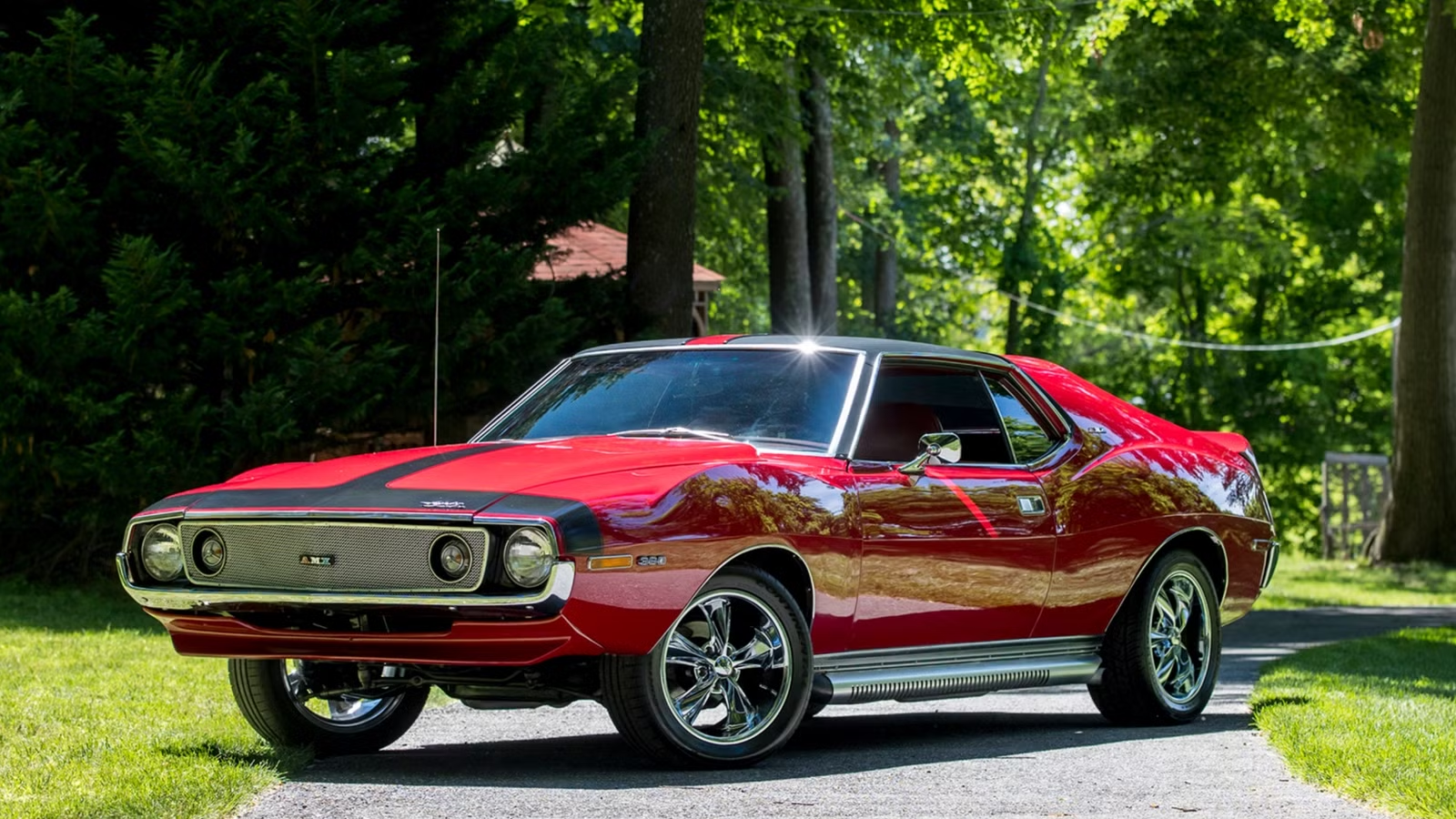
1971 AMC Javelin: $33,782
Quarter Mile: 15.7 Seconds

AMC is often left out of muscle car conversations, but the Javelin deserves a seat at the table. With distinctive styling and a range of robust engines, it gave enthusiasts something genuinely different to drive. Models powered by the 360 cu-in engine qualify as small-block cars, though the Javelin was also available with a 401 cu-in big-block for those who wanted more.
The 360 cu-in V8 produced 245 horsepower and 365 lb-ft of torque — numbers that remain respectable by any measure. Paired with a three-speed manual transmission, the Javelin could hustle down a drag strip with authority and reach a top speed of 115 MPH.
1972 Oldsmobile Cutlass: $33,523
Quarter Mile: 16.2 Seconds

The Cutlass equipped with the 350 V8 tends to be underappreciated, partly because the same car could be ordered with a massive 455 cu-in engine. Even so, the 350 small-block gives this Oldsmobile genuine muscle car credentials — credentials that often go unnoticed simply because the GTO and Chevelle were grabbing all the headlines from GM at the time.
The GM 350 V8 in the 1972 Cutlass delivered 200 horsepower and 300 lb-ft of torque. In Hardtop Coupe Rocket trim with the four-speed manual transmission, the car was capable of reaching 117 MPH when pushed.
1964 Chevrolet Nova SS: $31,814
Quarter Mile: 16.2 Seconds

The Chevrolet Nova might not seem underrated at first glance, but it consistently takes a back seat to the Chevelle in collector circles. The Nova’s reputation has been unfairly muddied over the years, yet it has proven itself a capable compact whose lightweight platform lets small-block V8s punch well above their displacement.
The 1964 Chevrolet Nova SS could be equipped with the 283 Turbo-Fire V8, producing 195 horsepower and 285 lb-ft of torque through a three-speed manual transmission. That was enough for brisk sprint times and a top speed of 112 MPH — impressive for a car that actually predates the peak of the Muscle Car Era.
1972 Plymouth Duster 340: $31,645
Quarter Mile: 15.2 Seconds

The Plymouth Duster 340 is one of the most underrated muscle cars of the early ’70s. It was lightweight, boasted an excellent power-to-weight ratio, and was practical enough to serve as a daily driver — a rare combination that made it as at home on a commute as it was at the drag strip.
True to its name, the Duster 340 ran a 340 cu-in V8 paired with a three-speed manual, sending 240 horsepower and 290 lb-ft of torque to the rear wheels. That combination was good for a top speed of 124 MPH and a quarter-mile time that bests several larger-displacement rivals on this list. Smaller engines were available, but the 340 was always the one to have.
1973 Ford Maverick Grabber: $18,795
Quarter Mile: 17.1 Seconds

Sometimes a car’s low price works against it, and that was certainly true for the Ford Maverick Grabber. Small, light, and inexpensive, it was easy to dismiss during its day. But this economy-minded alternative to traditional muscle cars is still one of the most affordable ways into classic ’70s style, and it delivers a genuinely fun driving experience for the money.
Under the hood sits a 302 cu-in V8 — one of Ford’s most widely used and well-proven engines of the era — mated to a three-speed manual transmission. In the Maverick Grabber, it produced 140 horsepower and 235 lb-ft of torque, enough for a top speed of 113 MPH. It may be the least powerful car on this list, but at this price point, it’s hard to argue with the value.
Sources: Hagerty, Classic.com.

Related posts


Latest Post


No Comments