
Oldsmobile’s Forgotten 455 Wagon Was the Ultimate Sleeper Dad Never Got
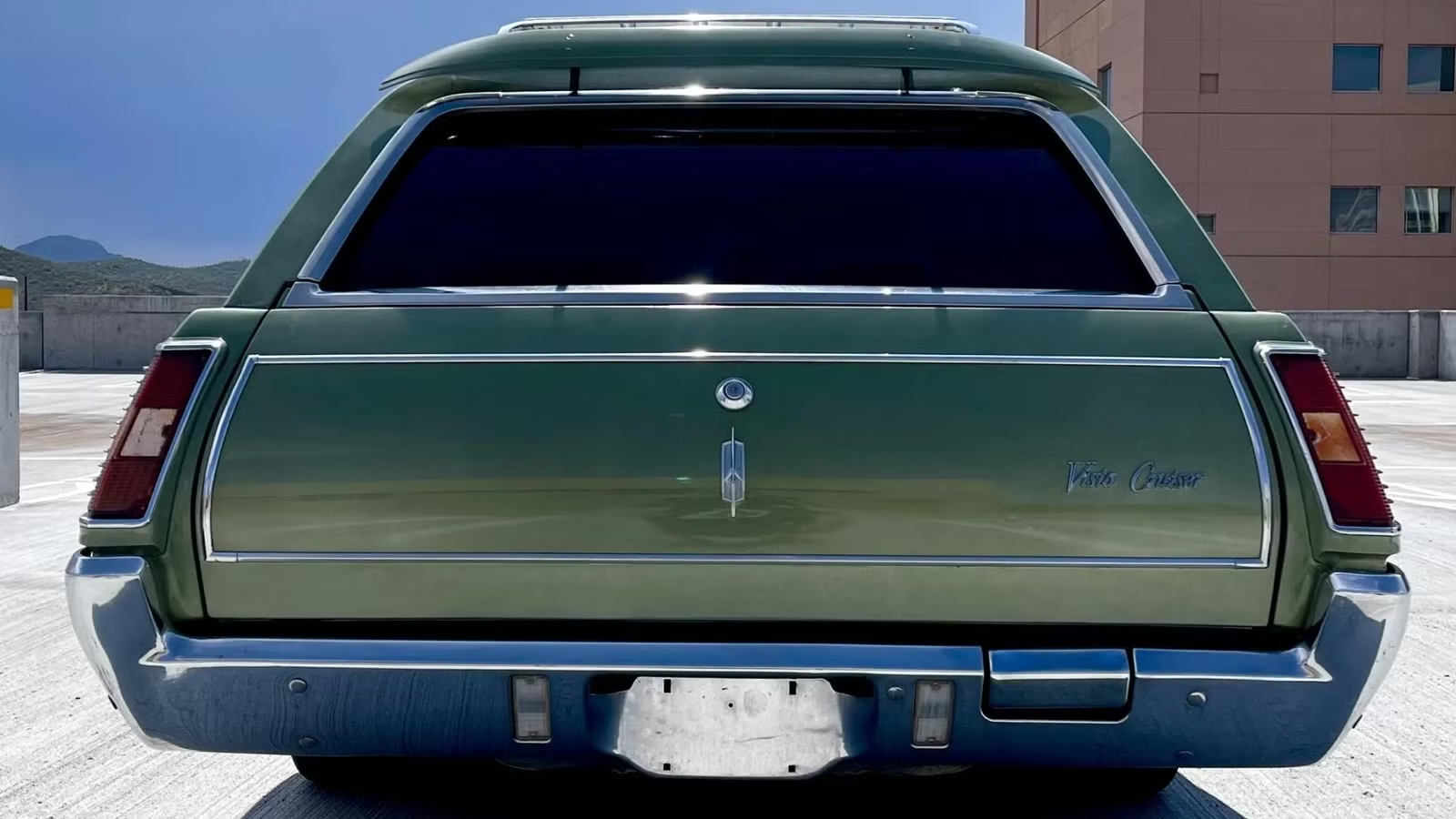
Long before the Hellcat engine started showing up inside increasingly implausible vehicles, American automakers had already discovered the familiar move of pairing otherwise normal cars with satisfying amounts of horsepower.

By 1970, Oldsmobile had both an established, practical family station wagon and its 455-cubic-inch Rocket V8. With all the inevitability of a Hellcat-powered Durango, Olds eventually put two and two together.
The Vista Cruiser Was Already An Unusual Family Wagon
Oldsmobile’s Vista Cruiser arrived in 1964, and it was already a notably unconventional take on the classic American station wagon. Its namesake feature was the elevated Vista Roof, with glass panels set into a raised section above the rear passenger compartment to expand the greenhouse and give the big wagon an unmistakable profile.

The Vista Cruiser had configurations available that seated up to nine, with more than 100 cubic feet of cargo space with the rear seats folded and a forward-facing third row during a time when the competition had kids drawing straws for who had to face the wrong way.
By 1970, the second-generation Vista Cruiser was already established as a comfortable, well-appointed family hauler, with Oldsmobile’s 350-cubic-inch Rocket V8 standard. But for those who wanted a little more excitement under the hood of their station wagon, Olds had something else in the engine lineup.
GM Opened The Door For A 455-Powered Vista Cruiser

Up until this time, General Motors had a self-imposed rule about engines, and it was a significant constraint. The company prohibited any of its divisions from putting engines larger than 400 cubic inches in their intermediate-sized cars, meaning that smaller vehicles generally couldn’t simply borrow engines from bigger cars in their lineup.
Despite being quite large, the Vista Cruiser was technically an intermediate-sized car based on the underlying A-body platform, which it shared with the Cutlass and the 4-4-2. That meant Oldsmobile’s enormous family wagon was subject to the same rules as GM’s muscle cars and other intermediate offerings.
In 1970, the displacement limit was lifted and the 455 was fair game, promptly becoming standard equipment for the 4-4-2. Oldsmobile also made the larger engine available in the Vista Cruiser, finally giving buyers the opportunity to combine a proven practical family wagon with the sort of displacement previously reserved for much larger cars.
The 455 Turned A Family Hauler Into A Muscle Wagon

The Vista Cruiser’s optional 455-cubic-inch Rocket V8 was rated at 365 hp and 510 lb-ft of torque, a formidable output for something that could comfortably transport a meaningful portion of a Little League team.
The engine had a four-barrel carburetor, with a three-speed Turbo Hydra-Matic automatic directing the power. It wasn’t exactly a 4-4-2 wagon, since the coupe had more performance-oriented suspension and handling equipment, but it did have enough juice to be worthy of comparison.
The Vista Cruiser was still a big, heavy car with a long wheelbase and a suspension tuned more for passenger comfort than attacking corners. Either way, abundant low-end torque meant plenty of power for acceleration to cruising speed, and the 455 brought considerable bragging rights even at a standstill.
An Even Wilder Vista Cruiser

By the time the 455-powered Vista Cruiser reached showrooms in 1970, Oldsmobile had already demonstrated what the combination could do. Two years earlier, a July 1968 issue of Car and Driver featured a specially prepared example that explored the muscle wagon concept’s reasonable limits.
The magazine had worked directly with Oldsmobile on the project car, which was a successor to an earlier Plymouth Fury III Boss Wagon it had showcased. With help from Oldsmobile, they had pulled out the standard 350, replaced it with the later-available 455, and outfitted it with 4-4-2 cylinder heads, a hotter cam, and an upgraded ignition system. Suspension was stiffened, more performance bits were introduced, and upgraded brakes aimed to keep the whole thing under control.
The result was an estimated 390 hp and 500 lb-ft of torque that took the 4,380-pound wagon from 0 to 60 mph in just 6.2 seconds, blasting through the quarter-mile in 14.7 seconds at 93.6 mph.
It wasn’t the production 1970 Vista Cruiser, but it certainly demonstrated the wagon’s potential.
The Vista Cruiser Was More Than Just A Muscle Car Novelty

Remarkably, this might not have been the end of Oldsmobile’s experimentation with high-performance Vista Cruisers. Some accounts suggest that a handful of Vista Cruisers received W-30 performance hardware similar to that offered on the 4-4-2. Two surviving examples are reported, although their factory origins and production numbers remain unverified.
With or without those elusive W-30 wagons, the 455-powered Vista Cruiser stands out as a piece of American automotive history. There’s a little of the same philosophy in the more recent Cadillac CTS-V Sport Wagon, although the Cadillac makes a bigger show of its performance credentials. The Vista Cruiser didn’t pretend to be a sports car. It was exactly what it claimed to be: an unapologetically enormous family wagon that happened to have one of the biggest engines available rumbling under the hood.
Sources: Oldsmobile, Car and Driver

Related posts


Latest Post



No Comments