
Group A Homologation Specials: The Legends Explained
As gearheads, we all love a homologation special. They’re some of the most remarkable cars ever made, and the sole reason they exist is because their manufacturers wanted to go racing. There are plenty of racing series that have had homologation rules allowing for these homologation specials over the years. The category we’re going to talk about is primarily known for one popular racing series. But it also caused significant changes in another, and spawned homologation specials for that series too.
Group B Was Legendary, But It Was Too Unsafe

There’s perhaps no era of rallying that’s more celebrated than the Group B era. The Group B regulations turned several drivers and automakers into rally legends. Audi was one of those automakers that gained that legendary status, through its UR Quattro. So did Lancia, through the Rally 037 (the final rear-wheel-drive car to win a World Rally Championship title) and the beast that was the twin-charged Delta S4. Ford also developed the RS200, a monster of a car that only got one season of competition.
While Group B had incredible cars and spectacular racing, it ended up being deemed to be far too unsafe. The cars were getting so powerful they not only became dangerous to drive, but they also became a danger to the spectators. Rally stages typically had minimal barriers between the crowds and the roads the cars were racing on. At the speeds Group B cars were reaching, any kind of incident could be fatal for either the people inside the car or the spectators, or both. Two fatal crashes did actually happen in 1986, and one of those resulted in the deaths of three spectators. So, the Group B category was banned after that year.
Group A Was Designed To Keep The Racing Exciting, Without The Cars Becoming Too Powerful


With Group B outlawed, how do you keep the racing exciting while making sure the cars don’t become too powerful? The FIA’s answer was Group A. Group A had already existed since 1982, initially sitting below Group B in the WRC categories. But after a planned Group S that would have limited power outputs but kept the mechanical craziness of Group B was canceled, Group A ended up becoming the top category in rallying.
Group A Covered Touring Cars As Well As Rally Cars

Group A is mainly thought of as being a rally category. But it was far from being just that. Touring car racing also used Group A rules, split into multiple divisions depending on engine size. These Group A touring cars formed the backbone of touring car racing all over the world, until a lot of touring car series adopted the BTCC-style Super Touring regulations in the mid-’90s.
Like Group B, Group A Required The Use Of Homologated Production Cars

One thing that stayed exactly the same in the transition from Group B as the top category in rallying to Group A was the need to use homologated production cars. Initially, 5,000 production versions of the car had to be built over 12 consecutive months. That was reduced to 2,500 units after 1991. There was an exception made for Australia—only 1,000 base-model units had to be built within that 12-month time frame. As you would expect from any time something like this happens, that resulted in homologation specials. Once again, these were often cars that were essentially built for racing, but had to be made street-legal to satisfy the FIA.
Group A’s Homologation Specials Are Just As Cool As The Ones Built For Group B

Group A may never have been as “cool” as Group B. But the homologation specials that were built as a result of it hold their own against any of the Group B ones. Several of them can genuinely be counted among the best and most celebrated enthusiast cars of all time.
Two Of Ford’s Most Legendary Performance Cars Were Group A Specials

One of the automakers that carried on creating greatness in the transition to Group A was Ford. Ford’s Group A entrant for rallying was the awesome Ford Escort RS Cosworth. Ford took the 3-door hatchback version of the Escort and let several of its design and engineering partners work their magic on it. This (obviously) included Cosworth, which provided examples of its fire-breathing 2-liter turbocharged inline-4 YB engine. That Cosworth engine sent its power through a permanent all-wheel drive system, giving it the traction it needed to be competitive on a rally stage.

Before the Escort RS Cosworth existed, Ford had already built a Group A touring car homologation special. That’s the Sierra RS Cosworth, based on the 3-door (1986–1987) and then later 4-door (1988–1992) versions of the Ford Sierra. The later 4-door versions were badged as the Sierra Sapphire RS Cosworth (1988–1989) and then later the Sierra RS Cosworth 4×4 (1990–1992), and are less rare (and therefore less desirable) than the original 3-door cars. All versions of the Sierra RS Cosworth use the same YB engine as the Escort RS Cosworth, but the final RS Cosworth 4×4 is the only one that also has the all-wheel-drive system.
One Of The Best BMWs Ever Was A Group A Special

We all know how great the E30 BMW M3 is. But you may not have known that it was originally a Group A homologation special. BMW wanted to take the 3 Series racing in touring cars, so it built the M3 as a way of making a 3 Series that was legal and competitive. While it may have only been intended as a touring car special, the M3 ended up becoming so beloved that it has been in the 3 Series lineup ever since.
Two Super Sedan Rivals Were Born Out Of Group A

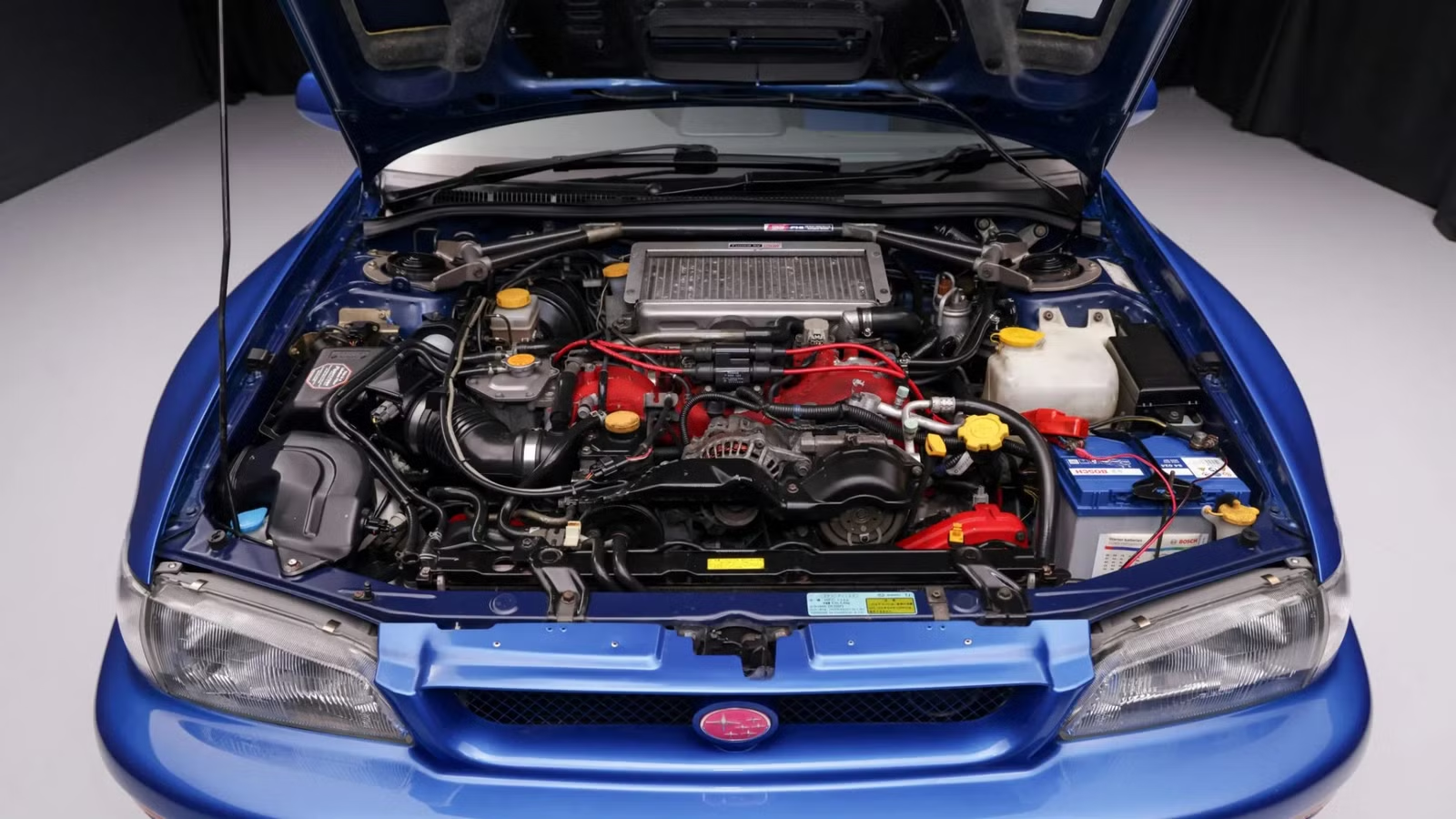
One of the greatest super sedan rivalries ever to exist is the one between the Subaru Impreza WRX STi and the Mitsubishi Lancer Evolution. This is a rivalry that started entirely because of both cars being built to compete in Group A. Multiple iterations of both cars were Group A homologation specials, but the two most famous ones have to be the Subaru Impreza WRX STi 22B (a 3-door coupe rather than a 4-door sedan, but still part of that Impreza family) and the Mitsubishi Lancer Evolution VI Tommi Mäkinen Edition (sometimes also known as the Evo 6.5). Both these cars represented the ultimate forms of what their manufacturers could create under the Group A regulations.
These two cars weren’t the only Group A specials to come out of these Japanese brands, either. Before the Lancer Evolution, Mitsubishi created the Galant VR-4. This is a super sedan that’s less well-known than the Lancer Evolution. But it has become beloved by enthusiasts in its own right. Its turbocharged engine and all-wheel drive system also laid the groundwork for what would come in the Lancer Evolution later. Subaru also built the Legacy RS before the Impreza WRX STi. This competed against the Mitsubishi Galant VR-4, and laid the groundwork for the Impreza WRX STi in the same way that the Galant VR-4 did for the Lancer Evolution. So, in that way, the Impreza/Evo rivalry was just a continuation of the Legacy/Galant rivalry that came before.
Lancia Still Found Itself A Spot In Group A
Like Ford, Lancia didn’t get left behind in the change to Group A. It just created another homologation special, and that special ended up becoming one of the most beloved hot hatchbacks of all time. That’s the Lancia Delta HF Integrale, an all-wheel-drive pocket rocket that’s a dream car for almost any enthusiast. It is easily the most successful Group A rally car, winning 46 events and dominating the constructors’ championship (6 consecutive wins from 1987–1992). It was also really Lancia’s last hurrah in rallying, coinciding with the decline of Lancia as a brand.
Toyota’s Legendary Turbo Cheater Was Built For The Group A Rules

Another Japanese manufacturer who got really into the Group A-era competition was Toyota. Not only was its Celica GT-Four extremely competitive, but in 1995 it actually dominated the competition. That’s because Toyota’s engineers came up with what then-FIA President Max Mosley described as one of the most ingenious cheats he had ever seen in motorsport. The engineers worked out a simple mechanical trick using some washers to move the mandated restrictor plates out of the way in the air intake. This occurred when the airflow in the intake was particularly high. The result was that it drew more air into the turbocharger than other cars did, and therefore produced nearly Group B levels of power.
When Nissan Decided To Build A Group A Special, Godzilla Was Unleashed

Is there a Japanese sports car that’s more beloved than the Nissan Skyline GT-R? A case could be made that there are not many others on that level. While the concept of the Skyline GT-R did exist before the Group A era, the R32 version that made the Skyline GT-R what we know it as was built as a Group A special. With a powerful turbocharged inline-6 engine and all-wheel drive system, it tore up the track in touring car racing in Australia. That’s where it gained the nickname that would follow it forever: Godzilla, named after the kaiju creature that wreaks havoc on Tokyo in the famous films.
Homologation Specials Still Occasionally Happen In Rally And Touring Car Racing Today

The era of crazy homologation specials for rally and touring car racing is far behind us. That doesn’t mean homologation specials no longer happen, though. There’s one, in fact, that actually competes in the World Rally Championship right now. That’s the Toyota GR Yaris. The sole reason this car exists is so that Toyota could have a 3-door version of the Yaris it could take rallying. That is reflected in how the rally-spec version of the GR Yaris was developed first. The road car came later in its development, and was essentially a comfortable street-legal version of that rally car.
On the touring car side of things, BMW created another homologation special version of the 3 Series in the 2000s to compete in the now-defunct World Touring Car Championship. This is the 320si, a variant of the E90 generation introduced in 2006. Only 2,600 of them were ever built, and they were powered by a naturally aspirated 2-liter engine. This engine was designed to comply with the Super 2000 regulations the WTCC used at that time.
Sources: BMW, Ford, Lancia, Mitsubishi, Nissan, Subaru, Toyota

Related posts



Latest Post


No Comments