
The Performance Bargain Hiding Between Two Generations Everyone Wants
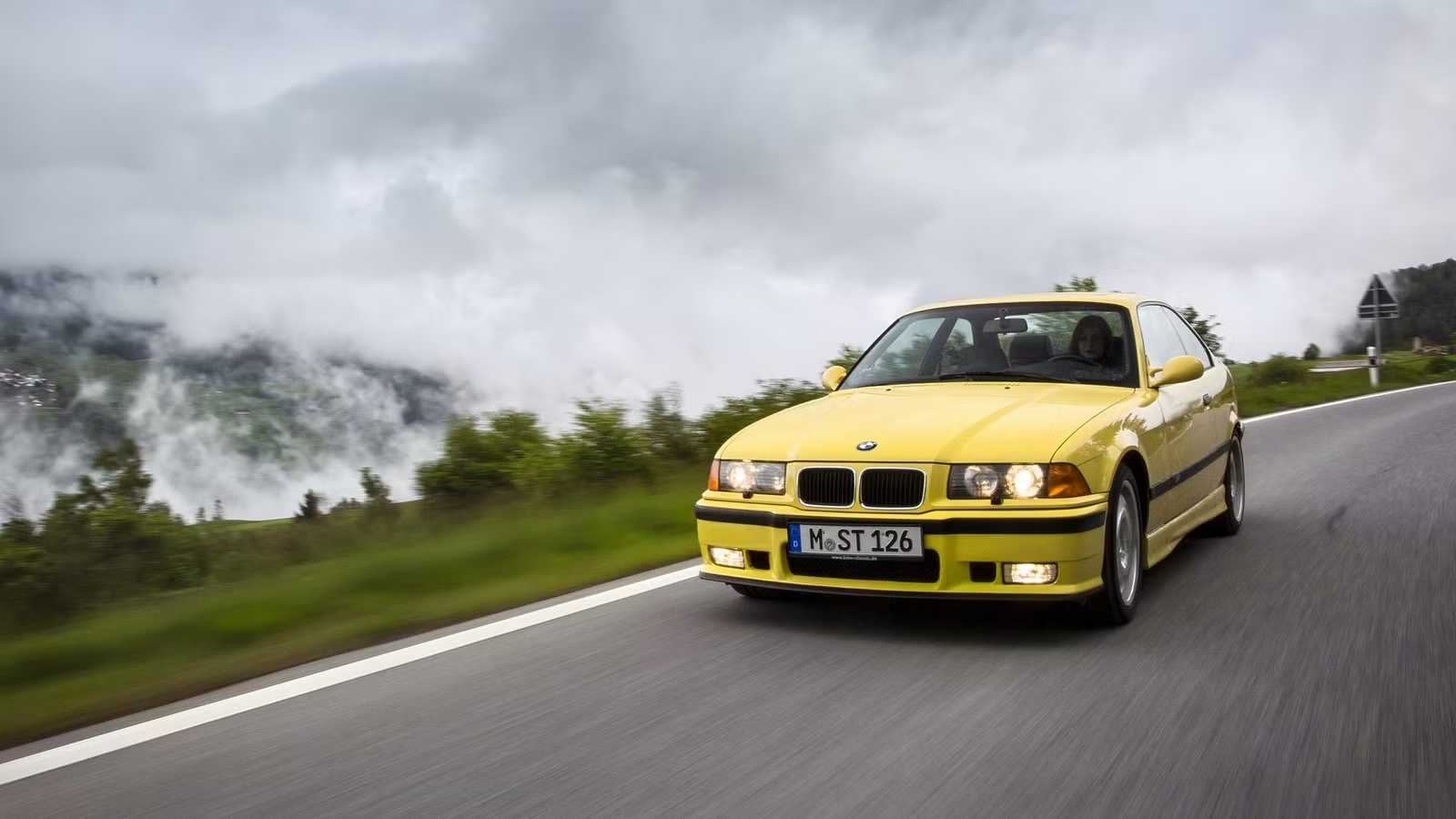
You can spend so much time chasing the right BMW M3 that you overlook the one you would actually enjoy owning. The original has racing history, its celebrated successor has an engine worth interrupting a conversation to hear, and the generation between them gets stuck defending itself. Apparently, delivering a brilliant chassis becomes less impressive when somebody else gets better fender flares.

That disagreement creates an opportunity, although the days of treating every overlooked M3 as disposable, cheap speed have passed. The real bargain takes more work to identify: a car that delivers the feedback you want without charging you for somebody else’s nostalgia.
Collector Favorites Can Make The Car Between Them Easy To Miss
The Original Built A Reputation Its Successors Had To Match
The E30 M3 has something a horsepower comparison cannot measure: a reason for existing that goes straight back to racing. BMW developed it as a homologation model, and its widened bodywork makes that purpose visible before you open the hood. You are buying a chapter of motorsport history alongside the car.

That distinction complicates any value argument. An E30 does not need to outrun a newer M3 to justify its appeal, because acceleration is only part of what collectors want. If your priority is driving rather than possessing that particular piece of history, however, paying the same premium becomes harder to defend.
The Next Icon Gave Enthusiasts Another Reason To Look Past The Middle

The E46 M3 supplies an entirely different temptation. Its U.S.-market S54 3.2-liter inline-six produces 333 horsepower and 262 pound-feet of torque, and its appetite for revs gives the car a personality that photographs cannot communicate.
Add its muscular proportions and six-speed manual, and the attraction needs little explanation. The problem for the generation between these two favorites is that it cannot win by impersonating either one. It has to make its own case, and that case starts making sense when you stop shopping for mythology.
The E36 M3 Is The Middle Child Worth A Second Look
America’s Version Explains Both Its Appeal And Its Reputation

The U.S.-market 1995–1999 BMW E36 M3 is the car caught in that argument. The 1995 model uses the 3.0-liter S50B30US inline-six, rated at 240 horsepower and 225 pound-feet of torque. From 1996 to 1999, the 3.2-liter S52B32US retained 240 horsepower but increased torque to 236 pound-feet.
Those figures require context. European E36 M3s received different engines with individual throttle bodies, initially producing 286 metric horsepower and later 321 metric horsepower. The American car’s single-throttle-body engine helped make it affordable, but also handed critics an accusation that has followed it for decades: America received the lesser M3.
The missing horsepower is real, and pretending otherwise does the car no favors. Yet BMW’s own historical account explains that the alternate engine brought the U.S. launch price to $35,800. Affordability was part of the engineering brief from the beginning, rather than a consolation prize invented by used-car shoppers.
Understated Styling Conceals A Serious Driver’s Car

The E36 does not announce itself with the E30’s box-flared silhouette or the E46’s more muscular stance. Its bumpers, mirrors, side skirts, and wheels distinguish it from an ordinary 3 Series, but the overall effect remains restrained. Depending on your taste, that is either the problem or the point.
Underneath, you still get RWD, a limited-slip differential, and, in the manual versions, a five-speed gearbox. The coupe is the natural starting point for this comparison, although sedan and convertible versions broaden the shopping list. Choose the configuration you want before comparing prices, because an automatic convertible cannot establish what a manual coupe should cost.
Its Strongest Performance Argument Happens Beyond The Spec Sheet
Usable Power Can Matter More Than A Higher Redline


A 240-horsepower rating sounds modest when ordinary modern vehicles can exceed it. Nevertheless, Car and Driver recorded a 5.6-second 0–60 mph run from a 1995 M3, showing that the American engine was hardly an apology on wheels.
The larger engine’s extra torque makes the later cars worth considering, but neither version needs to beat the E46 at its own game. You buy this M3 for the interaction between engine, gearbox, and chassis, rather than a promise to dominate modern traffic. If your satisfaction depends on having the fastest car at the light, the shopping list needs a different direction.
The Chassis Gives You A Reason To Take The Long Way Home
The steering’s firm weighting and self-centering action help communicate cornering load, while proportional responses make it straightforward to place the nose. Contemporary testing also described progressive changes in cornering attitude as the throttle moved. That gives the chassis an intelligible conversation with your hands and feet.
Its reputation is more than retrospective affection. In 1997, Car and Driver named the E36 M3 its best-handling car costing more than $30,000, and its later buying guide continued to praise the steering and neutral balance.
Condition determines whether you experience those qualities today. Tired bushings, poor tires, and an ill-chosen suspension setup can turn a celebrated chassis into a wandering collection of excuses. A lowered stance earns nothing if the car no longer works properly.
The Bargain Has To Survive A Fair Price Comparison
Compare Similar Cars Before Declaring A Winner

Recently completed sales show both the opportunity and its limits. A 131,000-mile 1996 manual coupe sold on Bring a Trailer for $18,786 on October 11, 2026. Its listing documented cooling, steering, suspension, and brake work, as well as cosmetic wear and a corrosion spot near the trunk latch.
A refurbished 1997 manual coupe with 116,000 miles brought $27,750 on July 13, 2026. That car had substantial interior and chassis work, modifications, and two reported incidents of minor damage. These are useful driver-car references, but neither deserves to be presented as an untouched collector example.
For perspective, a modified, repainted 1988 E30 M3 showing 148,000 miles sold for $55,000 on June 16, 2026. That supports a substantial price separation from these E36s without relying on a museum-quality E30 to exaggerate the difference. These figures are winning bids before buyer fees, taxes, or transportation.
Maintenance History Determines Whether The Savings Are Real

Start with cooling-system records covering the radiator, expansion tank, water pump, thermostat, and hoses. Ask specifically about overheating, and have a BMW specialist investigate suspicious symptoms. Receipts for recent parts are useful; they do not erase an earlier overheating event.
The inspection should also cover shock towers and rear subframe mounting areas, with particular attention to cracks and previous repairs. Check for structural rust, worn suspension joints and bushings, valve-cover leaks, and leaking power-steering components. Inspect reinforcement work for quality rather than assuming every welded plate is a reassurance.
Buy The Driving Experience You Actually Want

Build your comparison around purchase price plus written estimates for immediate work. Give documented maintenance, sound structure, and a coherent suspension setup more weight than a fashionable color or a seller’s enthusiastic use of “rare.” A project makes sense when you want a project, and the price leaves room for it.
The E36 M3’s appeal survives an honest comparison, even when the cheapest-car claim does not. You get a distinctive balance of usable power, steering feedback, and chassis involvement without necessarily paying E30 money. Buy the example that preserves those qualities, and being the middle child starts to look like an advantage.
Sources: BMW, Car and Driver, FCP Euro, Bring A Trailer

Related posts



Latest Post


No Comments