
The Carbureted 1970 Chevelle That Out-Torques A 2026 Hemi Durango
A 2026 Durango with a modern Hemi V8 should have little to fear from a carbureted Chevrolet from 1970. Right? Dodge quotes 470 lb-ft. The old engine’s factory paperwork says 500 lb-ft. Somewhere, a new-car brochure is demanding a recount. Among fans of muscle cars, that’s an argument worth having.

But read the fine print: 1970 SAE gross and today’s SAE net ratings weren’t measured alike. It’s no equal-conditions victory. More interesting is the old engine’s identity and a single rebuild that produced numbers Chevrolet never put in the brochure.
The 500-LB-FT Rating That Still Challenges A New Hemi

The old Chevrolet has a number that looks outrageous: 500 lb-ft of factory-rated torque. Dodge’s 2026 Durango R/T 392 Launch Edition brings a naturally aspirated 6.4-liter Hemi V8 with 475 hp and 470 lb-ft. That’s a 30-lb-ft advantage for the carbureted engine on paper. Torque is the twisting force at the crankshaft; through the right gearing and with enough grip, that force can push a heavy car hard enough to pin you into the seat.

But there’s a catch big enough to park the Durango in. Chevrolet’s 1970 figure used SAE gross testing, with fewer production accessories and restrictions fitted. Today’s SAE net rating includes the road-going intake, exhaust, and accessories; both figures measure engine torque, not torque at the wheels. So the old number wins the brochure contest, not a fair same-conditions dyno contest.
And a bigger torque figure doesn’t automatically win at the lights: weight matters, while Dodge’s all-wheel drive and eight-speed automatic help put its output to work. Dodge claims 0–60 mph in 4.4 seconds and an NHRA-certified 12.9-second quarter-mile. That’s no slow school run. Chevrolet’s old rating remains impressive, but we haven’t even opened its hood yet.
Meet The 1970 Chevelle SS 454 LS6 Behind Those Numbers

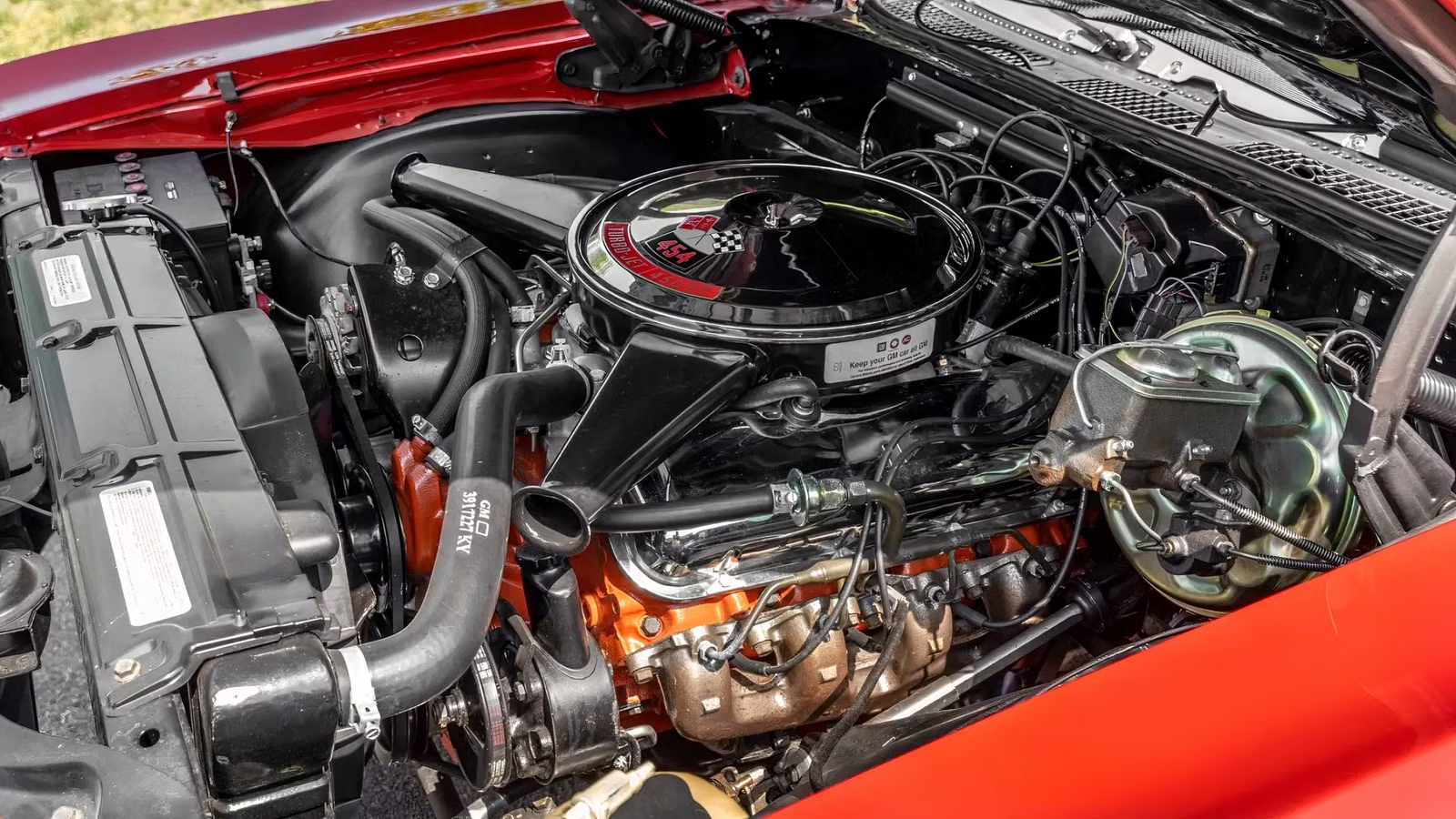
That 500-lb-ft troublemaker has a name: the 1970 Chevrolet Chevelle SS 454 LS6. Chevrolet rated its 7.4-liter V8 at 450 hp at 5,600 rpm and 500 lb-ft at 3,600 rpm, both SAE gross. That’s a heavyweight punch delivered 2,000 rpm before peak horsepower. With that torque available in the midrange, a driver could let a gear pull rather than keep chasing higher revs.

GM dropped its 400-cubic-inch ceiling on intermediate cars for 1970, clearing space for this late-arriving 454. Beneath the hood sat a four-bolt-main block, forged crankshaft and rods, aluminum pistons and 11.25:1 compression: hardware built to withstand a serious workout. A solid-lifter cam and Holley four-barrel on an aluminum intake helped it breathe. Drivers could work a four-speed manual themselves or let the Turbo Hydra-Matic shift; Chevrolet’s big-block engineering still asked for good fuel and regular valve-clearance checks.
The milder LS5 offered 360 hp; the LS6 added 90. The LS6 Registry records 4,475 factory installations across sport coupes, convertibles and El Caminos, not 4,475 coupes. With no official body-style breakdown, an SS badge can’t prove a survivor’s factory identity.
One Rebuilt Engine Adds An Unexpected Twist To 450 HP

Chevrolet advertised 450 hp and 500 lb-ft for the LS6, but one owner found more. Heacock Classic tells how Rob Timken rebuilt his LS6 with original parts and stock compression, although the cylinders were bored slightly larger. On a test stand, that engine reportedly made 485 hp and 513 lb-ft. That’s 35 extra horsepower and 13 more lb-ft than Chevrolet promised.
One rebuilt engine doesn’t tell us what every factory LS6 produced. The account doesn’t spell out all the test conditions, and Timken’s engine wasn’t untouched. Tests that measure power at the wheels also read lower because the transmission and other parts take some of it. You can’t compare those readings directly to an engine test, or use them to claim the LS6 secretly topped 500 hp.
The car could move, though. A May 1970 Hot Rod road test at Irwindale recorded a 13.44-second quarter-mile at 108.17 mph. Grip was such a problem that testers launched at 900 rpm. Motor Matchup’s 14.02-second figure is a computer simulation on a street surface, not another period test. Averaging them wouldn’t prove anything about horsepower.
Where Today’s Turbo-Sixes, Hybrids And EVs Really Stand

The LS6’s factory-rated 500 lb-ft still stands out against some modern six-cylinder SUVs. BMW’s 2027 X5 40 xDrive produces 428 lb-ft, while the 2027 Mercedes-AMG GLC 53 makes 443, rising to 472 on overboost. Both use 48-volt mild-hybrid assistance. Those engine figures trail Chevrolet’s SAE-gross rating, but modern SAE-net numbers were measured under different conditions.
Plug-in hybrid power changes the scoreboard. The 2026 BMW X5 xDrive50e produces 516 lb-ft combined; the 2026 AMG E 53 Hybrid Wagon makes 553. Mercedes lists 413 lb-ft for its gasoline engine and 354 for its electric motor. Don’t add them like items on a restaurant bill. The engine and motor don’t necessarily reach peak torque together, so Mercedes rates the complete hybrid system at 553 lb-ft.
Then comes the 2026 Volvo EX90 Twin Motor Performance with 642 lb-ft from its electric system, including 288 from its front motor and 354 from the rear. These selected electrified models beat the LS6’s advertised peak; that doesn’t mean all combustion engines need batteries to do it. Imagine that Chevelle in your garage. Good luck walking past it without reaching for the keys.
Sources: General Motors Heritage, SAE International, Dodge, LS6 Registry, Hagerty, Heacock Classic, Hot Rod

Related posts

Latest Post


No Comments