
Ford’s NASCAR Engine Wouldn’t Fit A Mustang, So Kar Kraft Reworked The Shell
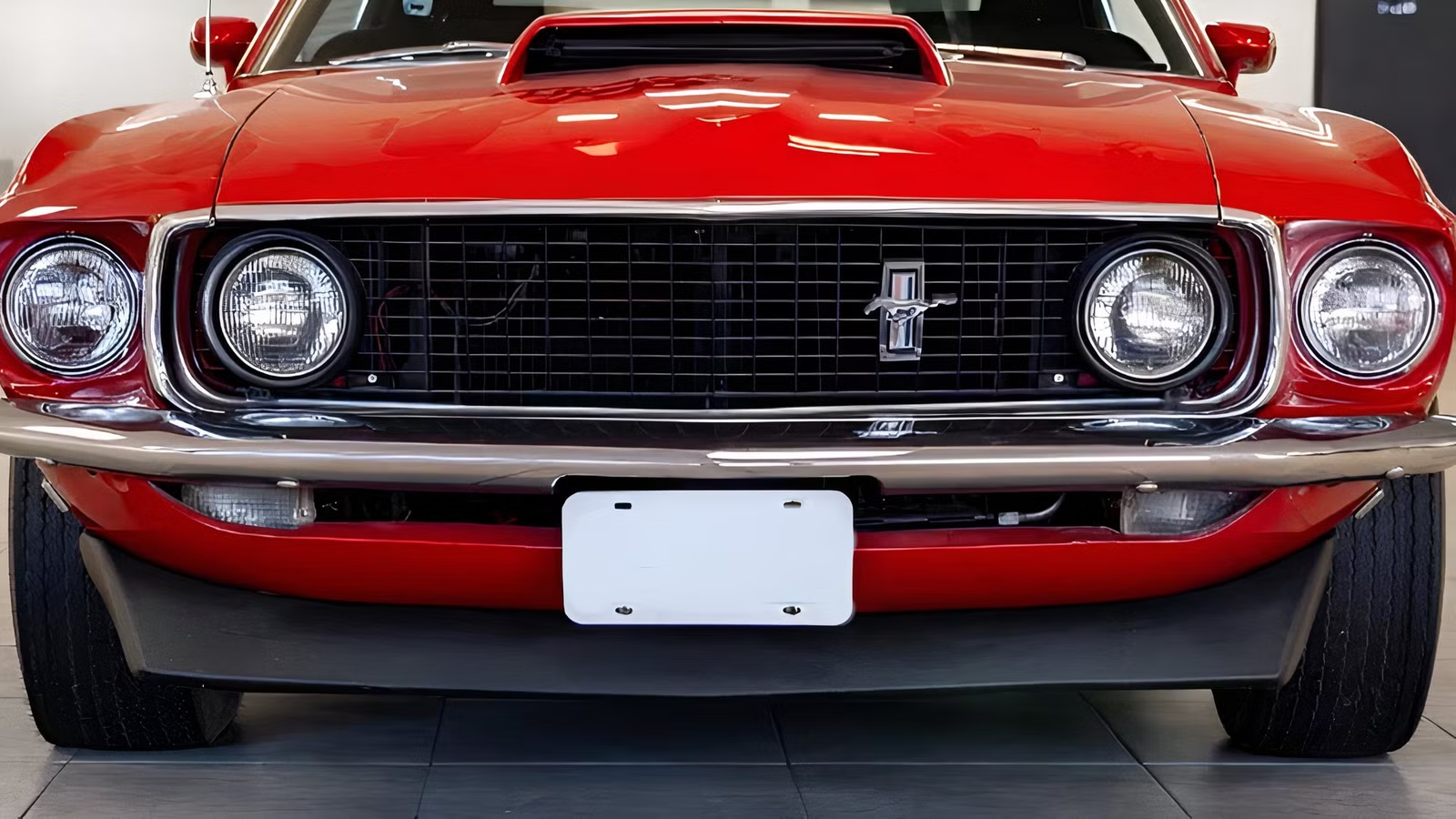
If you think stock car racing is a snoozefest today, we highly recommend turning back the clock to roughly the late 1960s. In most respects, NASCAR Cup racing back then solved most of the problems the sport self-imposed in the years since. Yet, Cup racing in those years had another benefit: a byproduct of competition that simply doesn’t exist in modern racing anymore. Put simply, it birthed what many consider to be the greatest Ford Mustang variant.
The NASCAR to Homologation Pipeline: Turning Race Icons into Street Legends

Win on Sunday, sell on Monday. It’s clichéd and gauche by modern sensibilities, but it was a mantra that OEMs lived and died by back when NASCAR Cup cars really were based on cars sold at dealerships. Early on, these racers really were just road cars with fancy engines, almost no safety equipment, and even functional doors.
By roughly 1967, token gestures like full welded roll cages and heavily beefed-up frames were commonplace, but the underlying architecture was still sourced from road cars. From the very beginning in the late 1940s, NASCAR mandated that participating OEMs sell a bare minimum amount of the models they raced at American dealerships, a practice called homologation. Of course, homologation is a common practice around the racing world in every discipline from endurance racing to rallying.
But in the case of NASCAR, it sparked an escalating arms race among Detroit’s Big Three, plus a few other stragglers like AMC and Studebaker. In extreme cases, engineers fitted aerodynamically slippery bodies on Cup racers and then shipped the bare minimum of 500 units required to race to dealerships, becoming local legends. Such was the case with the Dodge Charger Daytona, but not every homologation special was that visually radical; others were at least marginally more subtle.

Forging the Most Extreme Mustang Variant of the ‘60s

The Mustang may have already been Ford’s bread-and-butter vehicle by the late 1960s, but at least on the racetrack, it was the Torino that bore the brunt of the superspeedway. At the time, Ford was deep in the development process for a race variant of the long-standing 385 engine family. Ordinarily, the 385 was a typical wedge-head passenger car engine that also saw service in applications such as school buses, fire engines, and medium-duty trucks.
In the hands of Ford’s racing division, that same engine was fitted with semi-hemispherical crescent cylinder heads on top of a massive 429-cubic-inch block. Separate from the 427 and 428-cubic-inch blocks using the altogether different FE architecture, this new engine needed a home to satisfy NASCAR’s 500-unit homologation mandate. At the request of Ford’s new president, Semon “Bunkie” Knudsen, it was decided that the Mustang would be the obvious place to put it, revitalizing its image as it headed toward its first big facelift.
Well, it would’ve been, had the new motor physically fit in the engine bay of a standard Mustang. As you might imagine, this presented an enormous challenge for Ford’s engineers. To accomplish this feat of automotive engineering, Ford shipped incomplete Mustang body shells to a Michigan firm called Kar Kraft. At its facility, Kar Kraft widened the shock towers, revamped the front suspension, and relocated the battery to the trunk to make everything fit. Suffice it to say, what Kar Kraft returned was nothing short of extraordinary. Even if the Mustang itself wouldn’t race, that production run would clear the way for the engine to be used in the Grand National-spec Torino Talladega.
The 1969 Ford Mustang Boss 429: Homologation At Its Finest

The original Mustang Boss 429 was a convergence of some of the muscle car era’s greatest paradigms. At $4,900, the car was almost twice as expensive as a standard Mustang fastback. Like those of so many great muscle cars and pony cars of the period, Ford’s official horsepower rating for the Boss 429 was almost comically understated. While the brochure stated the figure was 375 hp, insiders knew well that the real number was well north of 500.
That conservative rating was mostly intended to keep corporate insurance underwriters from raising rates. Every major American OEM employed the same kind of deception, whether for insurance reasons or to mislead NHRA regulators into favorable power-to-weight classifications, but the Boss 429 was one of the most egregious cases. Underneath, the car had heavy-duty power front disc brakes, upgraded heavy-duty spindles, and a race-derived competition suspension package.
One would hope so, as the car could sprint to 60 in the mid-6s or low 7s, depending on wheelspin and how quickly one could shift its close-ratio four-speed gearbox. The quarter mile was handled in the mid-to-high 13-second range, a very respectable figure. Thanks to its staggered rear shocks and thick anti-roll bar, the Boss 429 was one of the most stable muscle cars off the line, and the first to feature rear sway stabilization straight from the factory. It was an engineering marvel of the day, and it helped Ford race the 429 in Cup competition for the next two seasons.
An Ultra-Rare, Ultra-Valuable Ford Icon

Between 1969 and 1970, Kar Kraft completed just 1,358 Boss 429 Mustangs before Ford shuttered the program. Being a homologation special, Ford wasn’t really obligated to commission any more. With only 859 units built for 1969 and a final batch of 499 for 1970, Dearborn’s ultimate pony car is rarer than almost any of its period competitors.
By comparison, Chrysler was forced to build roughly 1,920 Plymouth Superbirds when NASCAR tightened its homologation rules in 1970, making the winged Mopar marginally more common than Ford’s hand-assembled Mustang. Today, one would be hard-pressed to find one that sells for less than a quarter million dollars, with examples in excess of half a million or even north of seven figures in some cases.
Sources: Mecum, Bring a Trailer

Related posts
Latest Post


No Comments