
The Ugliest Italian Bike Had A Walnut Dash, Bizarre Styling, And A Ducati V-Twin
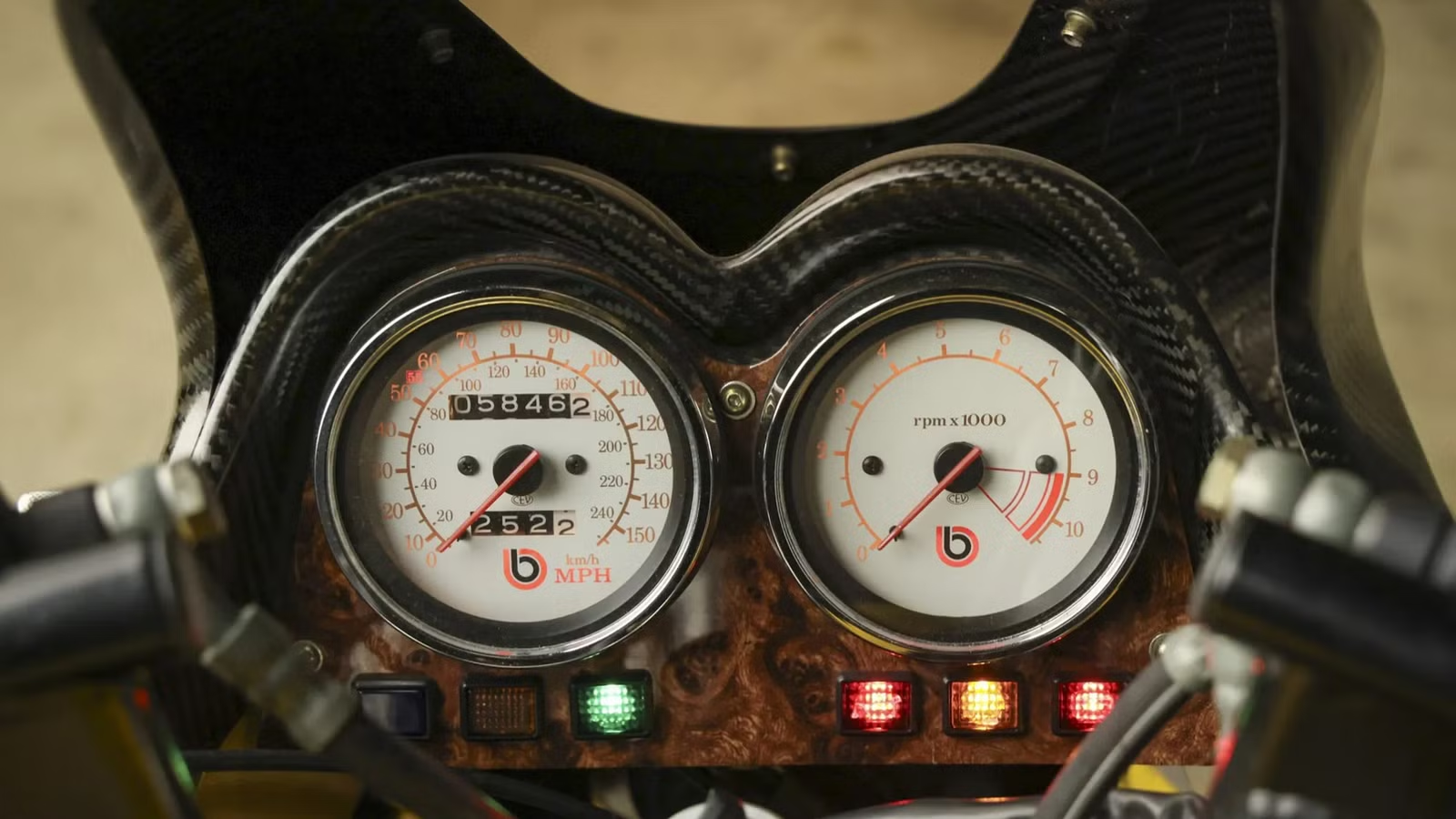
Italian motorcycle design has never been afraid to divide opinion, but there’s usually been a limit. The Ducati 999, for example, might be considered “ugly” by Ducati’s standards, but there’s still a degree of beauty there. As you understand more about the bike, more of its design makes sense. But while Italy has always woven beauty into its bikes, there was one that was so radical, so different, that it still divides opinion to this day.
Why Italian Motorcycle Design Has Always Dared To Be Different

Italian motorcycling has never just been about getting from A to B. Its motorcycles have often been treated more like rolling works of art, combining distinctive styling with mechanical performance and unmistakable character. It reflects Italy’s tradition of form and function being intrinsically linked, rather than one taking precedence over the other. From the sculpted, flowing lines of Ducatis to the striking silhouettes of MV Agustas and Bimotas, Italian bikes have stood apart by refusing to chase mass-market appeal. This has led to some creative interpretations of the two-wheeled machine, some of which have divided opinion.
The 1990s Were A Wild Time For Motorcycle Styling And Engineering

The motorcycles of the 1990s were anything but conservative. Computer-Aided Design, improving technology, and fierce competition meant that manufacturers had to produce ever-crazier bikes to gain attention. Honda released the NR 750, with its oval-shaped pistons and carbon fiber bodywork, while Yamaha’s GTS1000 tried a radical hub-center steering system. Bimota also tried to make the hub-centre steering format work with the Tesi 1D, which combined it with a futuristic aesthetic to make one of the most futuristic-looking bikes of the decade. But while the Tesi 1D was on the odder side of Bimota’s 1990s offerings, it was hardly the weirdest.

The Bimota DB3 Mantra Was A Controversial Bike With A Walnut Dash

The Bimota DB3 Mantra was never going to be everyone’s cup of tea, but it seemed destined to divide opinion from its 1995 launch. On paper, it made for a reasonably interesting proposition: an Italian roadster that had a Ducati-sourced, air-cooled, 904cc, 90-degree V-twin making 86HP. That gave the bike some mechanical credibility at least, but if you looked beyond the spec sheet and at the bike instead, there was a problem. And it was the styling.
If you’re imagining Ducati or MV Agusta, you’re wrong. The Mantra’s design combined sharp angles, hard edges, and unconventional curves, giving it a look unlike anything else on the road. It blended elements of naked bikes, superbikes, and roadsters into a design that looked as though a concept bike had escaped into the real world. Its engine was shared with the genre-defining Ducati Monster, but the styling was anything but familiar. Even by Bimota’s standards, it was a lot. But perhaps the oddest part amongst all of this was the walnut dashboard.
Usually reserved for the pipe-smoking Jag and Bentley car owners, a walnut dash evokes feelings of grandeur and heritage — both at odds with the Mantra’s sporting credentials and futuristic design. It gave the dashboard an almost furniture-like quality. Perhaps that was fitting: French designer Sacha Lakic would later work in furniture design. The contrast between the traditional equipment and the bike’s futuristic styling was stark, but it was central to the Bimota’s character. It didn’t set out to try a new mechanical concept, or to take an already-proven engine and repackage it in a sportier guise as it had done with the YB8 Furano. The Mantra was an illustration of Bimota’s refusal to play by the rules, and to offer exclusivity and individuality to those who were brave enough to try it.

The irony of the Mantra was that, underneath its divisive looks and obscure choices, it was a very capable motorcycle. Contemporary reports praised the bike’s handling and eagerness to change directions, noting that it was a thoroughly enjoyable bike to ride. But, for many, the bike was too odd to warrant its roughly $20,000 price tag when new. 454 bikes were made before the Bimota was binned in 1998, as Bimota moved onto the far more standard-looking DB4 in hopes of greater success.
A Ducati V-Twin And Exotic Engineering Couldn’t Make Everyone Love Its Looks

It’s almost a shame that the Mantra’s looks were so odd, as they took attention away from the surprisingly good bike underneath. The bike’s Ducati V-twin lent the Bimota its accessible power and distinctive character that had helped make the Italian brand so popular and, with the power taken care of, meant Bimota could focus more on how the bike handled.
This contradiction is what makes the Mantra so interesting. It would have been very easy to see the bike and write it off immediately, taking one look at its design and assuming it must be overcompensating for something when, in reality, it was complementing it. The bike was arguably let down by the very thing that made it so memorable, and which could have helped to make the Mantra the commercial success it never was.
The Bimota DB3 Mantra’s Lasting Legacy As One Of Motorcycling’s Most Unforgettable Oddities

Unfortunately for the Mantra, the exclusivity and rarity still haven’t impacted its value; bikes routinely sell for less than $10,000, as the present still hasn’t caught up to the future that the Mantra predicted. But while the bike might not represent a great investment, it does represent a time in motorcycle design when manufacturers weren’t afraid to be different. Where most were refining and tweaking a familiar formula, Bimota created something truly memorable — for better and worse. And, in doing so, it created a bike with a far stronger legacy than anything that came before or after.
Sources: Cycle World, KB Style, Bring a Trailer

Related posts




Latest Post


No Comments