
Pontiac Used Stockpiled Blocks To Build One Last 400 V8 Trans Am After GM’s Order
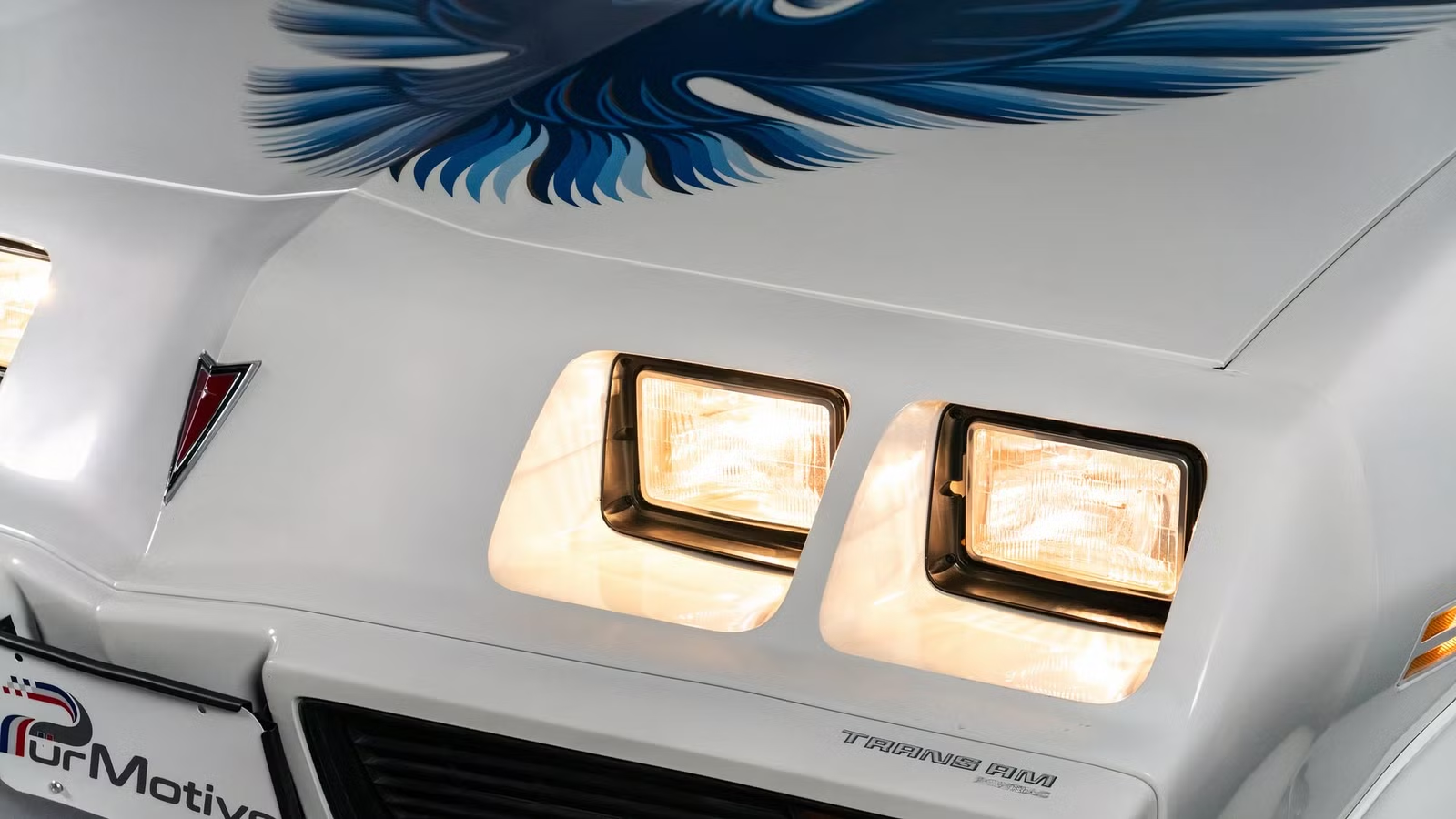
General Motors wanted Pontiac’s 400-cubic-inch V8 out of production. Pontiac’s answer was to make sure it had enough engine blocks tucked away to keep building its performance cars after the order took effect. That quiet act of defiance gave the 1979 Trans Am one last year with a traditional big V8, a four-speed manual, and the W72 performance package. It arrived with an official rating of just 220 hp, a figure that hardly sounded like a fitting send-off. But contemporary road tests showed the car had more going for it than the number suggested.
The Horsepower Rating That Made Muscle Cars Look Weak

By the late 1970s, American muscle cars were fighting a different battle. Emissions rules, fuel economy concerns, and corporate restrictions had pushed manufacturers away from the high-output V8s that defined the previous decade. Then there was the horsepower rating itself, which made the decline look even more dramatic.
Before the change to SAE net ratings around 1971 and 1972, manufacturers measured gross horsepower with fewer accessories and less restrictive exhaust arrangements than a production engine used. Net ratings accounted for a more realistic installation, including the equipment needed to run the car. The new numbers were more representative of what buyers received, but they made comparisons with older gross figures misleading.
The Numbers Changed, But The Engines Didn’t All Change Equally

The switch did not mean every engine remained mechanically identical. Emissions equipment, compression changes, and other restrictions also affected output. Still, comparing a gross rating from 1969 with a net rating from 1979, without accounting for the difference, can make the newer car look much weaker than it was.

That context matters for Pontiac’s final 400. Its 220-hp rating looks modest compared to the muscle cars of the late 1960s, but the number alone doesn’t tell us how the car performed. The more revealing question is why Pontiac fought to keep this engine available at all.
Pontiac’s 1979 Trans Am W72 400 Survived GM’s Phase-Out Order

Pontiac’s W72 400 was the division’s last stand for its traditional performance V8 in the Trans Am. When GM ordered the 400 phased out, Pontiac reportedly stockpiled around 10,000 engine blocks in late 1978. That inventory allowed the division to assemble engines for the 1979 model year instead of abandoning the package immediately.
The resulting Trans Am paired the 400 with a Borg-Warner Super T-10 four-speed manual. The engine was rated at 220 hp and 320 lb-ft of torque, and the package came with the WS6 handling setup. Pontiac had not simply kept a large engine around for nostalgia. It was preserving a combination of displacement, a manual gearbox, and chassis hardware that still appealed to drivers who wanted a more involved car.
A Limited Supply Made The Four-Speed W72 Special
The W72 four-speed combination was not available indefinitely, and the production numbers reflect that. Pontiac built 8,326 Trans Ams with the W72 400 and four-speed in 1979, a small slice of the model’s 117,108 total sales. Those cars represented the final opportunity to buy a new Trans Am with this particular Pontiac V8 and manual transmission pairing.
The stockpile was a practical solution to a production order, but it also gave the engineers and buyers one last chance to keep the old formula alive.
The Last 400 Trans Am Was Quicker Than Its Horsepower Suggested

The W72’s performance figures help explain why Pontiac’s effort mattered. Car and Driver recorded a 15.3-second quarter-mile at 96.6 mph. That is respectable for a late-1970s car carrying an official 220-hp rating, especially when emissions restrictions and extra equipment were common obstacles to performance.
Hot Rod recorded a quicker 14.61-second pass at 96.67 mph. That result does not automatically invalidate the Car and Driver test. Hot Rod used a lighter, sparsely equipped press car, and its report suggested the car may have received factory preparation. Different test conditions can produce different elapsed times even when trap speeds are nearly identical.
The NHRA’s Higher Figure Needs A Caveat
Some sources report that the NHRA rated the engine at 260 to 280 hp. That figure is worth mentioning, but it should be treated as a reported re-rating, not a verified factory output measurement. It does not establish that every W72 produced that much power, nor does it prove Pontiac deliberately understated the official number.
What the tests do show is that the W72 could deliver credible acceleration despite the modest rating. Its torque, four-speed gearbox, and WS6 chassis package also mattered. The Trans Am’s appeal was not confined to straight-line speed, and its handling equipment gave drivers more to enjoy than a quarter-mile slip.
Pontiac’s Stockpile Bought The 400 One Final Year

The stockpiled blocks bought Pontiac time, not a permanent reprieve. Once that supply was used, the division could no longer keep building the W72 400 in the same way. The 8,326 four-speed Firebird Trans Ams became a final chapter in Pontiac’s long association with large-displacement performance engines. As of 2026, the average asking price for this model is around $78,797, with a top sale of $265,000.
A Final Stand, Not A Return To The Past

The W72 did not reverse the direction of the industry, and it was not the only worthwhile performance car of its era. Its significance is more specific: Pontiac found a way to keep a traditional V8 and manual transmission combination available for one last model year after GM had decided to move on.
That makes the 1979 Trans Am more than a car remembered for its graphics or movie appearances. Its 220-hp rating never told the whole story, and the stockpile behind it reveals how much Pontiac wanted to preserve the package. The W72 was a final, stubborn reminder that the old-school muscle car still had a place, even as its time was running out.
Sources: Jay Leno, Classic.com

Related posts






Latest Post


No Comments