
The Adventure Motorcycle From Past EICMA Show That Helped Shape Today’s Market
At one point, the adventure bike segment chased excess relentlessly: flagship machines had ever-increasing displacements, high horsepower, and more digital aids than you could shake a stick at. These bikes were heavy, intimidating, and expensive, which meant they were of no real use to practical trail riders. There was a big disconnect between the marketing and riders who genuinely wanted to explore the rugged backcountry. Today, the adventure motorcycle segment has had a slight shift. Actual off-road-capable machines are becoming more and more common, and this shift started with one concept bike shown at the 2016 EICMA.
The Breaking Point: Rejecting 600-Pound Overpriced Land Yachts

This disconnect in the ADV world grew wider and reached a tipping point in the middle of the 2010s. Enthusiasts were not willing to pay for cruise control, electronic suspension, and 160 horsepower; they simply did not need these things to explore a Forest Service road. Plus, riding in the dirt means dropping the bike, and these heavy motorcycles would make what should have been a fun ride in the gravel into an exhausting ordeal.
These were expensive motorcycles as well: base prices began above $20,000, which meant young riders – the ones that would actually ride these bikes the way they show in the marketing equipment — simply could not afford them. Essentially, you were paying Harley tourer kind of money in the name of a versatile machine meant to be taken off the road. What was needed was a basic, rugged, manageable machine that offered accessible ownership and durability over everything else.
EICMA 2016: The Yamaha T7 Concept Sparks A Global Revolution


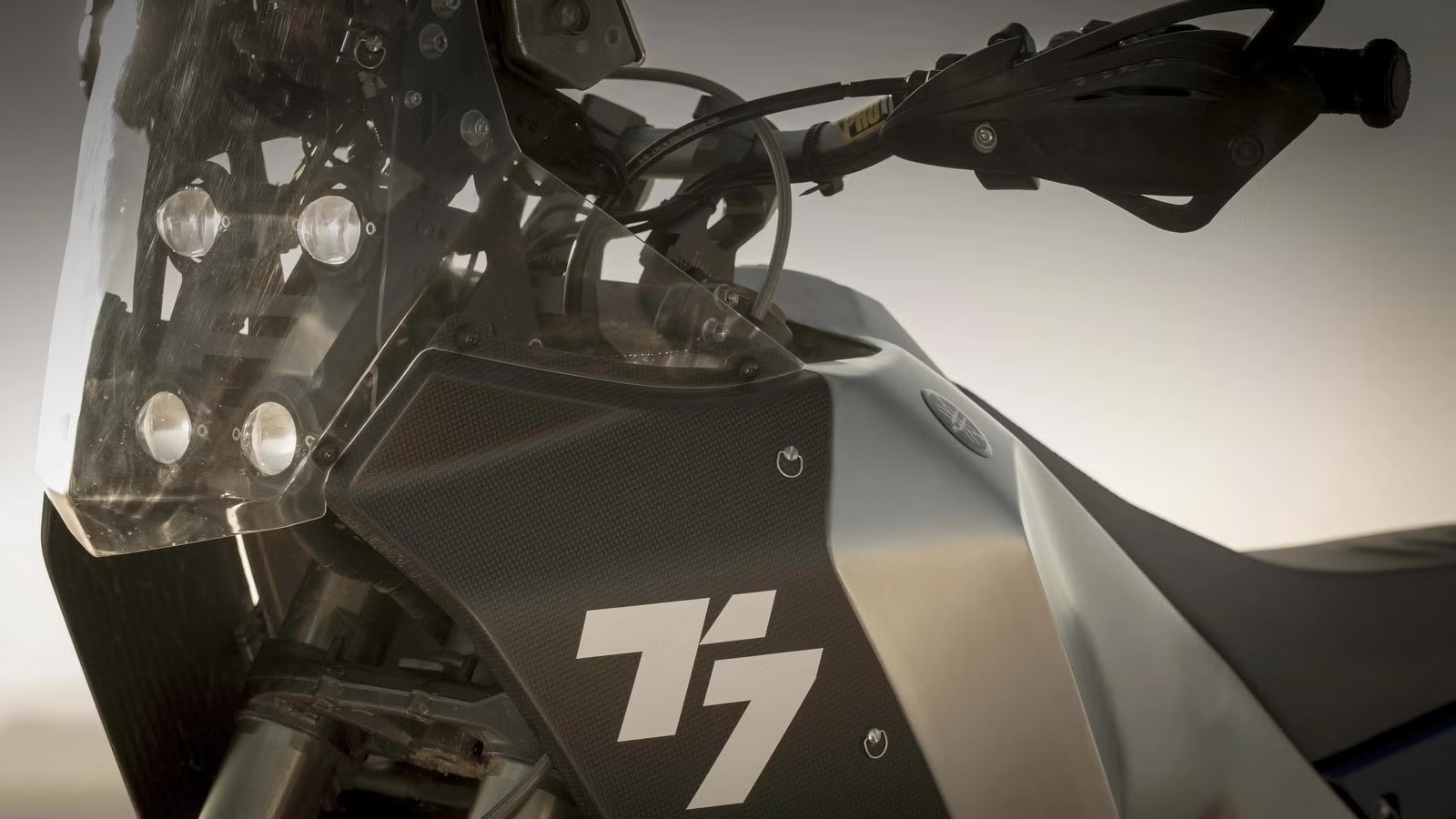
The solution to this problem materialized at the 2016 edition of EICMA. Yamaha displayed something it called the T7 Concept. It was developed in secret by its dedicated European rally and design teams, a stripped-back rally-raid machine made of unpainted aluminum, carbon fiber bodywork, and an insectoid quad-LED headlamp array. It looked more ready to ride off and enter the Dakar Rally at that very moment.
The concept ignited a wave of interest, not to mention global demand. It proved that adventure riders wanted a functional machine, one genuinely capable of tackling dirt, with narrow ergonomics, long-travel suspension, and an agility that allowed it to behave like a large dirt bike, just like the original adventure motorcycles were large enduros capable of all-day highway runs. Fans of the T7 Concept flooded inboxes and forums demanding that the concept not be touched and brought to the showroom without diluting its styling or adding weight.
The Production Ténéré 700 Delivers Pure Dirt Agility To Showrooms
Yamaha took it surprisingly slowly with the T7 concept. The Ténéré 700 World Raid prototype was displayed the next year at EICMA, and then the production-ready Ténéré 700 was unveiled at EICMA in 2018. Finally, after nearly three years of waiting, the Ténéré 700 was launched in the middle of 2019. Fans of the concept were overjoyed to see that it did not deviate much from the concept’s design at all, but everyone was shocked at how simple and capable it turned out to be under the aggressive skin.
A Bulletproof 72-HP CP2 Parallel Twin Sits As The Heart

Yamaha chose a known quantity to power the Ténéré 700: the 689 cc CP2 parallel-twin engine was already a popular one in the MT-07 naked bike. It had a 270-degree firing order and generated 72 horsepower and 50 pound-feet of torque. The offbeat firing order gave it the character of a V-twin, which meant instant low-end torque with which you could crawl up rocky desert washes. At the same time, it showed the ability to cruise at freeway speeds. It was perfect for riders who didn’t feel the need for 130 horsepower. Yamaha deliberately chose a cable throttle to keep complexity down, and it was only available with a six-speed manual gearbox.
To join the engine, Yamaha built an all-new tubular steel double-cradle frame. This is the best kind of chassis for off-road work, and Yamaha matched it with the best kind of wheel sizes for dirt as well: a 21-inch front and an 18-inch rear. It paired them with adjustable KYB suspension with 8.3 inches of travel at the front (adjustable compression and rebound damping) and 7.9 inches at the rear (with preload, compression, and rebound damping adjustment). Quality Brembo brakes also helped keep the handling sharp.

Despite the cradle frame, it had an extremely impressive 9.4 inches of ground clearance. Of course, that meant a slightly high 34.4-inch seat, which limited the number of riders that could flat-foot at a stoplight. Still, it weighed just 452 pounds wet, which meant it was not too difficult to manage, and a 62.8-inch wheelbase kept it stable both at highway speeds and while riding off-road. It made big ADVs feel unnecessary with its breadth of abilities.
The Sub-$10,000 Price Ditched Digital Complexity For Raw Off-Road Control

The original Ténéré 700 went on sale in America at $9,999; it did this by keeping things simple in the electronics department as well. It did not have a by-wire throttle, and neither did it have a six-axis IMU. In fact, there was no traction control at all! The only safety net was dual-channel ABS, which you could disable completely at both wheels — something that only a serious off-roader would offer. This was backed up with a 4.2-gallon fuel tank and an upright rally-style display.
It Soon Became The Blue-Collar Benchmark Of Modern ADVs

The Ténéré’s runaway sales success forced manufacturers to admit that there was a market for something simple, reliable, and capable. It led to a golden age of dirt-capable adventure machines that include the Aprilia Tuareg 660, KTM’s 790 and 890 Adventure R, the Suzuki V-Strom 800DE, and even premium manufacturers like Ducati got into the act with its dirt-capable DesertX.
Meanwhile, the Ténéré 700 has evolved: it now has a TFT display with Bluetooth and navigation, a by-wire throttle, switchable traction control, a two-way quickshifter, and a taller windscreen to make life easier on the highway. It still retains a reasonable price of $10,999, and those override buttons that shut off rider aids instantly when you want to fool around in the dirt. The Ténéré 700 continues to be the benchmark for adventure riders who want something that they can ride to the dirt, and then in it.
Sources: Yamaha Motorsports, Yamaha Motor Europe

Related posts




Latest Post


No Comments