
Forget The 160-HP KTM And Ducati, BMW’s 125-HP Underdog Beat Them Both
Horsepower can settle arguments in a showroom, but a 900-mile road trip can change everything. In 2016, four heavyweight adventure motorcycles faced a three-day test across Britain and Scotland, with two contenders packing 160 horsepower each. Both had enough speed to embarrass some sportbikes, but the least powerful machine made one of the strongest cases for long-distance touring. It even delivered a surprise during acceleration testing. The results showed why comfort, handling, fuel range, and usable power can matter more than having another 35 horses under the tank.
These 160-HP Adventure Bikes Had Speed To Spare

The 2016 KTM 1290 Super Adventure and Ducati Multistrada 1200 Enduro ranked among the most powerful heavyweight adventure bikes of their time. KTM equipped its flagship with a 1,301cc V-twin producing a claimed 160 horsepower and roughly 103 lb-ft of torque. Ducati countered with a 1,198cc Testastretta DVT V-twin, also rated at 160 horsepower. Its variable valve timing helped combine flexible low-speed performance with strong power at higher rpm. The KTM favored aggressive acceleration and excitement, while the Ducati blended sportbike-like performance with more refined touring manners.
Both motorcycles delivered serious speed during BikeSocial’s August 15, 2016, comparison. The KTM reached a tested 144.36 mph, narrowly beating the Ducati‘s 143.57 mph. These were measured speeds from actual testing, not theoretical maximums. Less than 1 mph separated the two, making them remarkably close in outright performance. However, speed alone couldn’t determine which motorcycle worked best over hundreds of miles.
A 900-Mile Ride Exposed What Top-Speed Figures Couldn’t


BikeSocial’s four testers spent three days covering roughly 900 miles, traveling toward Scotland and exploring the winding roads around Loch Lomond and the Trossachs. Alongside the KTM and Ducati came the Triumph Tiger Explorer XCa, powered by a 1,215cc triple-cylinder engine producing a claimed 137 horsepower. All four machines offered comfortable upright riding positions, modern electronics, and substantial touring capability. Their different priorities became clearer as the miles piled up.
The KTM delivered thrilling performance, but its narrow, firm saddle made longer stretches less enjoyable. Its windscreen also proved awkward to adjust, although its WP semi-active suspension impressed testers with its ability to absorb rough surfaces. The Triumph offered a smoother, more relaxed experience, thanks partly to its flexible three-cylinder engine and comfortable riding position. However, its substantial weight affected handling, while its smaller 20-liter fuel tank meant more frequent stops than its 30-liter rivals.
Ducati struck an appealing balance between sportiness and practicality. Its Sachs Skyhook semi-active suspension helped maintain control across changing road surfaces, while its agile handling made winding roads more enjoyable. Generous luggage capacity strengthened its touring credentials. However, its seat wasn’t quite as comfortable as the one fitted to another motorcycle in the group. That distinction became increasingly important after several hours on the road.
The 125-HP BMW R1200GS Adventure Made The Strongest Touring Argument

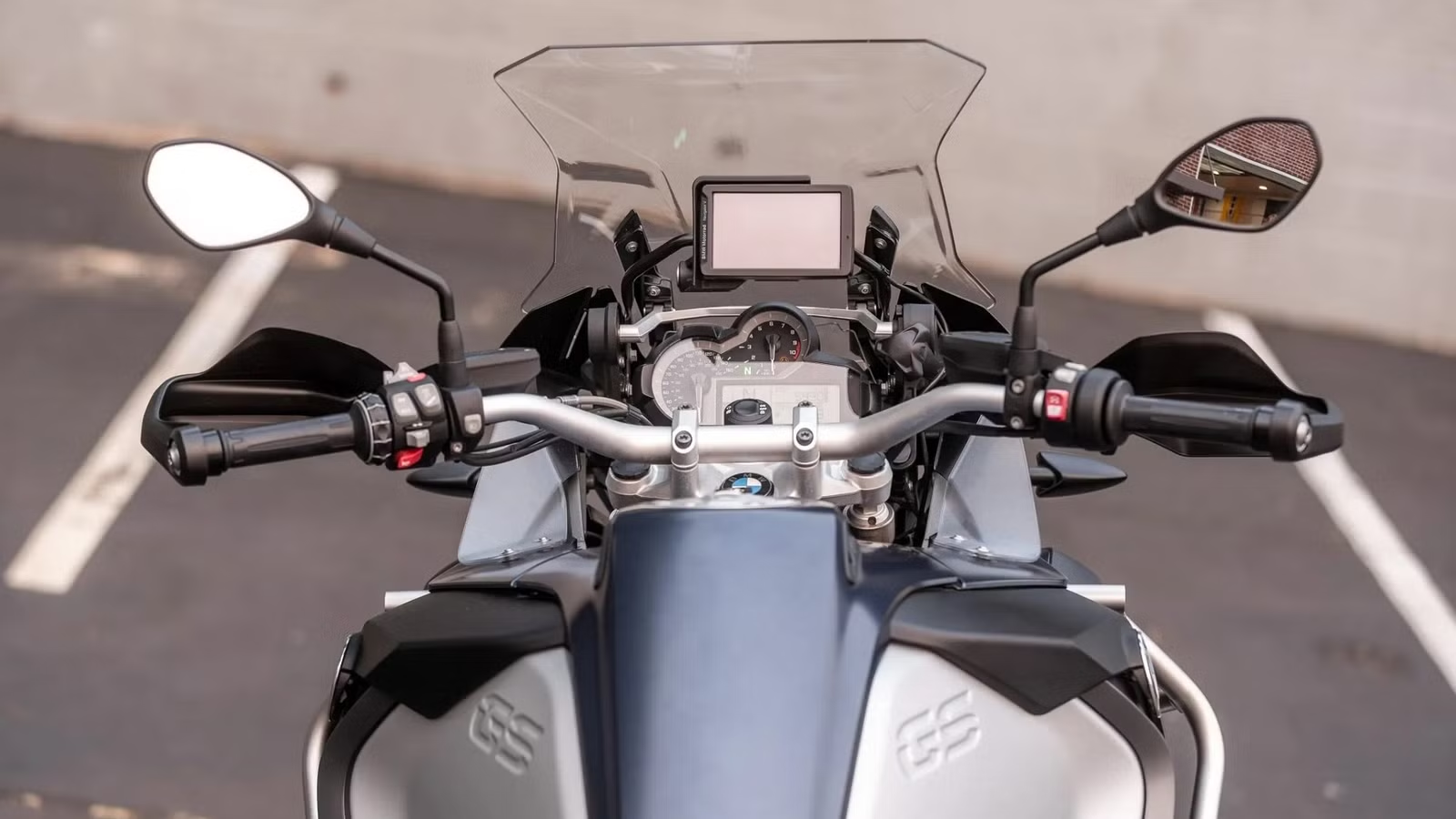
The surprise contender was the 2016 BMW R1200GS Adventure. Its 1,170cc air/liquid-cooled boxer twin produced 125 horsepower and approximately 92.1 lb-ft of torque. That left it 35 horsepower behind both the KTM and Ducati. Yet BikeSocial’s reviewers praised how easily the BMW delivered power during everyday riding. Its predictable handling, supportive saddle, excellent wind protection, and commanding riding position made covering long distances feel effortless. It lacked the outright speed of its rivals, but rarely felt short on usable performance.
The acceleration results made the BMW‘s achievement even more surprising. Despite having the lowest claimed horsepower, it recorded the quickest 0–60 mph time at 3.73 seconds. Ducati followed at 3.80 seconds, Triumph at 3.92 seconds, and KTM at 3.93 seconds. The BMW also had the lowest tested top speed at 131.32 mph, compared with the Triumph’s 135.31 mph, Ducati’s 143.57 mph, and KTM’s 144.36 mph. These results showed that peak horsepower doesn’t tell the full acceleration story. Launch conditions, gearing, traction, and power delivery can influence short sprints, although BikeSocial didn’t establish a specific reason for the BMW’s advantage.

The BMW also excelled where touring motorcycles spend most of their lives. Its semi-active suspension allowed riders to adjust the setup for different conditions, while substantial panniers provided plenty of luggage space. Its integrated satellite navigation proved particularly useful, making the BMW the group’s lead motorcycle because it was the only test bike equipped with navigation. Fuel economy strengthened its case further. Across the trip, it returned 44.6 mpg and an estimated 290.3-mile tank range. The KTM managed 37 mpg and approximately 244.1 miles, while the Ducati came close with an estimated 285 miles. That roughly 46-mile advantage over the KTM could prove useful when fuel stations become scarce, even if most riders would stop to stretch well before draining a 30-liter tank. Ultimately, two testers preferred the BMW, while two favored the Ducati. Editor Marc Potter’s casting vote gave Ducati the narrow overall victory.
The KTM Won The Speed Contest, But The BMW Made Touring Easier

The KTM deserved its performance crown. Its powerful V-twin delivered aggressive acceleration and excellent midrange response, making it the most excitement-focused motorcycle in the group. It completed the standing quarter-mile in 11.32 seconds, the quickest result of the test. It also dominated the 40–120 mph top-gear acceleration run at 9.52 seconds, compared with the Ducati’s 9.62 seconds and BMW’s 11.79 seconds. Those figures demonstrated the KTM’s advantage when accelerating hard at higher speeds. Its impressive WP suspension added control, although its firmer saddle compromised comfort.
Ducati’s narrow overall victory reflected its impressive balance of strong acceleration, agile handling, sophisticated electronics, and touring practicality. BMW offered a more relaxed alternative, prioritizing comfortable seating, protective bodywork, predictable steering, and generous fuel range. Its Telelever front suspension also delivered a distinctive steering feel compared with conventional telescopic forks. While the Ducati encouraged spirited riding, the BMW made long journeys easier to manage, particularly when luggage, weather, and fatigue entered the equation.
The Best Motorcycle For 900 Miles Isn’t Always The Fastest

The BMW’s achievement became clear after three days of riding. Despite producing just 125 horsepower and reaching only 131.32 mph, it earned the preference of two testers over considerably more powerful rivals. Its quickest-in-test 3.73-second sprint to 60 mph proved that useful acceleration doesn’t always follow horsepower rankings. Meanwhile, its estimated 290.3-mile range, comfortable riding position, excellent wind protection, and balanced handling helped make hundreds of miles feel manageable.
Ducati officially won the comparison by combining sporting performance with impressive touring versatility. KTM remained the natural choice for riders who prioritized excitement and outright acceleration. But the BMW showed that long-distance touring rewards more than raw engine output. Giving away 35 horsepower didn’t stop it from matching the Ducati in tester preferences. Sometimes the motorcycle that makes the journey easiest has more to offer than the one that reaches the destination fastest.
Source: BikeSocial, BMW, KTM, Ducati, Triumph

Related posts
Latest Post


No Comments